Test an offer with customer interviews
Turn a product assumption into questions, evidence, and a decision about what to test next.
- Starting point
- You can name a specific person, a problem they may have, and the offer you are considering.
- What you need
- Required: a way to speak with potential customers and a document for notes. A spreadsheet or paper works; the tools below are optional.
Steps
-
Write a claim you could disprove
Name the audience, the recurring problem, and the existing workaround. Write what evidence would make you change your mind before arranging conversations. Start with one assumption, such as whether the problem is frequent enough to matter.
-
Invite people who face the situation
Explain that you want to understand their current work. Ask permission to take notes; ask separately before recording. Collect only the contact information needed to arrange the interview. Include people who might disagree with your idea.
-
Ask about the last real occurrence
Ask: “When did this last happen?”, “What did you do?”, “What did it cost in time or money?”, and “What have you already tried?” Follow concrete examples. Save a demonstration of your offer until you have understood the current behavior; separate those reactions from the earlier evidence.
-
Separate observations from interpretation
Record a short quote or described action, the situation, and any contradictory evidence. Keep your inference in a different column. Use anonymous participant IDs in a shared sheet. A compliment or hypothetical promise is not evidence of a purchase.
-
Choose the next test
Review the original decision rule. Decide whether to narrow the audience, revise the problem, test an offer, or stop. Write why and what is still unknown. A small set of interviews informs the next experiment; it does not establish market size or guarantee demand.
The role of each resource
These are options for a specific role; you do not need to adopt all of them.
- Optional · tool Cal.com Arrange interview times when manual scheduling becomes inconvenient.
- Optional · tool Tally Collect brief interview requests. This is the tally.so form builder.
- Suggested · tool Notion Keep questions, observations, and decisions together; an existing document is sufficient.
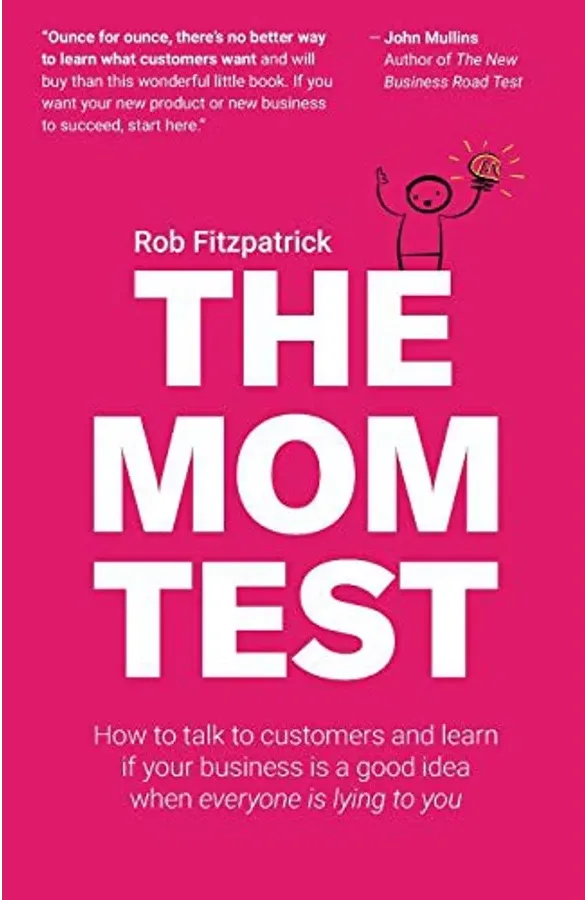
- Reading · book The Mom Test Background on asking about behavior without inviting reassuring answers.


When it is done
You have a stated assumption, notes that distinguish evidence from interpretation, and one next decision with its uncertainties. Unfavorable evidence is a useful result.
An evidence table
Fictional teaching example about a client-approval service. These are invented notes, not customer research or LV results.
| Observation | Interpretation | What to check |
|---|---|---|
| P01 describes chasing a missing approval in yesterday’s project. | There may be a coordination problem. | How often does this happen, and who bears the cost? |
| P02 says the current shared document works well. | The proposed problem may not apply to this person. | What differs between these working arrangements? |
| P03 calls the proposed idea “interesting.” | This is an opinion, not evidence of demand. | Return to a recent event and the actual workaround. |
The next decision could be to study one narrower approval process before building anything. The table alone does not justify a sales forecast.
Checklist and template
Test an offer with customer interviews

[ ] Name one audience and one assumption.
[ ] Write the evidence that would change the decision.
[ ] Arrange relevant conversations and agree how to take notes.
[ ] Ask about actual events, workarounds, and costs.
[ ] Record contradictory evidence and keep inferences separate.
[ ] Choose the next test and record what remains unknown.

Audience:
Problem assumption:
Evidence that would change my mind:

Participant ID / date:
Last real occurrence:
Current workaround:
Observed cost or effort:
Quote or described behavior:
Contradictory evidence:
My interpretation:

Decision: continue / narrow / revise / stop
Reason:
Unknowns:
Next test / owner / review date: