My take
The rare management book written by an operator who ran a fab at scale. Task-relevant maturity and one-on-ones changed how I think about leverage in teams.
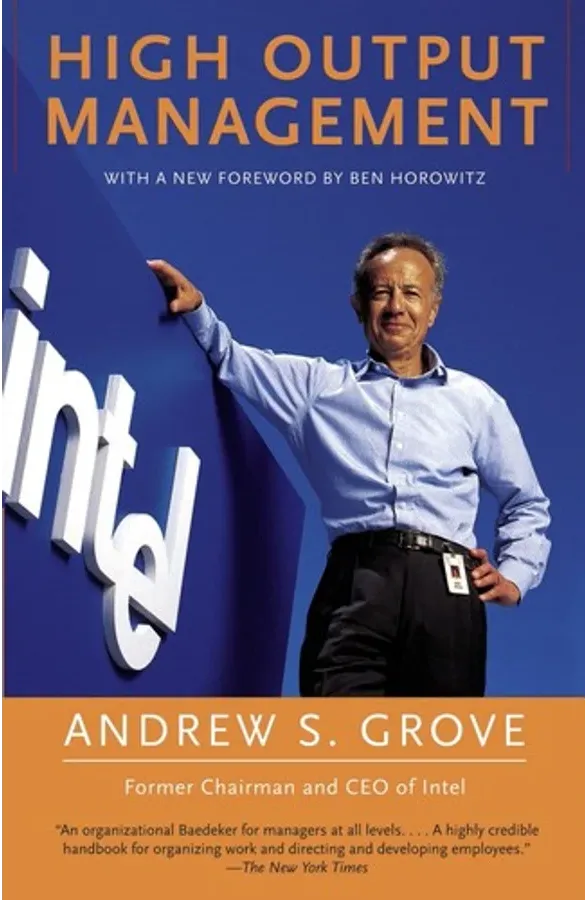
What is High Output Management about?
Management is a leverage game: managerial output equals organizational output, and every activity should be judged by the leverage it creates.
Who should read High Output Management?
New and practicing managers, team leads, and founders who became bosses overnight.
Key ideas from High Output Management
- A manager's output is their organization's output
- One-on-ones are the highest-leverage meeting
- Task-relevant maturity dictates management style
- Meetings are a medium of work, not a deviation from it
- Fix or move rate-limiters, do not hide them.
Is High Output Management worth reading?
Still the most focused management reference forty years on: mechanics over philosophy, checklists over inspiration.
Best for
Anyone with direct reports, especially technical founders managing people for the first time.
Not ideal for
Readers seeking leadership storytelling or culture philosophy, Grove is deliberately mechanical.
What materially matters
- The manager's-output equation and leverage analysis of every activity.
- One-on-one and meeting mechanics: their agenda, your structure.
- The task-relevant maturity model for choosing how to manage each person.
Practical use cases
- Run the leverage audit on your calendar and cut or delegate the lowest-leverage recurring block.
- Install weekly one-on-ones with the Grove structure: their agenda first.
Pros
- Concrete and mechanical, you can implement the chapters.
- Dated examples, timeless mechanics.
Limitations
- Semiconductor-era anecdotes require translation to your context.
- Dense, closer to a textbook than a narrative.
High Output Management FAQ
Is High Output Management outdated?
The examples are 1980s Intel; the leverage frame, one-on-ones, and review mechanics remain standard practice.
Is it useful for solo founders?
Yes for the leverage and meeting discipline; the people chapters pay off the moment you hire.
Continue · Strategy