The internet has made it easier than ever to build independently.
A single person can publish, sell, build an audience, launch software, run a community and reach customers globally without needing a large team or much initial capital.
That is the opportunity.
It is also the trap.
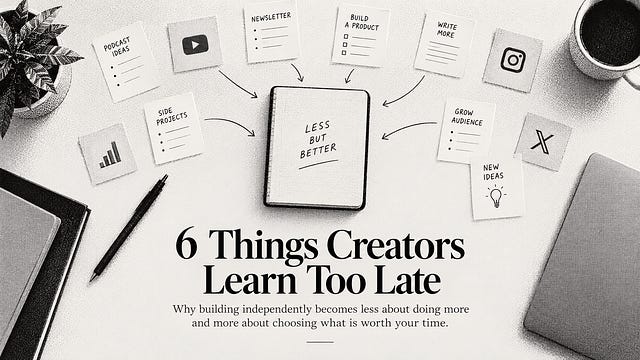
Because when almost everything is possible, the difficult part is no longer access. It is deciding what deserves your attention.
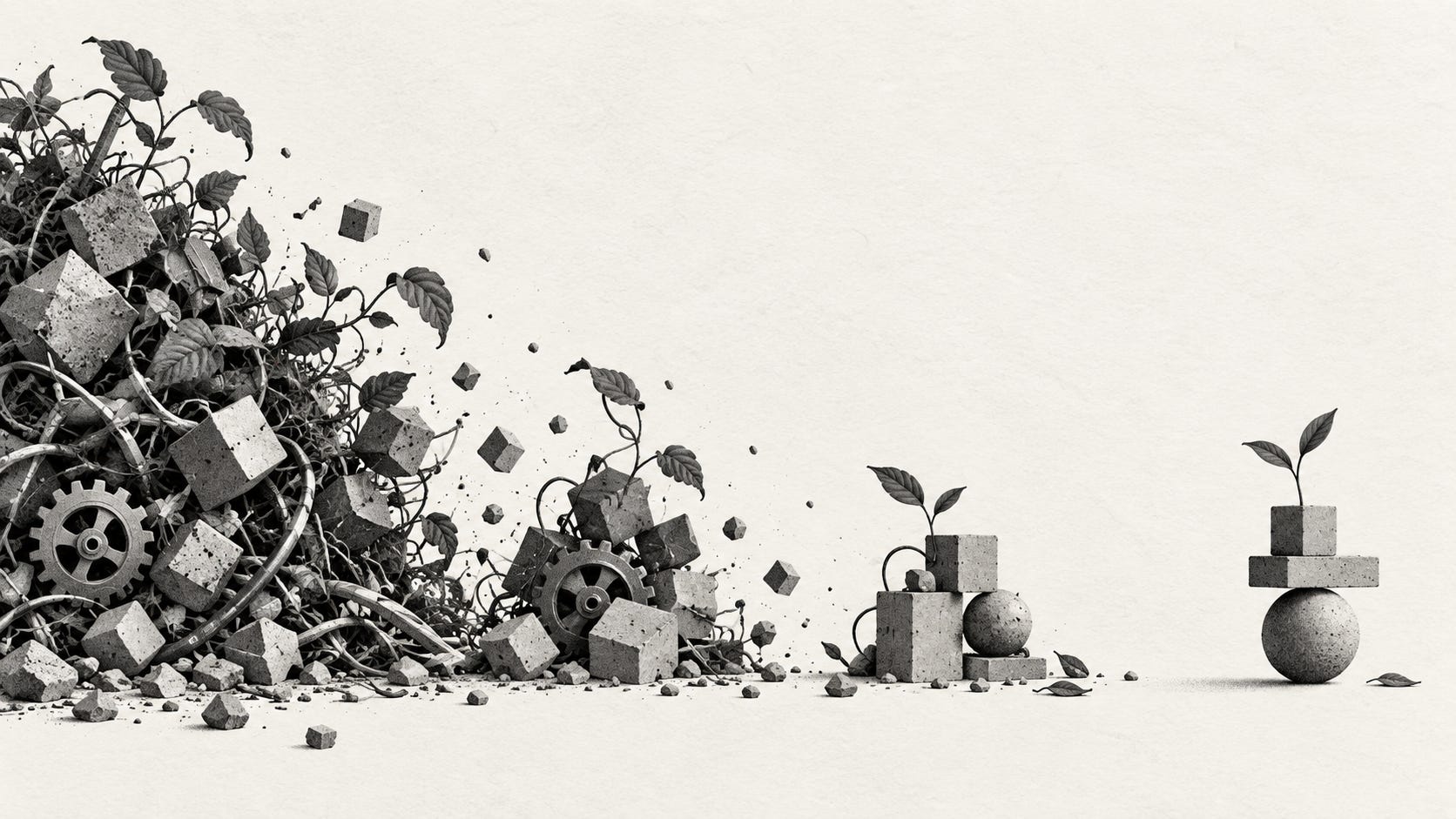
Independent creators and founders rarely fail because they have no ideas. More often, they accumulate too many of them. Too many products, channels, collaborations, audiences, experiments and unfinished projects.
The early stages reward expansion. You try things because you need information. You test formats, markets, platforms and business models until something starts working.
But at some point the game changes.
More stops being the obvious answer.
These are six things I think become increasingly important once you have been building independently for a while.
1. The real cost of a project is not launching it. It is maintaining it.
Starting things online has become almost frictionless.
You can buy a domain, generate a brand, build a landing page, connect payments and publish the first version of a product in a weekend.
That creates a dangerous illusion.
The initial cost of a project looks extremely low.
But launching is usually the cheapest part.
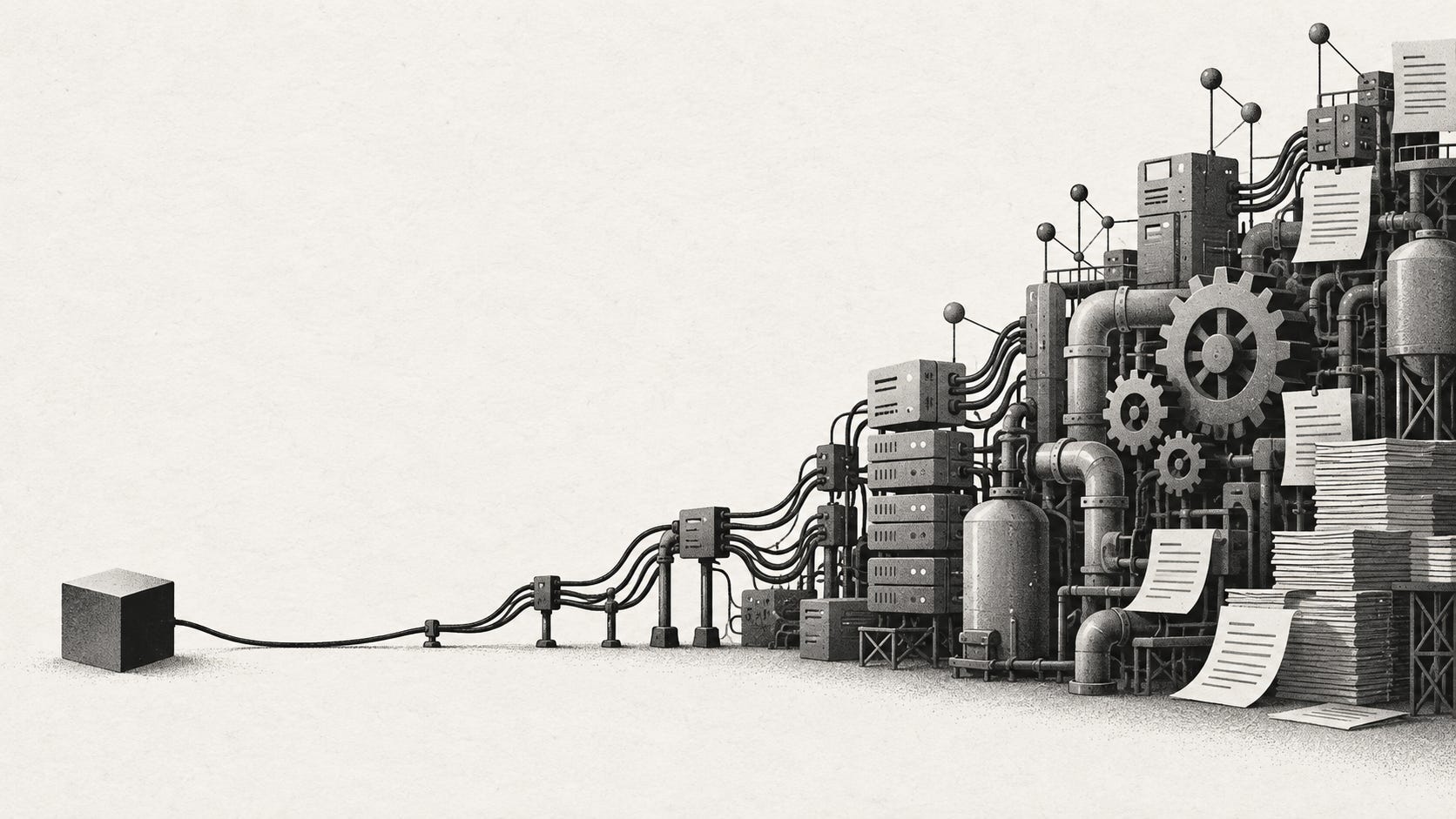
Every project creates a long tail of maintenance: customer questions, updates, broken links, content, analytics, accounting, integrations, renewals, partnerships, social accounts, documentation, support and hundreds of small decisions that were invisible when the idea was exciting.
This is why independent founders should probably evaluate ideas less by asking:
Can I build this?
And more by asking:
Do I want to maintain this if it works?
Those are completely different questions.
A business that succeeds can become a much larger commitment than a business that fails.
Creators face the same problem.
A newsletter means another publishing schedule. A podcast means another production pipeline. A second YouTube channel means another audience expecting consistency.
Nothing remains “just an experiment” forever if people start relying on it.
Before starting something new, imagine it already has customers, traffic and expectations.
Would you still want it?
That is often a better filter than market potential alone.
2. Attention becomes the main bottleneck much earlier than people expect.
In the beginning, you usually need more opportunities.
More clients.
More distribution.
More followers.
More collaborations.
More revenue.
You say yes because there is relatively little downside to exploring.
Eventually, however, the constraint changes.
You stop lacking opportunities and start lacking high-quality attention.
That transition is easy to miss.
A creator can technically maintain five platforms. A founder can technically run three products. A consultant can technically accept another client.
The problem is not whether those things fit into the calendar.
The problem is whether you can still think clearly about the work that matters.
Attention is different from time.
A one-hour meeting does not necessarily cost one hour. It can divide an entire afternoon.
A small client might only require five hours per month but interrupt you twenty times.
A side project you barely touch can occupy mental space simply because you know it is unfinished.
Eventually you have to start calculating attention cost, not only time cost.
This is one of the reasons small independent businesses can become surprisingly stressful even when the founder is not working extreme hours.
There are too many open loops.
Every project is asking a small part of your brain to remain available.
At some point, the highest-leverage move is not better productivity.
It is having fewer things requiring productivity in the first place.
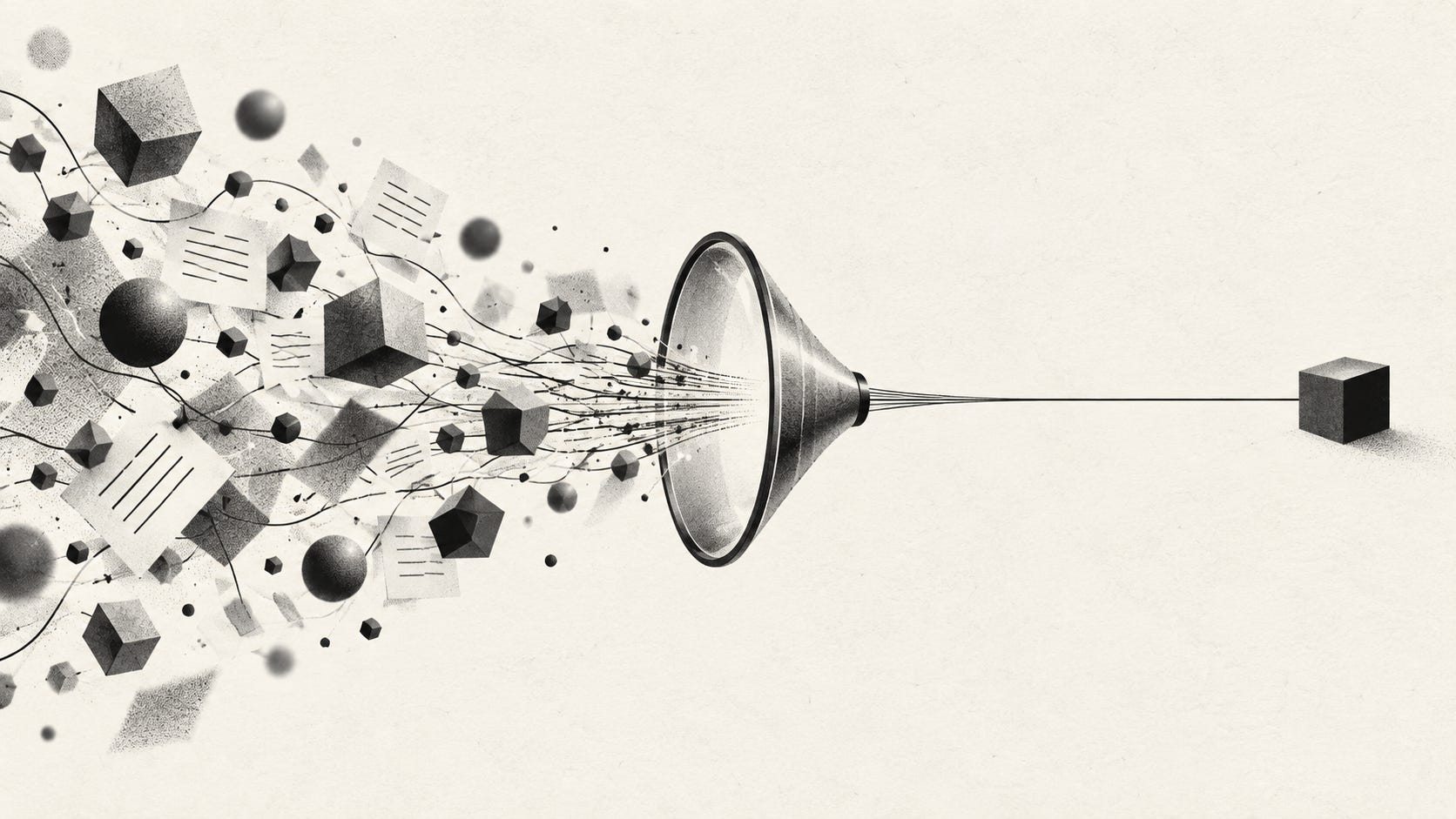
3. Distribution matters, but being everywhere is usually a bad strategy.
Independent creators are constantly told to diversify distribution.
Build an email list.
Post on X.
Start YouTube.
Repurpose to TikTok.
Publish on LinkedIn.
Create short-form clips.
Run a community.
Build your own website.
In isolation, almost all of this advice is reasonable.
Together, it can become absurd.
A small creator suddenly has the content obligations of a media company without the staff of a media company.
The result is often a large amount of mediocre output spread across channels that never become meaningfully strong.
There is also another problem.
Platforms reward constant activity, which means distribution can slowly consume the time that should have been spent creating something worth distributing.
You start as a writer and eventually spend most of the week turning one article into seventeen content formats.
You start as a builder and end up spending more time talking about the product than improving it.
There is nothing wrong with promotion.
Distribution is part of the work.
But there is a difference between using platforms and working for them.
For most independent creators, I think the better strategy is usually one primary asset, one or two meaningful distribution channels and a clear path between them.
The primary asset might be your product, newsletter, website, YouTube channel or community.
Everything else should support it.
If every platform has become its own separate business, you probably no longer have a distribution strategy.
You have several jobs.
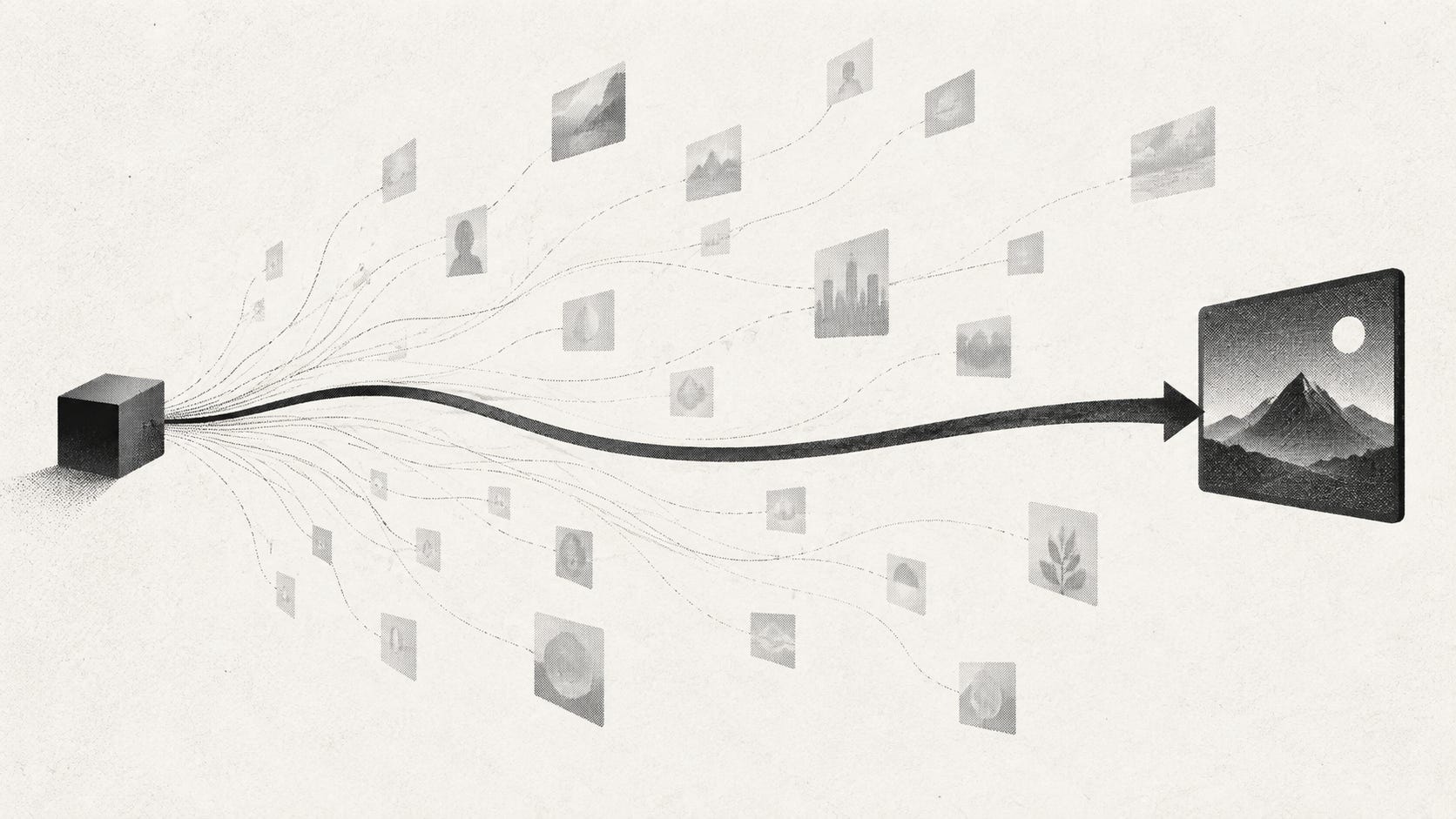
4. There is a point where starting new things becomes avoidance.
Launching feels productive because the progress is visible.
There was nothing yesterday.
Today there is a website.
Tomorrow there is a logo, a landing page and the first customers.
Improving an existing project is less satisfying.
Version seven often looks almost identical to version six from the outside.
The work becomes less about invention and more about refinement.
You fix onboarding.
Improve conversion.
Rewrite documentation.
Talk to customers.
Publish another article.
Make the product slightly faster.
Repeat.
This is where many creators and founders become vulnerable to new ideas.
The existing project is now difficult and repetitive.
The new idea is clean and full of potential.
So you start again.
There is a psychological advantage to always being early.
When a project is new, it cannot really disappoint you yet.
Its future is unlimited because reality has not tested it.
Mature projects are different.
They expose your weaknesses.
You know the traffic.
You know the revenue.
You know which customers do not convert.
You know what is broken.
Starting something new can therefore become a sophisticated form of procrastination.
Sometimes the correct move is another product.
But sometimes the highest-value thing you can do is spend another year making the existing one better.
That is much less exciting.
It is also how durable things are usually built.
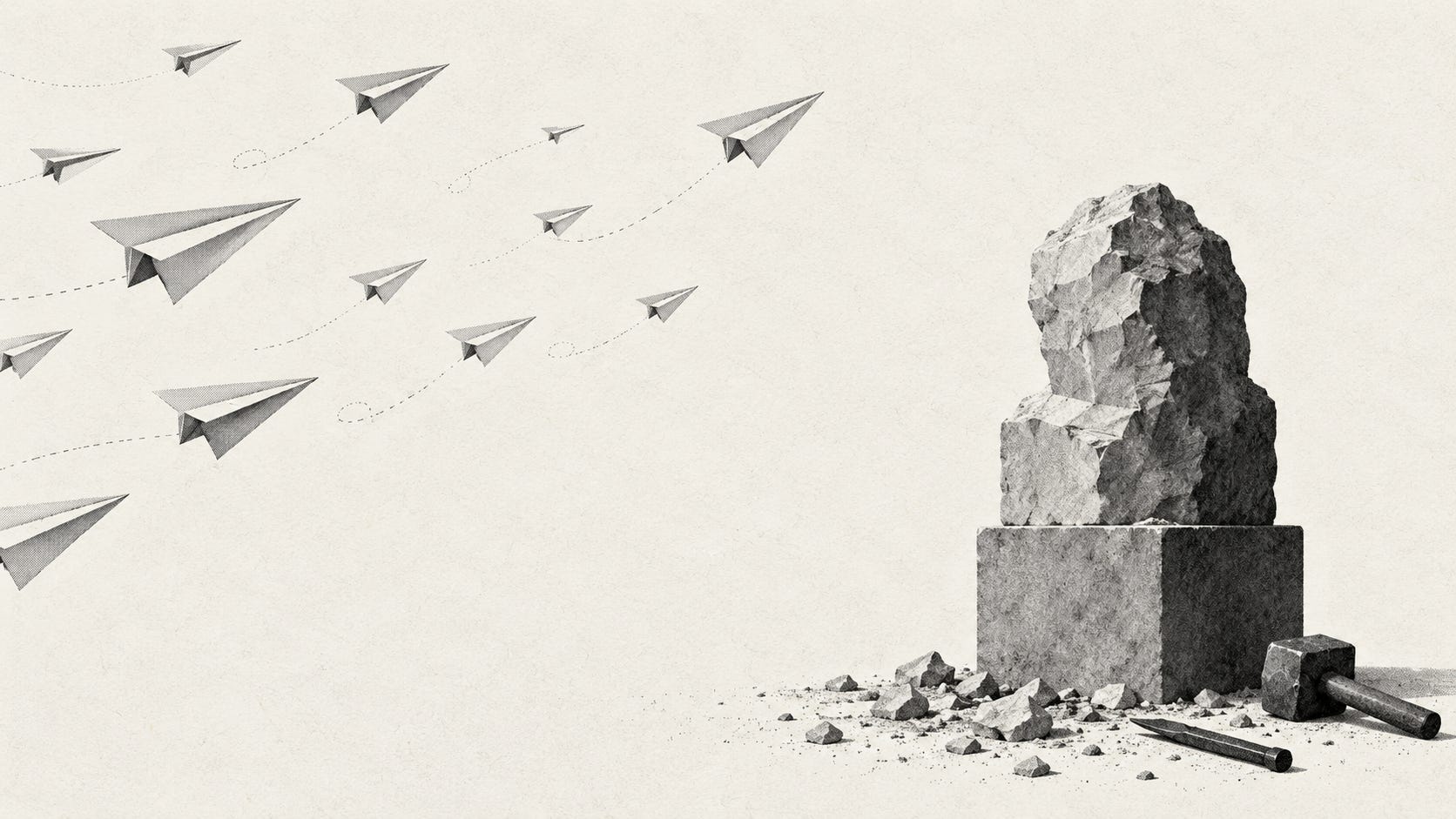
5. Being good at something can trap you in the wrong business.
One of the least discussed problems in independent work is competence.
If you become good at something, people will naturally ask you to do more of it.
A consultant who is good at marketing gets more marketing clients.
A designer gets more design work.
A creator known for a particular topic receives more opportunities related to that topic.
At first, this is exactly what you want.
Competence creates leverage.
You can charge more. Work faster. Attract better clients. Build a reputation.
But competence can also create inertia.
The market starts telling you who you are.
And because the work is profitable and familiar, it becomes difficult to question whether you still want to spend your time doing it.
Independent founders have an unusual advantage here.
They have more freedom to redesign their work than most people.
They can change the product mix, reduce services, move toward ownership, build software, create media, hire, automate or simply stop doing certain types of work.
But that flexibility is only useful if you actually use it.
A useful question is not simply:
What am I good at?
It is:
What do I still want to be getting better at five years from now?
The answer may be the same.
But it is worth checking.
Otherwise you can become extremely efficient at building a career you no longer want.
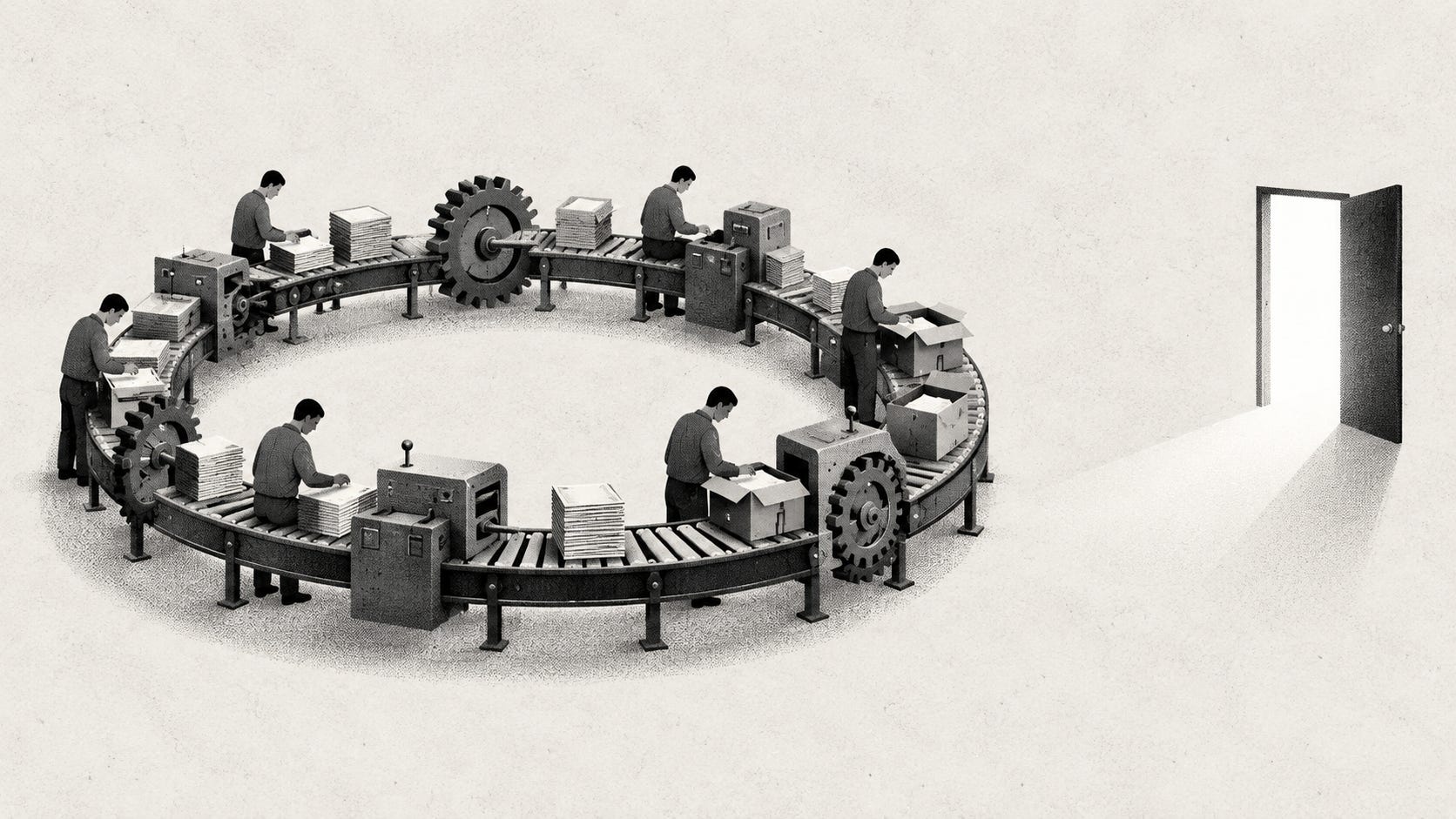
6. At some point, growth becomes a problem of subtraction.
Early-stage advice is dominated by addition.
Add a product.
Add a revenue stream.
Add a feature.
Add a channel.
Add a market.
Add a team member.
Add automation.
And again, much of that is reasonable when you are trying to discover what works.
But mature independent businesses often improve in the opposite direction.
Remove the product nobody really needs.
Stop posting on the platform producing no meaningful return.
End the partnership that creates more work than value.
Fire the client responsible for half your stress and 5% of your revenue.
Delete the feature confusing new users.
Merge two brands.
Simplify the offer.
Reduce the number of decisions customers need to make.
The difficult part is that subtraction rarely feels like growth.
There is nothing new to announce.
The company might even look smaller from the outside.
But complexity has a cost.
Every additional component interacts with the rest of the system.
A second product creates cross-selling decisions.
A second brand creates another identity to maintain.
Another pricing tier creates another customer segment.
Another employee creates another communication layer.
Individually, these additions may look insignificant.
Together they create an organisation that becomes harder to understand and harder to operate.
Independent founders have one enormous structural advantage over larger companies: they can remain simple.
It is worth protecting.
The goal is not to own the most projects, reach the most platforms or have the longest list of things you are working on.
The goal is to build something valuable while preserving enough freedom to enjoy the fact that you built it independently.
That may require ambition.
But increasingly, I think it also requires restraint.
The early years of building are often about discovering everything that could work.
The later ones are about deciding what is worth continuing.
And that may be the more difficult skill.