Now
Most creators treat every video and post as a blank page, so output is slow, quality swings wildly, and almost nothing converts. Creating reactively instead of running a system leaves growth and income on the table.
Build a repeatable content pipeline from idea capture to review, publishing, and repurposing.
The shift
Now
Most creators treat every video and post as a blank page, so output is slow, quality swings wildly, and almost nothing converts. Creating reactively instead of running a system leaves growth and income on the table.
After the sprint
In 30 days you will have a weekly operating path, hook and script standards, a quality gate, and a rulebook that removes avoidable decisions.
Best fit
You have expertise and ideas, but every asset still starts from zero or depends on last-minute energy.
Not the fit
It does not create content for you or promise views, followers, or revenue.
The mechanics
The 102-page main book teaches the logic, psychology, application, and limits. Templates come after understanding.
How tension, specificity, curiosity, and proof determine whether an idea earns real time.
How to capture signals, select by evidence, and produce without returning to a blank page.
How to review hooks, scripts, retention, credibility, and CTA with observable criteria.
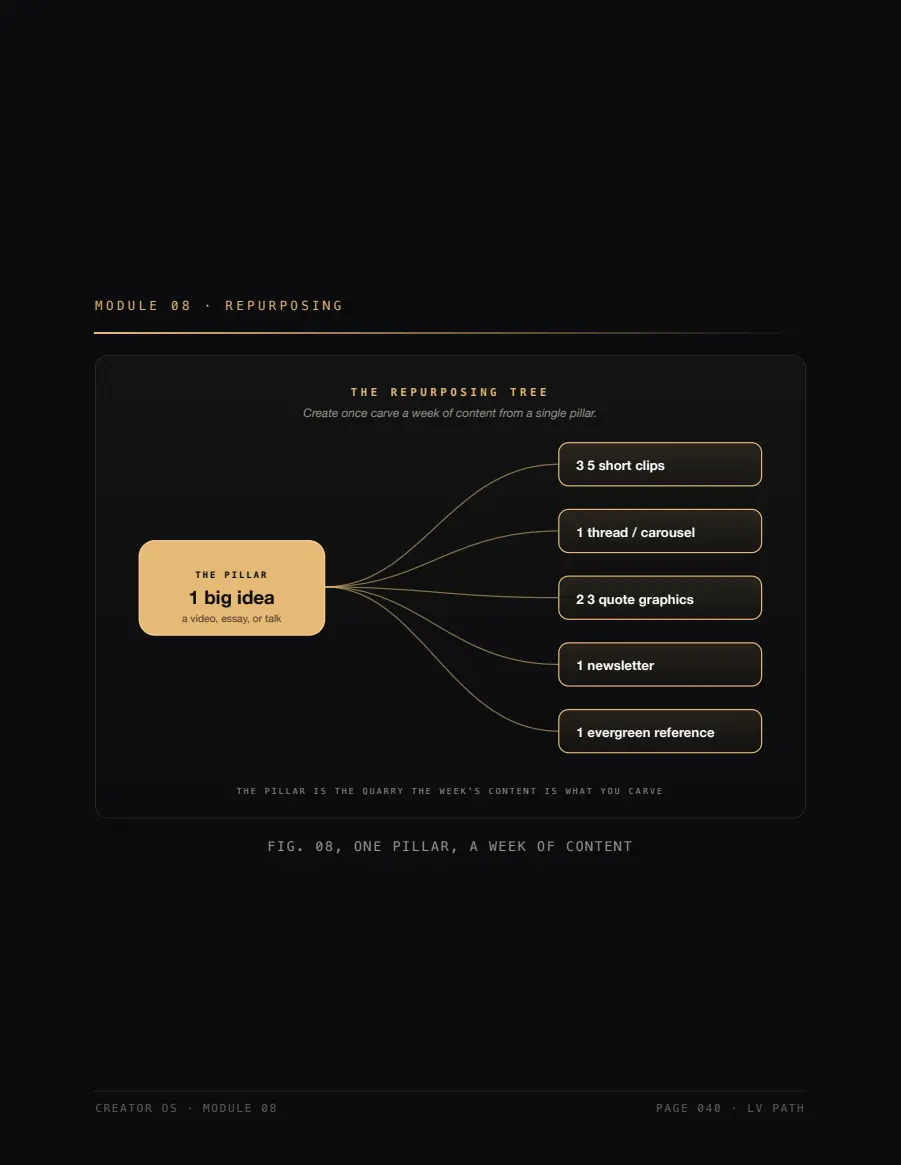
How to repurpose by channel job and connect content to a proportionate offer.
Operating path
Days 1-7
Audit the workflow and install one capture rail.
Days 8-22
Choose formats, install patterns, and create the quality gate.
Days 23-30
Repurpose with intent and write the weekly rulebook.
Before and after
Weak version
“Tips for creators”
It names the category but reveals no tension, mechanism, or consequence.
Stronger version
“Why capable creators still rebuild every post from zero.”
It names the material problem, makes the change visible, and opens a proof path.
Three reading modes
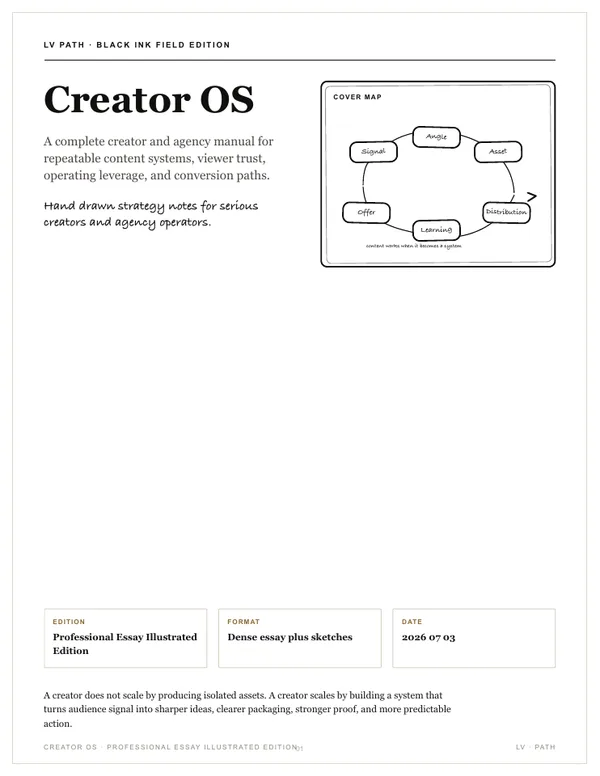
The LV edition creates energy and memory. The light edition supports long study and print. The casebook turns principles into visible decisions.
Customer kit
The main book teaches the complete system. The light edition, casebook, visuals, and tools extend it without turning the download into a collection of busywork.
The primary deliverable: dense teaching, complete systems, psychology, examples, infographics, and application.
The same strategic core with a light background, monochrome diagrams, and typography for long reading or print.
Realistic cases with diagnosis, before/after, channel applications, and transferable rules.
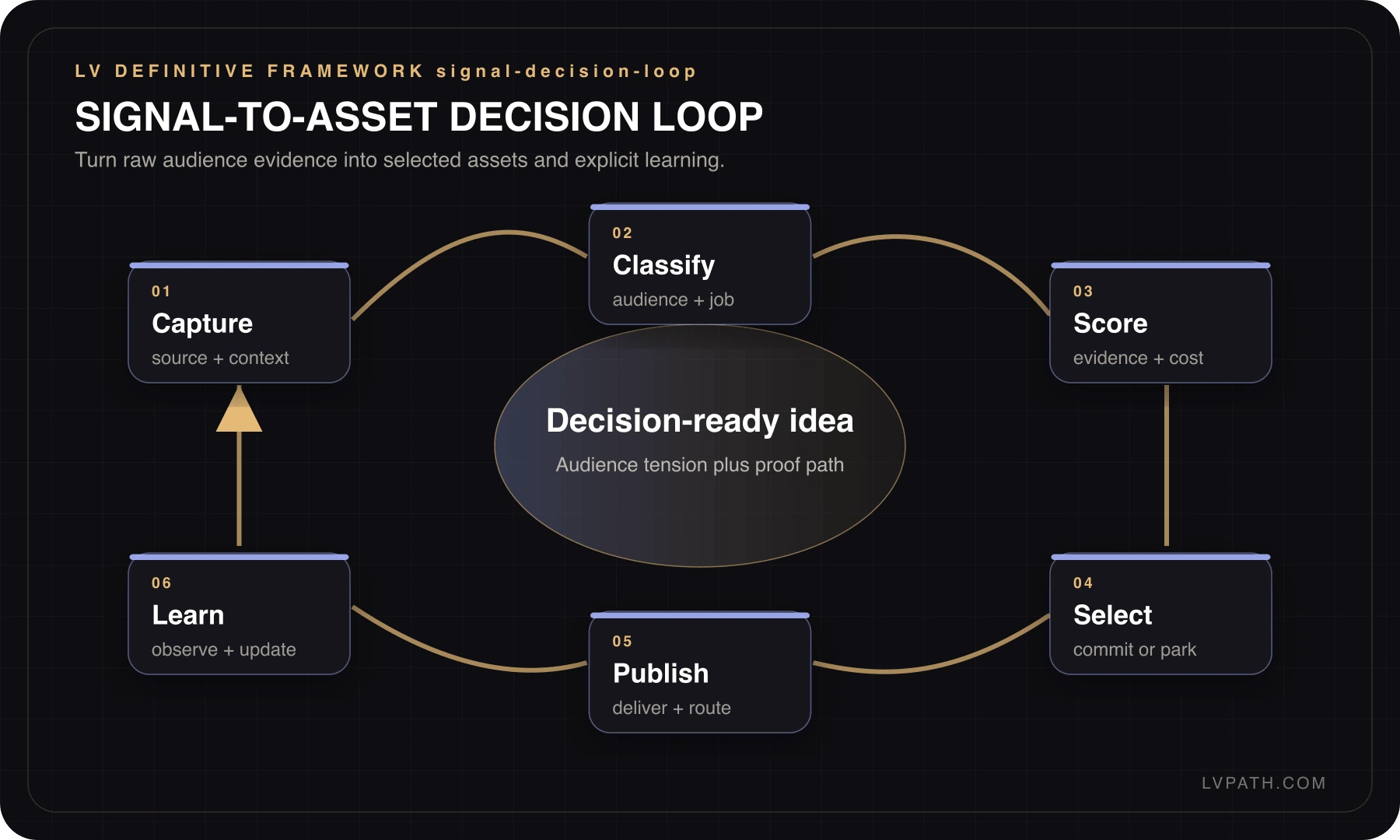
System diagrams for reference, team explanation, and quick application.
Eight complete workflows with inputs, output contract, review, and responsible boundaries.
Completed comparisons that show the decision behind a stronger version.
Included for readers who want to document decisions. It does not replace the book or lead the experience.
238 pages across the three primary reads
Update policy ↗Visual library
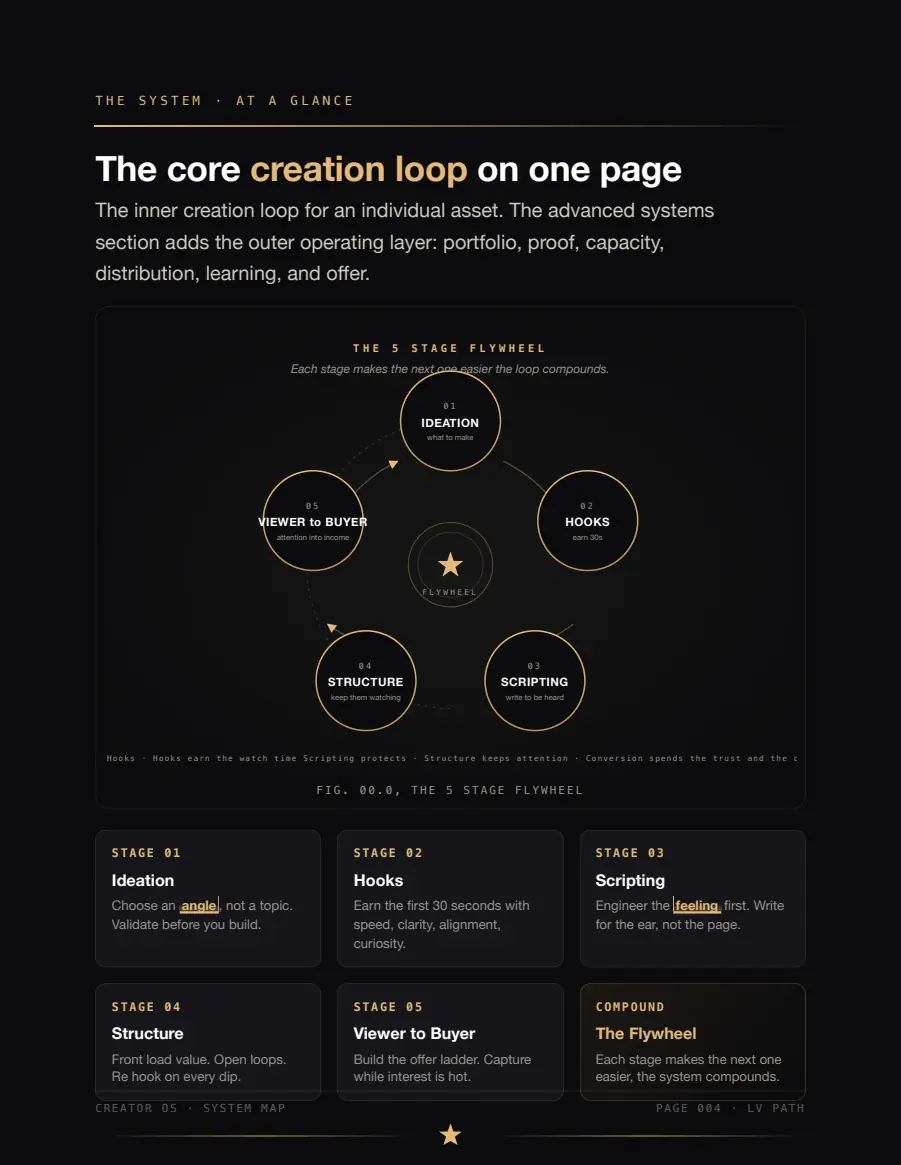
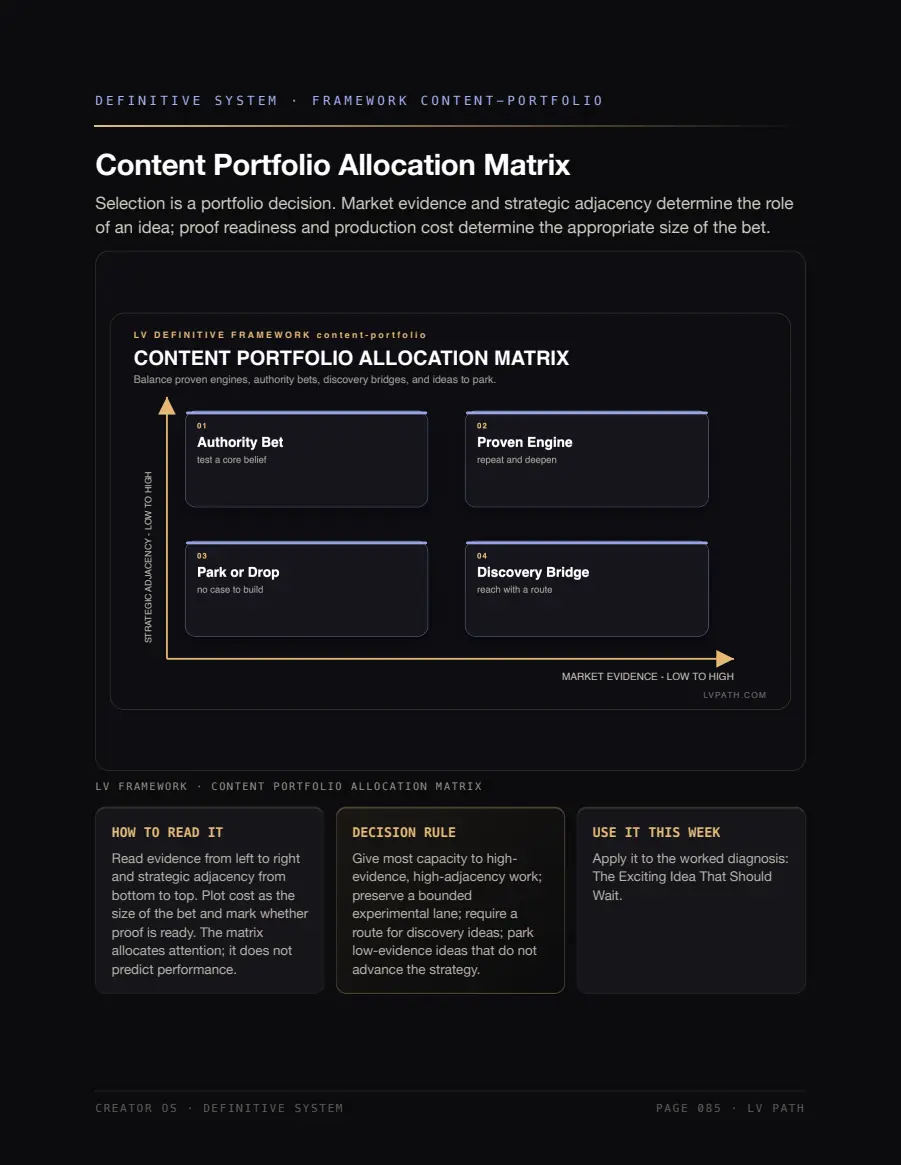
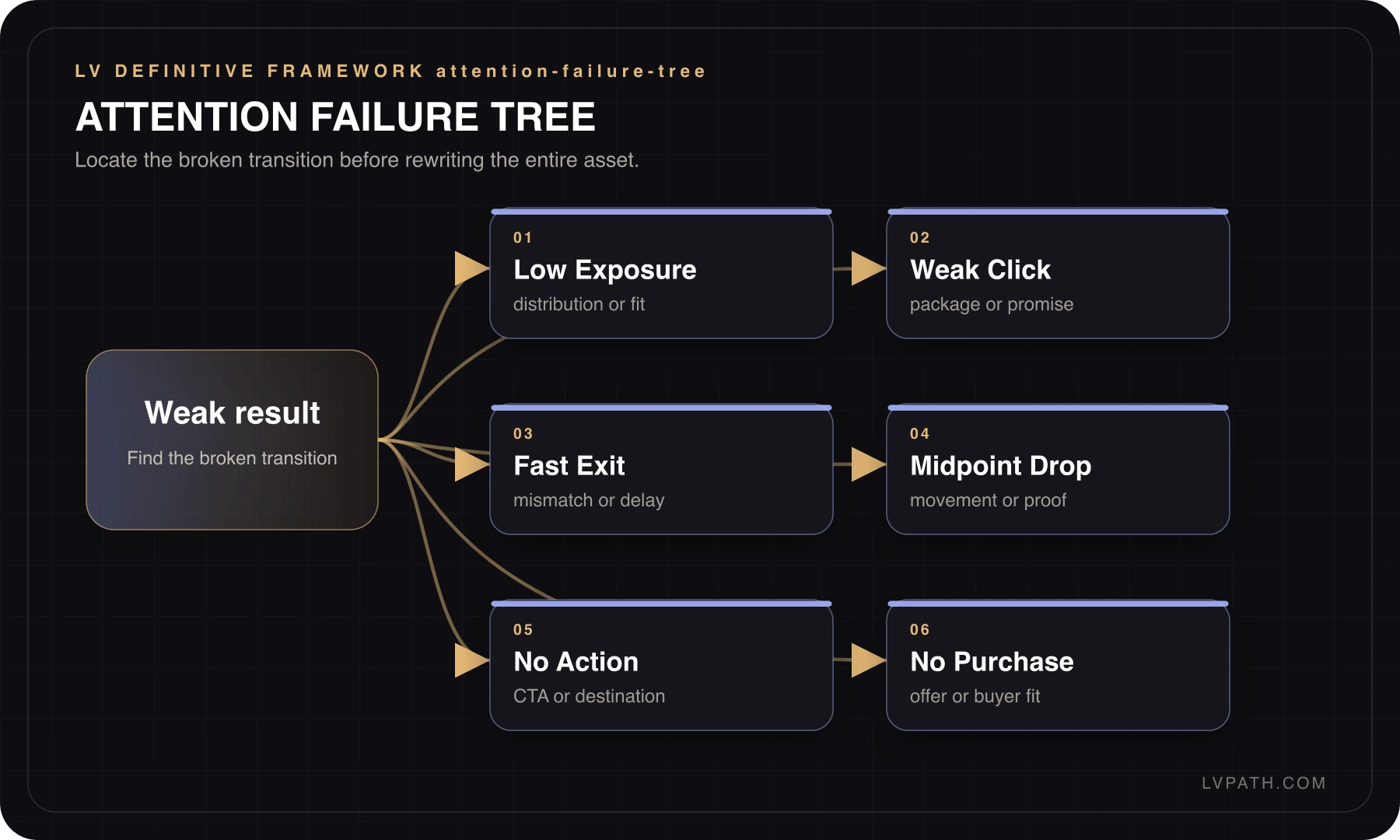
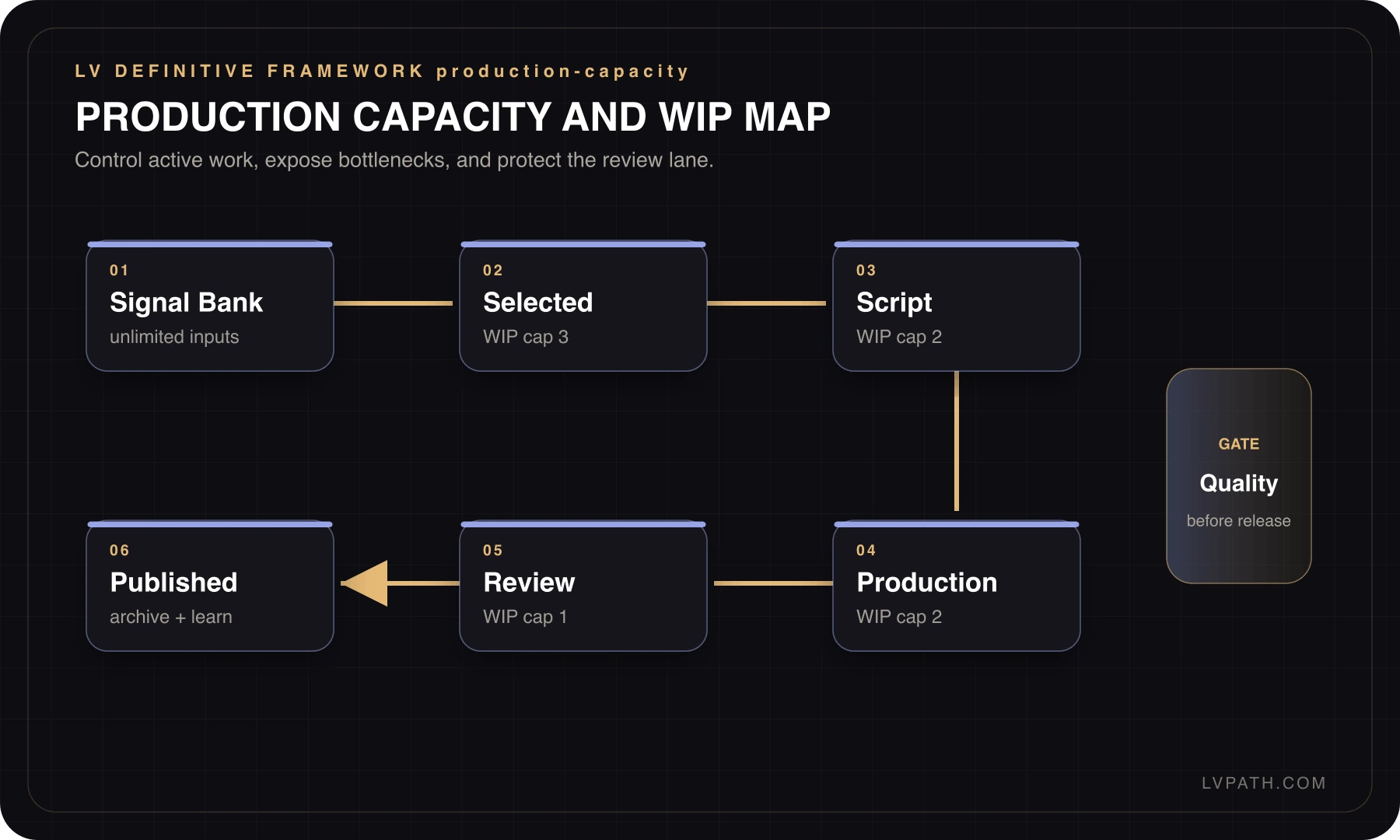
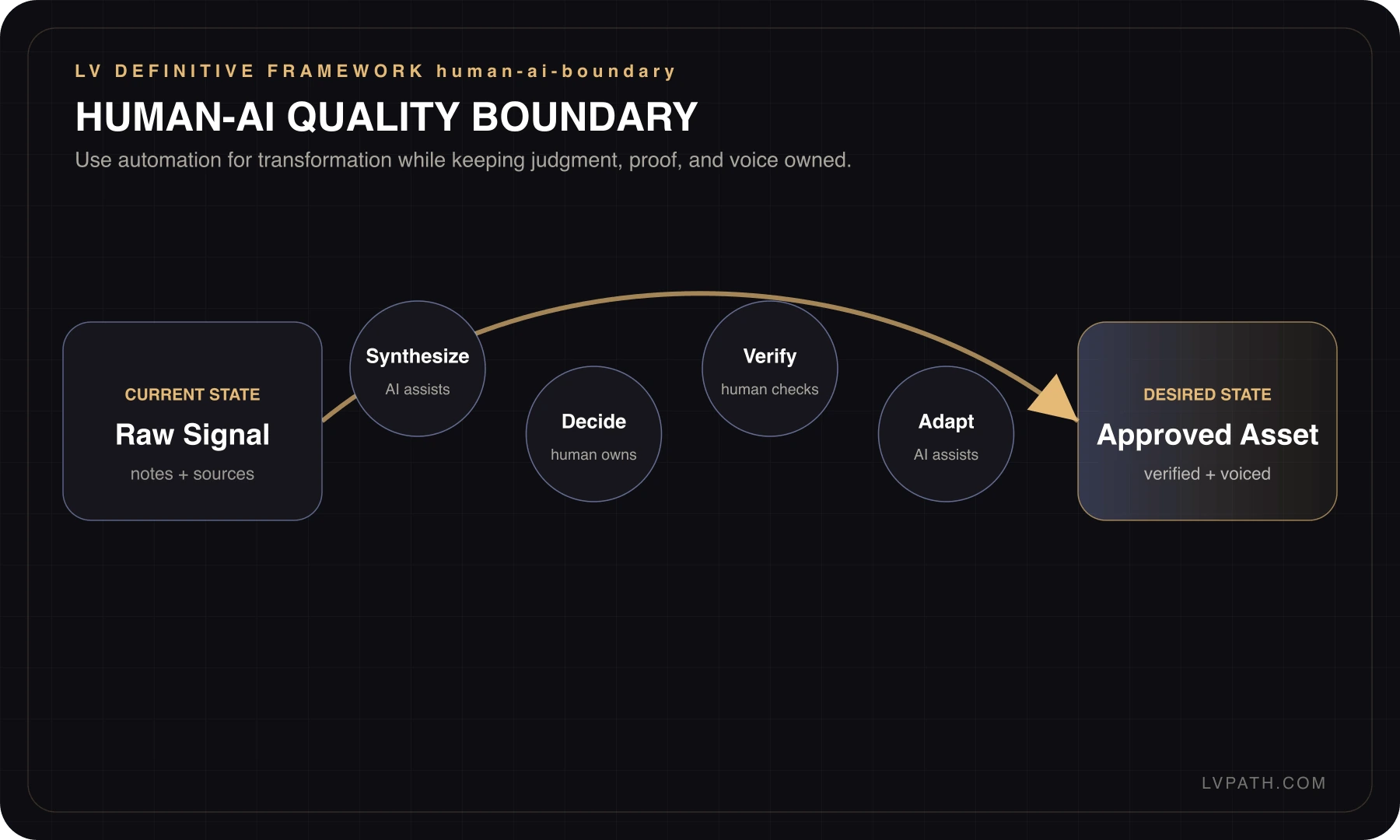
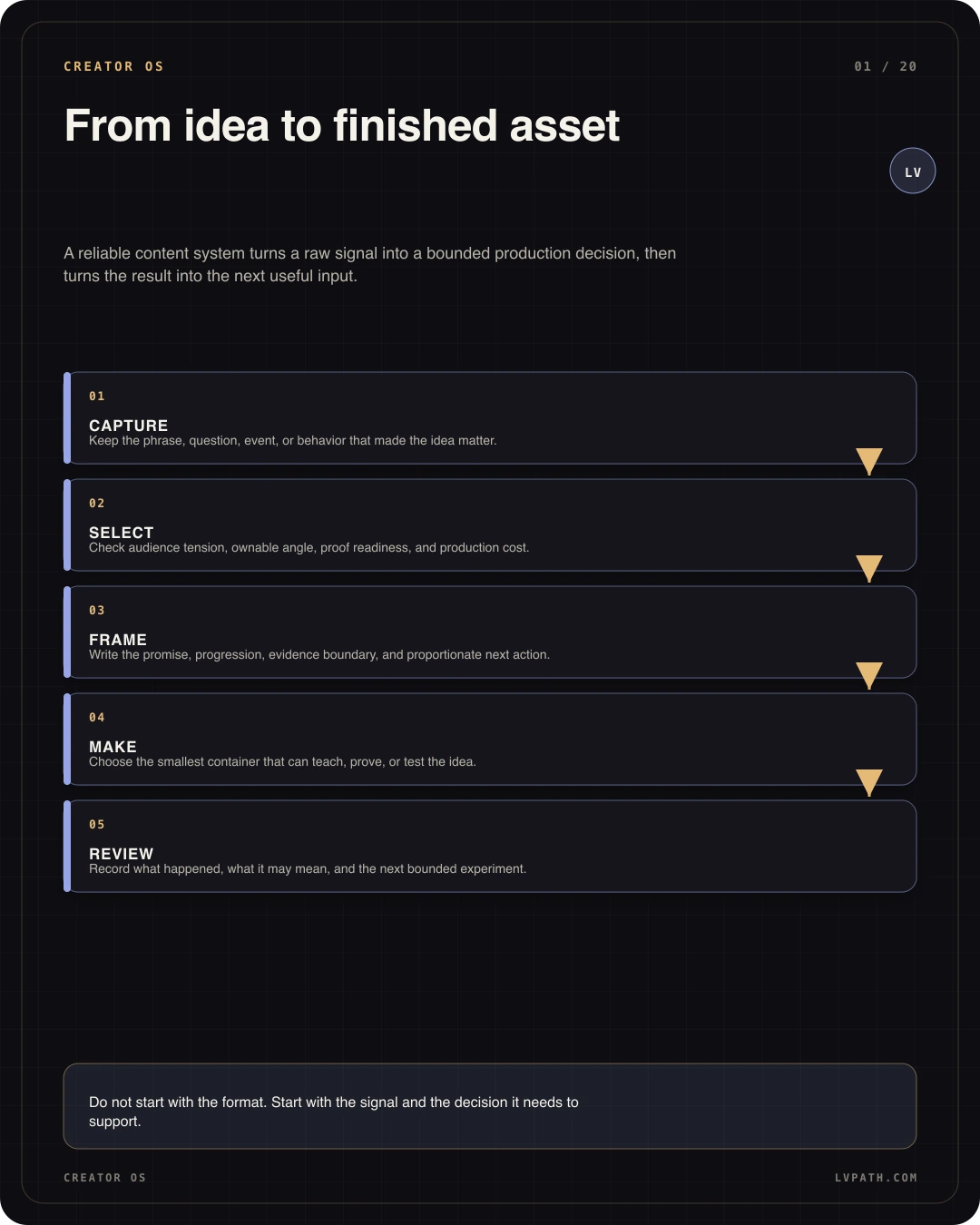
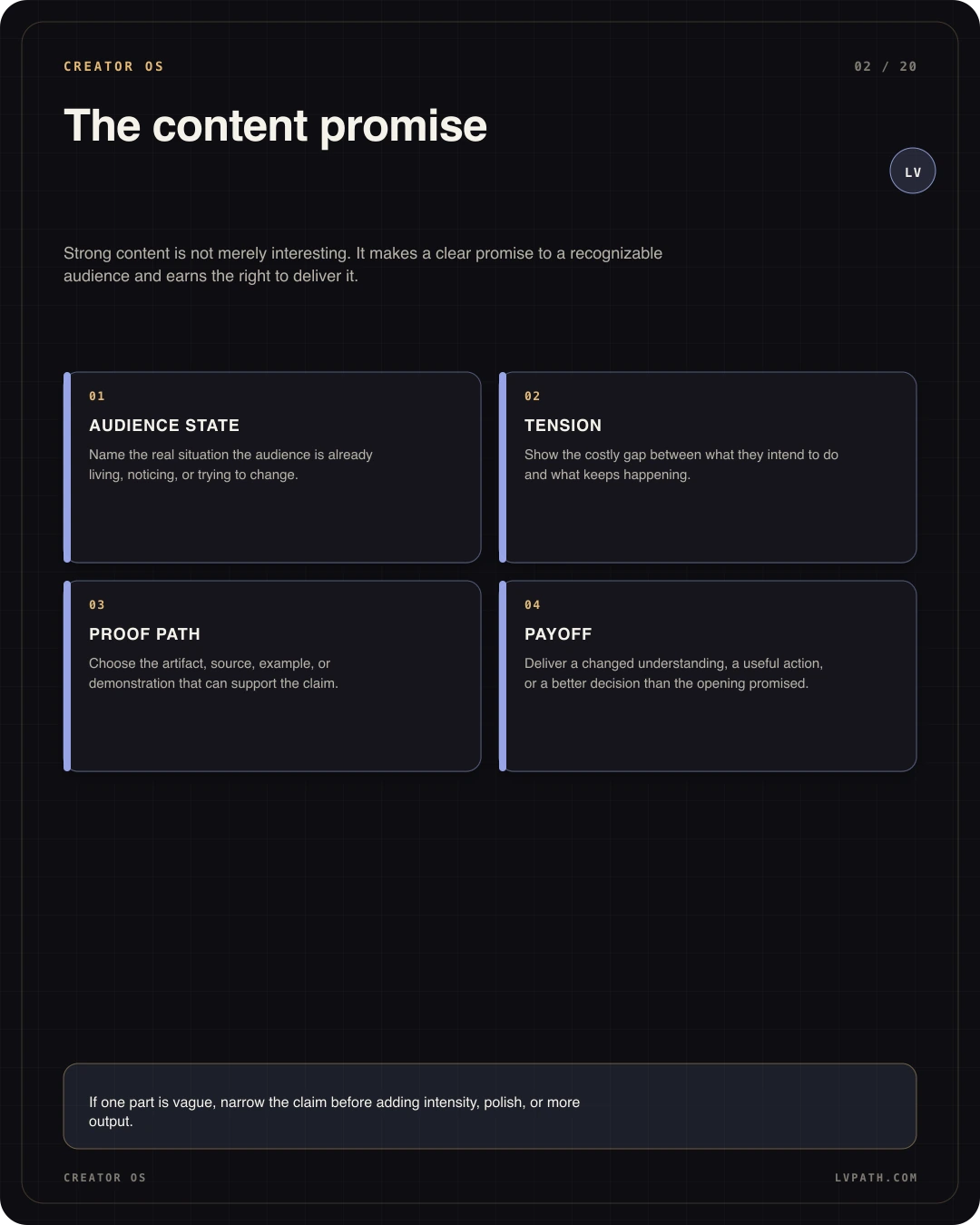
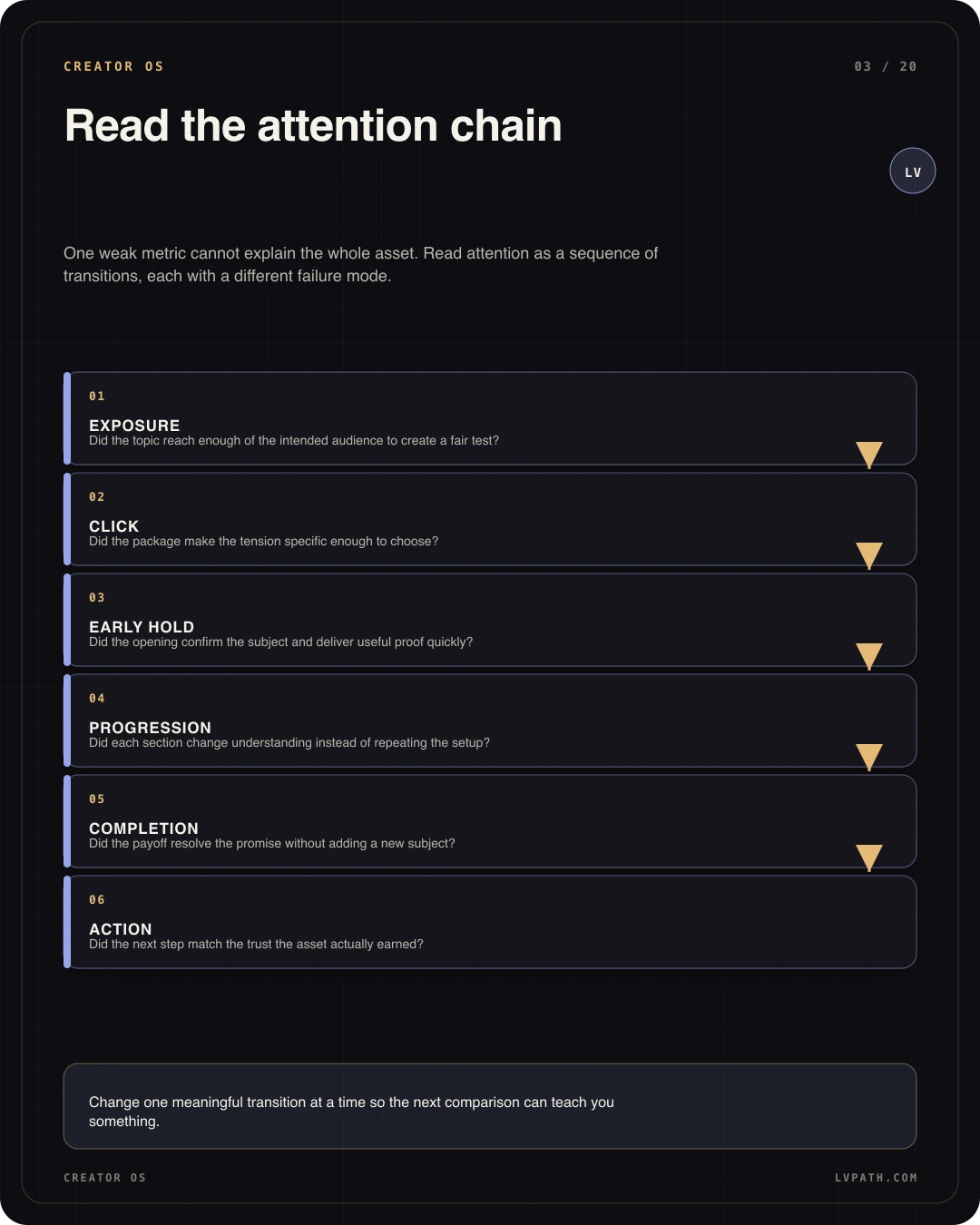
Every visual has a job: orientation, diagnosis, team explanation, or reference during execution. They are not filler decoration.
Visual world
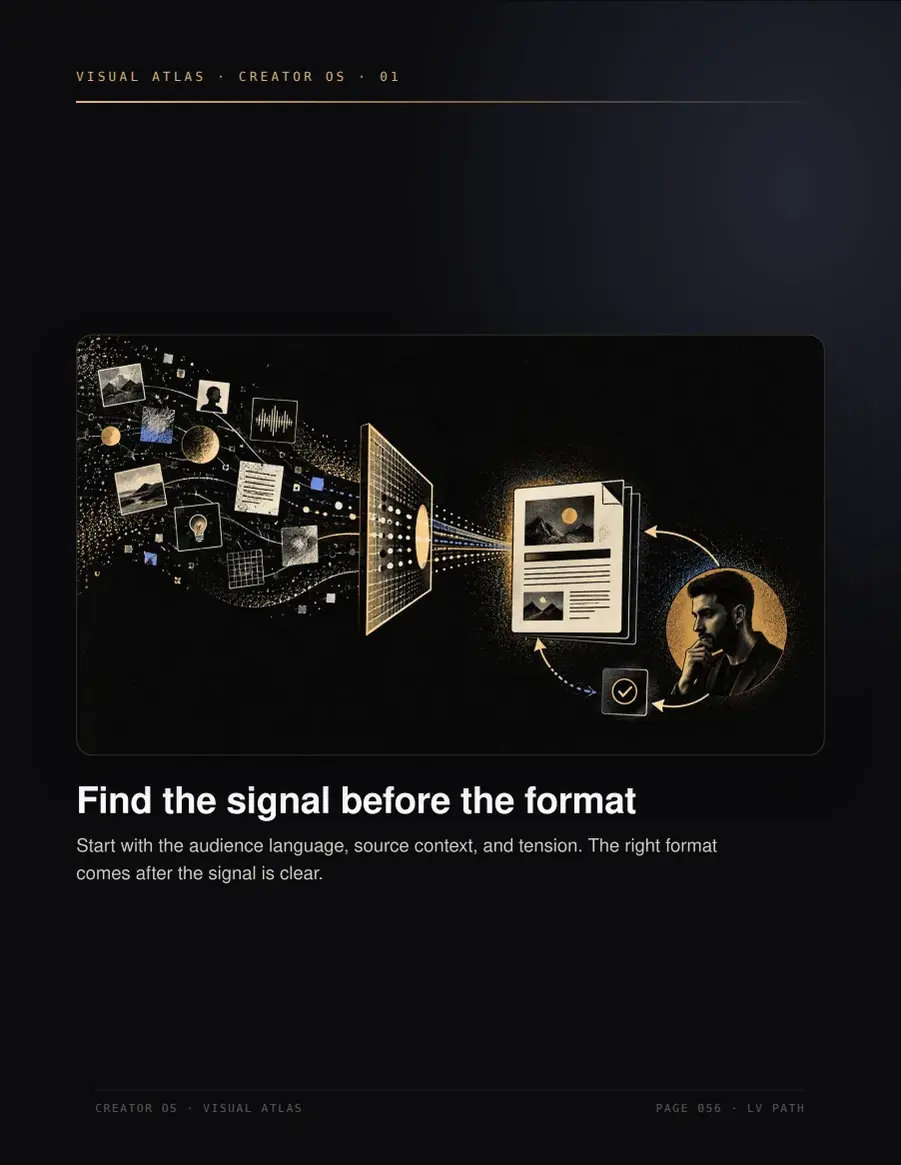
Motion, symbolic portraits, and section illustrations turn abstract concepts into signals the reader can recognize and remember.


Look inside
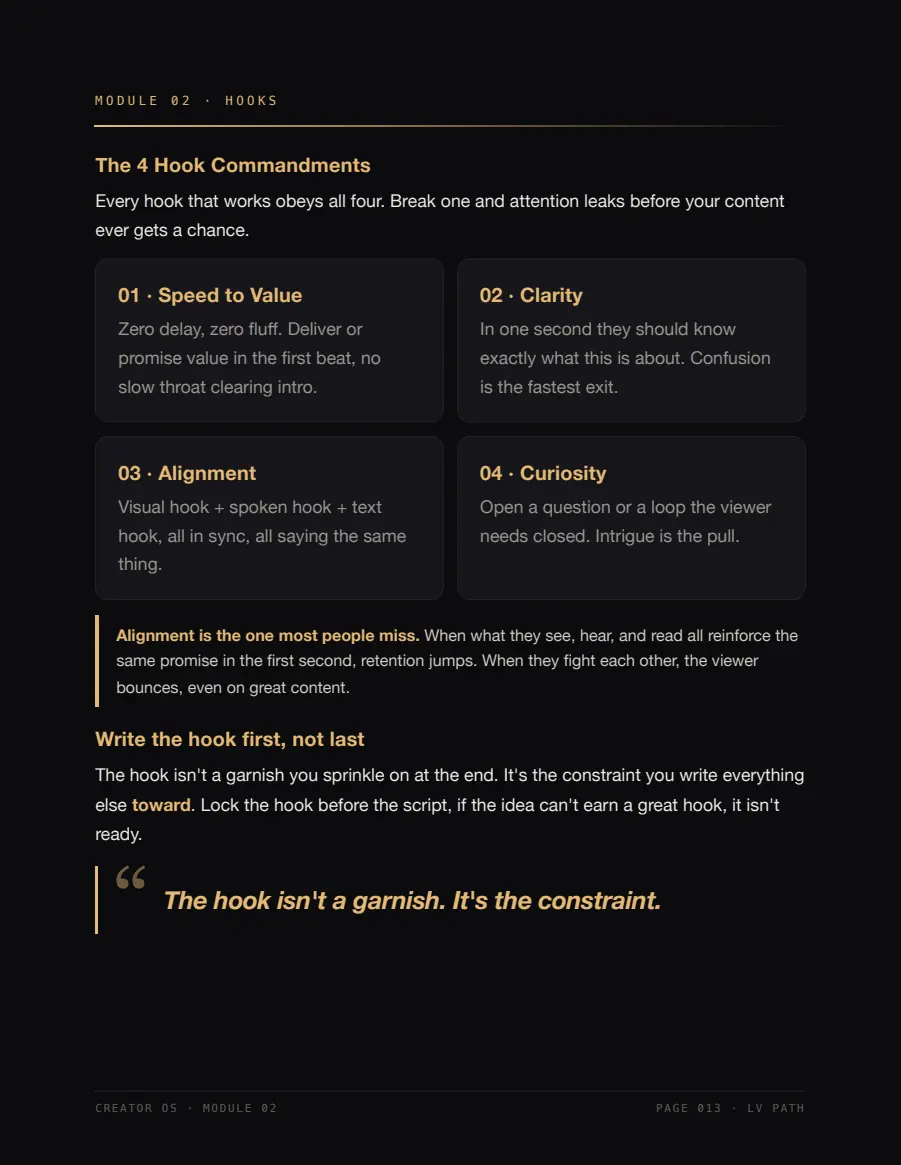
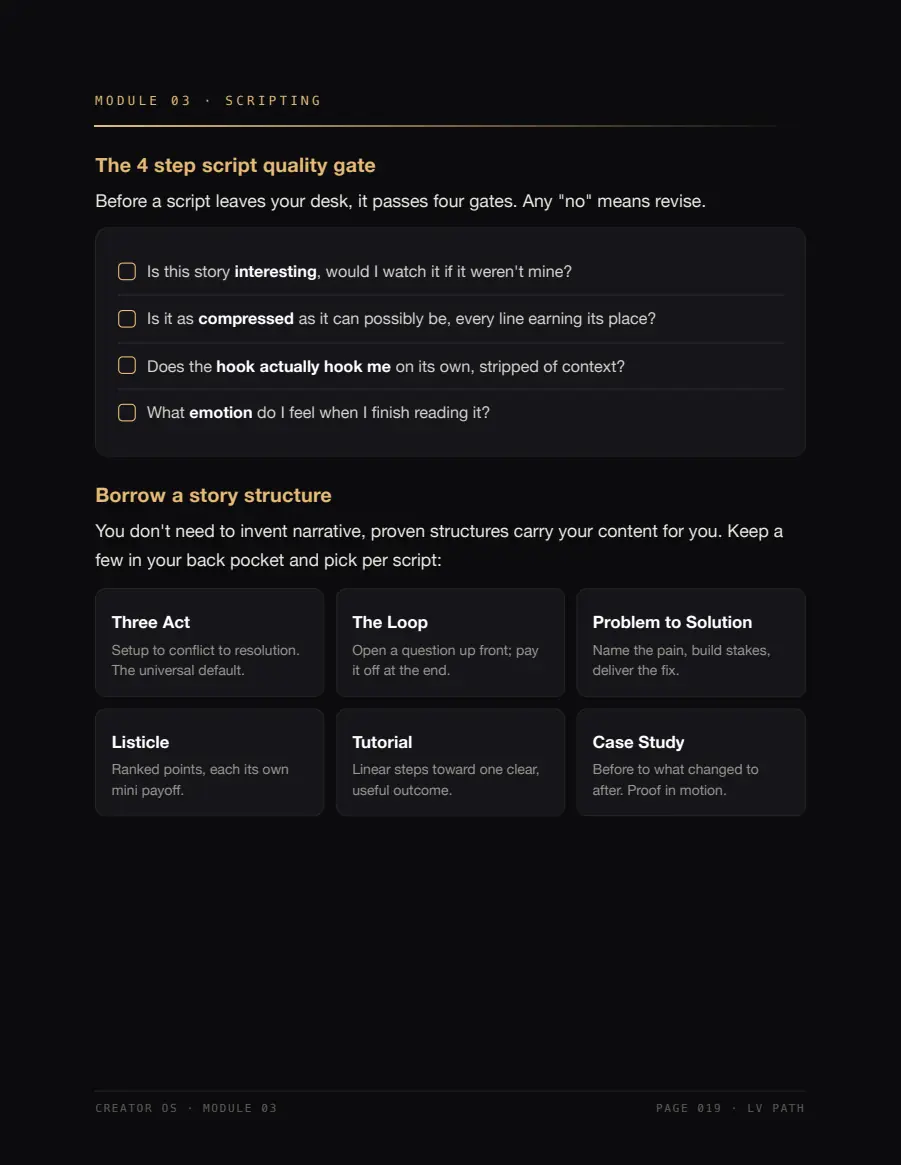
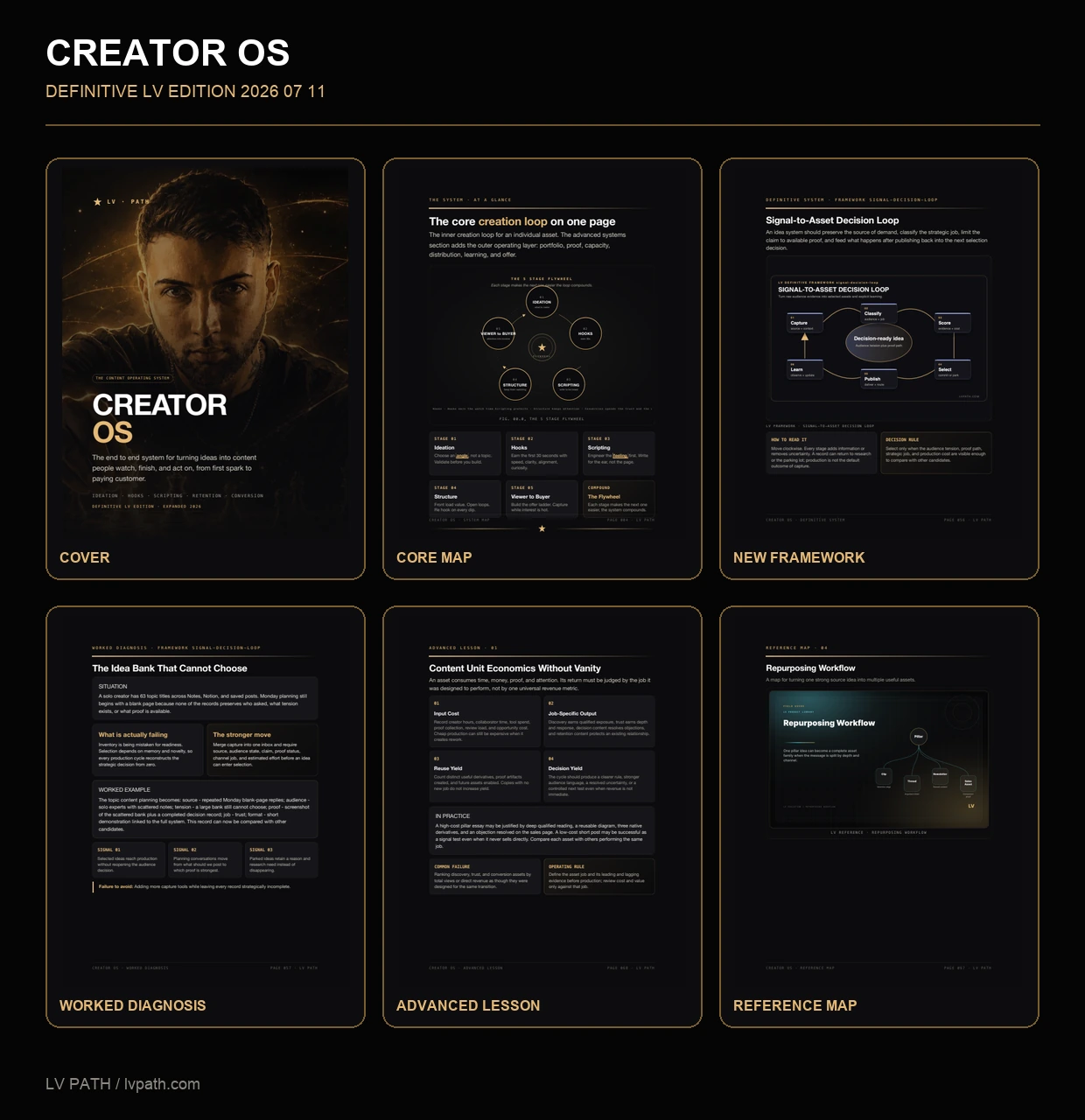
These are real product pages. The free preview shows the structure, voice, and depth so you do not have to buy blind.
Open the sample chapters now, or save the link to your inbox for later.
Open the free previewOr send it to your inbox
Choose by bottleneck
Questions before buying
No. Creator OS is a self-contained PDF product stack. Open it on any device, study the visual systems, and adapt the operating maps inside your own notes, docs, or content calendar.
No. The system covers any format, video, short-form, newsletters, threads. The frameworks adapt to whatever you publish.
No. It's built to run from your very first piece. Beginners get a clear path; experienced creators get a system to tighten what already works.
The value is immediate clarity, better structure, and a stronger review process for the next piece you publish. Performance still depends on your niche, offer, distribution, consistency, and audience fit.
No. It is a self paced product stack built around PDFs, examples, visual systems, prompts, and resource references. You can study it like a manual and apply it inside your own notes, content calendar, or production process.
Yes, for internal strategy, briefing, production, and review. It helps teams share language around hooks, scripts, retention, quality, and conversion. It is not a resale license or a public template library.
Yes. The prompts and review systems can support AI assisted ideation, drafting, rewriting, and repurposing. The core value is judgment: knowing what to ask for, what to reject, and what to improve before publishing.
Your next cycle
In 30 days you will have a weekly operating path, hook and script standards, a quality gate, and a rulebook that removes avoidable decisions.
$59 · one-time · digital download
Schedule a call
Initializing Secure Connection...