Skip to content

Storytelling Blueprint

Tell stories people remember

Turn useful but forgettable ideas into stories people understand, remember, and pass on.

USD 39.00 One payment · digital download

Read a free chapter
  • 122 pages
  • 10 chapters
  • 6 visual maps
  • 8 AI workflows

Already bought it? Download it again →

Make ideas memorable

This fits if…

Your information is useful, but the audience cannot picture it, remember it, or feel why it matters.

What you will work toward

A 30-day plan to build a reusable library of moments, structures, and proof that turns flat messages into memorable narratives.

Storytelling Blueprint in 74 seconds

The method, the book from the inside, and a real rewrite, in one short tour. Captions included.

Read chapter 05 for free

The whole chapter, as it appears in the book (pages 21–24).

Chapter 05 · The hook and the open

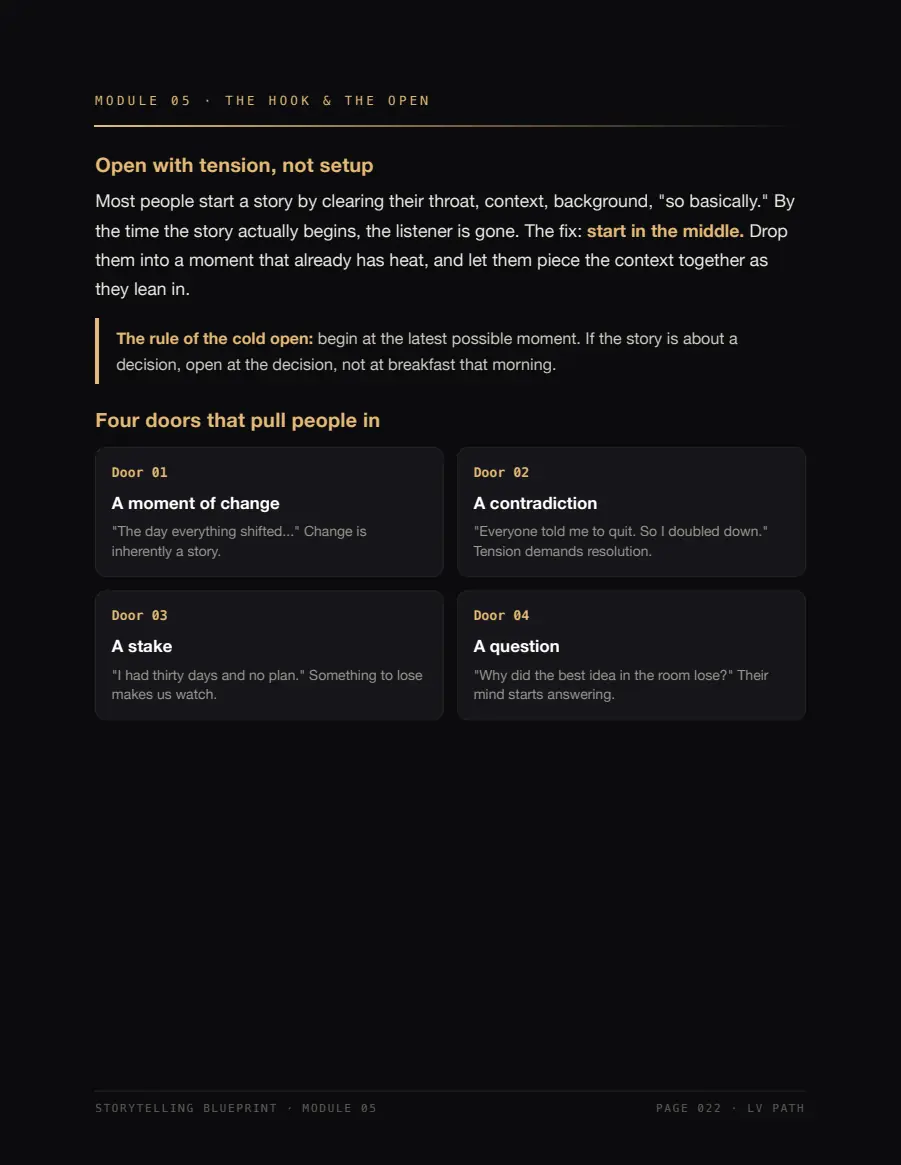
The first line is a door. If they don't open it, nothing you wrote behind it matters. Great stories don't begin, they drop you somewhere you have to understand.

Open with tension, not setup

Most people start a story by clearing their throat: context, background, "so basically." By the time the story actually begins, the listener is gone. The fix: start in the middle. Drop them into a moment that already has heat, and let them piece the context together as they lean in.

The rule of the cold open: begin at the latest possible moment. If the story is about a decision, open at the decision, not at breakfast that morning.

Read the full chapter

Four doors that pull people in

  1. A moment of change"The day everything shifted..." Change is inherently a story.
  2. A contradiction"Everyone told me to quit. So I doubled down." Tension demands resolution.
  3. A stake"I had thirty days and no plan." Something to lose makes us watch.
  4. A question"Why did the best idea in the room lose?" Their mind starts answering.

The promise inside the open

A great open does more than grab, it makes a quiet promise about where this is going and why it'll be worth the trip. The viewer agrees to stay because the door implied a room worth entering. Break that promise and they leave; keep it and they follow you anywhere.

Write the open last

You often don't know the sharpest way in until you know where the story lands. Draft the whole thing, find the real point, then go back and build an open that points straight at it. The best first line is usually hiding in your last paragraph.

Cut the run-up

After you've written the open, delete the first sentence. Then read it again. Nine times out of ten it's still strong, and now it starts even closer to the heat. Most openings are one or two sentences too early.
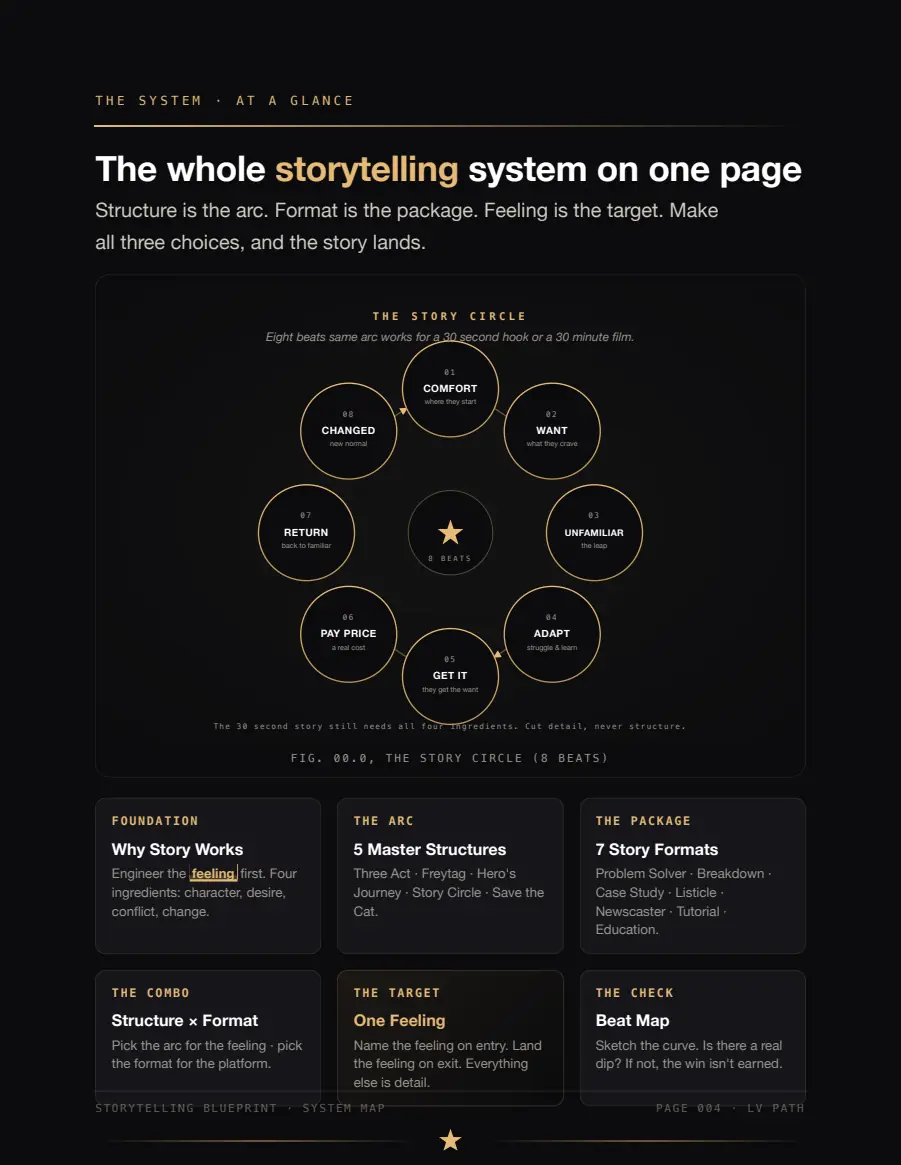
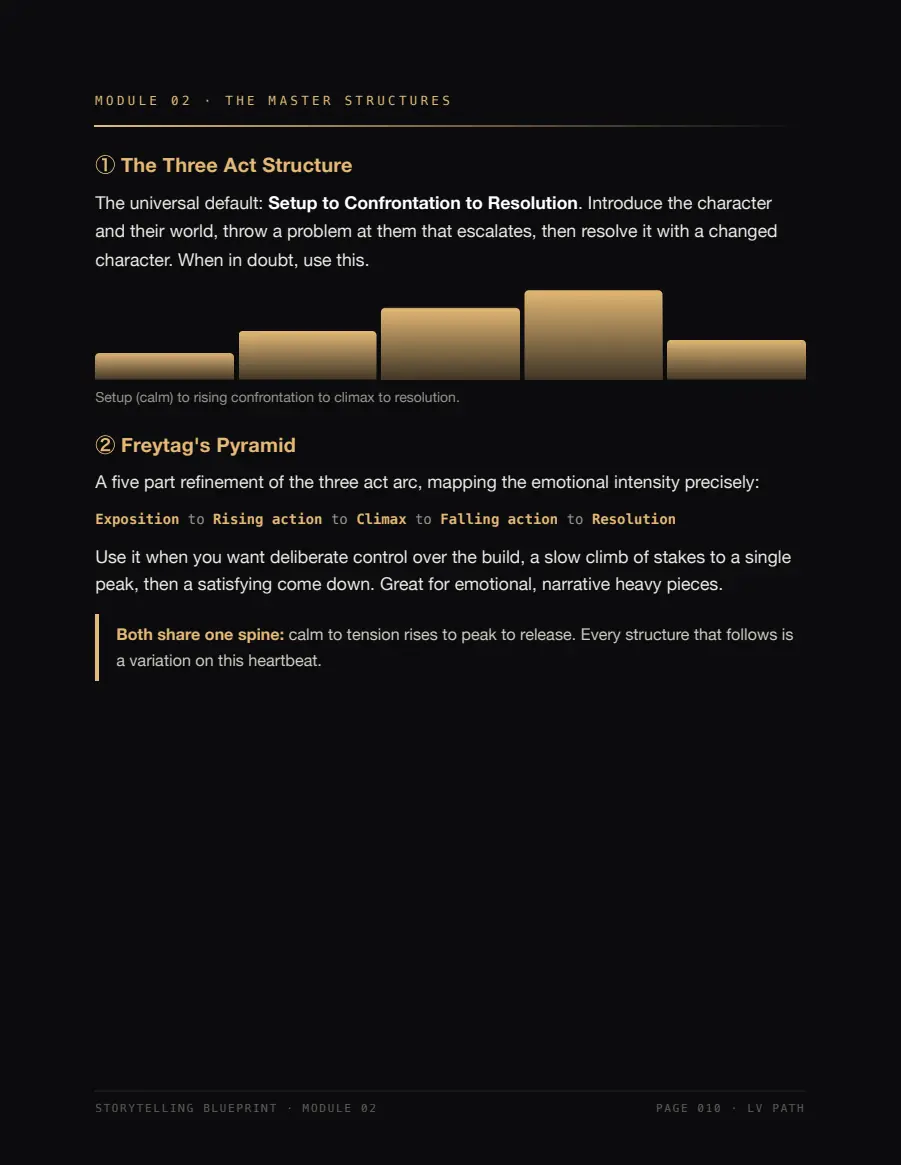
The book includes 10 chapters, plus examples, maps, and worksheets.

Examples from the book

Three before-and-after examples, with an explanation of each change.

  1. An opening that raises a questionp. 100

    Before

    Today I want to talk about audience quality.

    After

    The smallest video I posted that month created more buyers than the one with a million views.

    Why it works: It puts the audience inside a contradiction that demands resolution.

  2. A result with contextp. 101

    Before

    The client got ten calls after working with me.

    After

    Before, every post attracted curious strangers. After one positioning shift, the next ten calls came from buyers who already understood the offer.

    Why it works: It makes the before state, the mechanism, and the after state visible.

  3. A lesson people can rememberp. 102

    Before

    You should be more consistent.

    After

    Consistency is not motivation repeated. It is a calendar protecting the work before emotion gets a vote.

    Why it works: A memory line compresses the lesson into language the audience can carry.

Turn information into a moment worth remembering

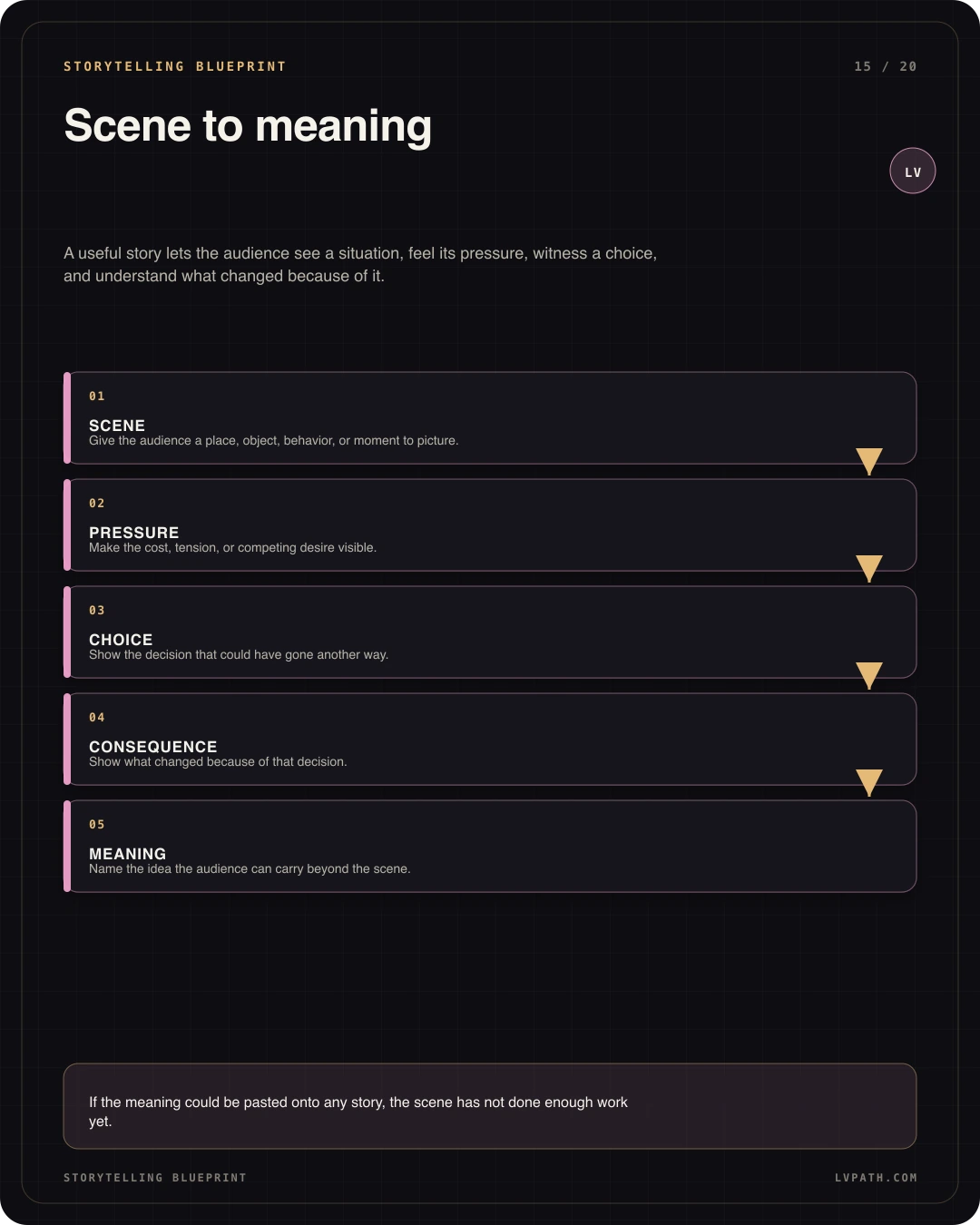
From a claim to a scene.

What each beat adds to the same example.

Open on a moment, not a benefit.

Make the cost visible in an ordinary scene.

Every Monday began with rebuilding the same plan.

Name the decision that changes it.

Connect the friction to a deliberate choice and what changes after.

The fix was one reusable operating path.

Show the mechanism.

Support the change with something concrete you can show.

Show the plan in use, not an unmeasured time-saving number.

Distill one line worth keeping.

Say what the scene means in one usable sentence.

Keep the useful decisions. Do not rebuild the plan.

Lead to a relevant action.

Invite the reader to apply the change they just understood.

Pick one repeated task. Save the decisions worth keeping.
How to apply it over 30 days
  1. Days 1-7

    Discover

    Audit stories and define the change the audience needs to see.

  2. Days 8-22

    Shape

    Choose structure, design beats, and rewrite flat explanations.

  3. Days 23-30

    Build the library

    Connect stories to offers and save reusable raw material.

What's in the book

Every chapter in one line, taken from the book itself.

Part I, The Foundations

  1. 01
    Why Story Works

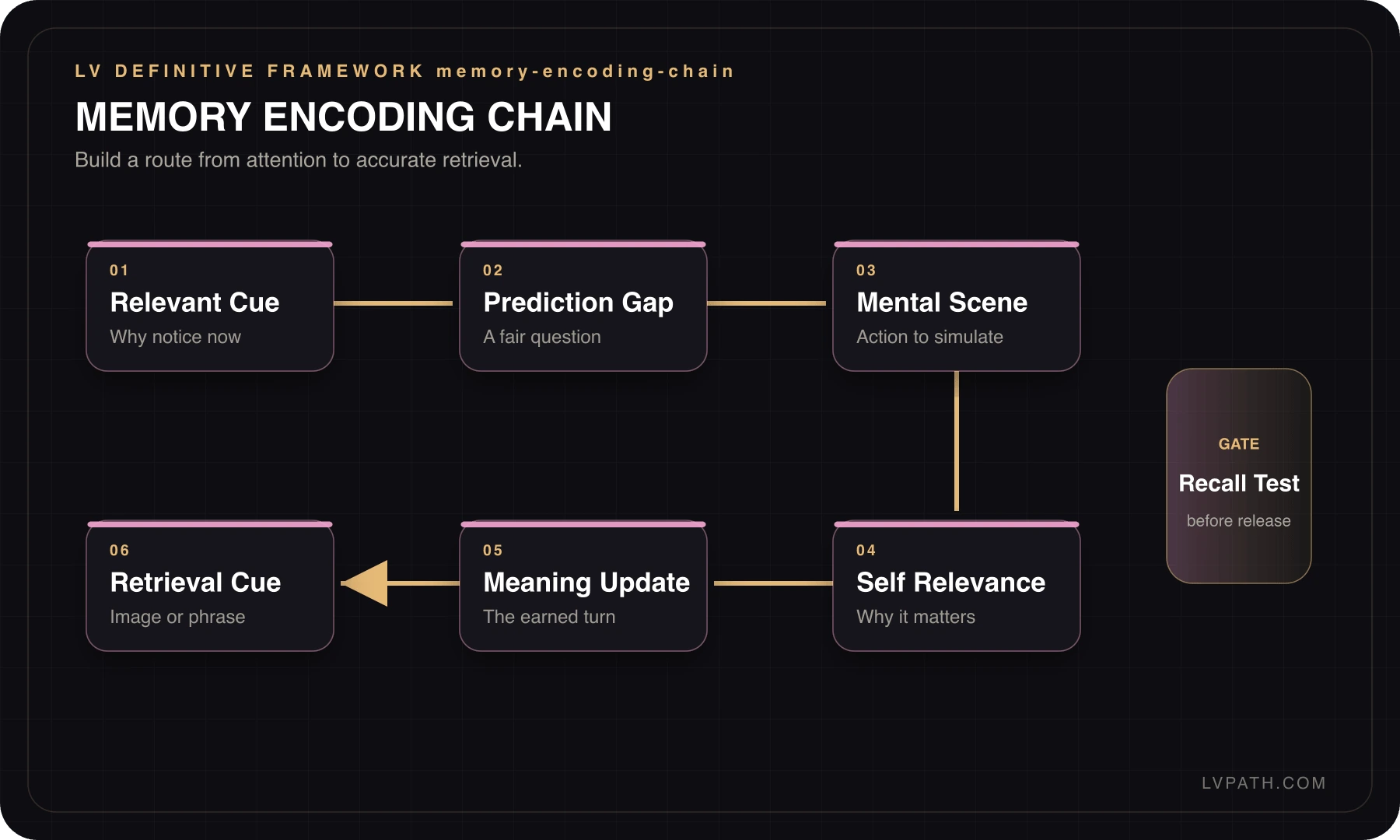
    Before structures and formats: the foundation. How prediction, mental simulation, self-relevance, and retrieval cues can make information easier to understand and remember.

    p. 5
  2. 02
    The Master Structures

    Five battle tested arcs that have carried stories for centuries, from a 30 second clip to a feature film. Learn them once; reach for the right one forever.

    p. 9
  3. 03
    Seven Narrative Jobs

    Structures are the arc. Formats are the package you pour it into, each with a plug and play outline you can complete today.

    p. 14
  4. 04
    Putting It Together

    The craft is the combination, choosing the right structure, pouring it into the right format, and aiming the whole thing at one feeling.

    p. 18

Part II, The Craft

  1. 05
    The Hook & The Open

    The first line is a door. If they don't open it, nothing you wrote behind it matters. Great stories don't begin, they drop you somewhere you have to understand.

    p. 21
  2. 06
    Character & Stakes

    We don't care about events. We care about people who could win or lose something. Without a character to root for and a stake worth fearing, even the most dramatic events are just things that happened.

    p. 25
  3. 07
    Tension & Pacing

    Tension is the engine; pacing is the throttle. A story without tension is a list of events. A story without pacing is a great idea told at the wrong speed. Master both and people can't look away.

    p. 29
  4. 08
    The Turn

    Every story worth telling has a turn, the moment something changes, a realization, a reversal. Without it, you don't have a story. You have an anecdote that stops instead of ends.

    p. 33
  5. 09
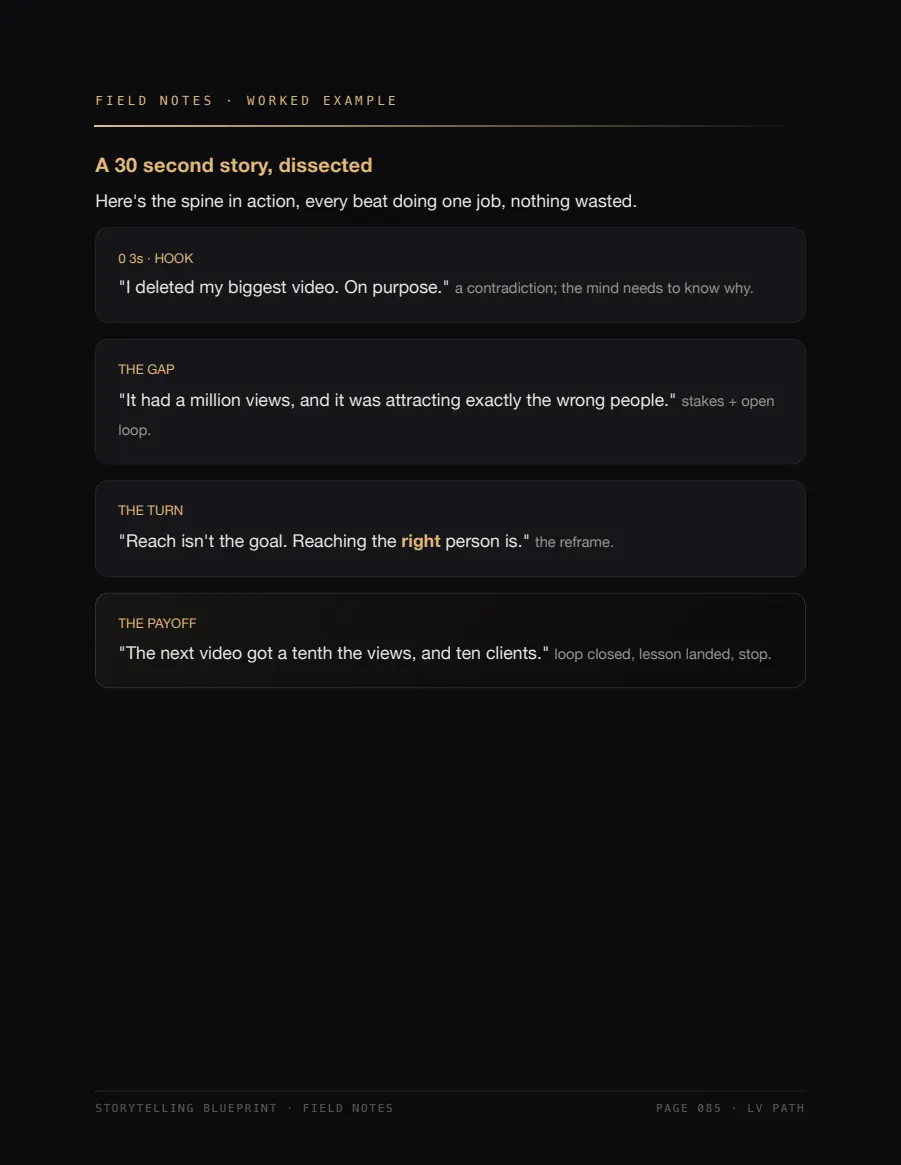
    Story in Short Form

    A full arc in thirty seconds. Short form doesn't mean less story, it means the same spine with every ounce of fat stripped away. The shorter the format, the sharper the structure has to be.

    p. 38
  6. 10
    Story That Sells

    A well-evidenced story can make an argument easier to understand by showing a buyer the situation, mechanism, and consequence. People don't buy the best option; they buy the one whose story they believe. Here's how to tell it without ever feeling salesy.

    p. 43

Then: advanced decision systems, case studies, before-and-after rewrites, reference maps, and an appendix with a quickstart and worksheets.

Inside the book

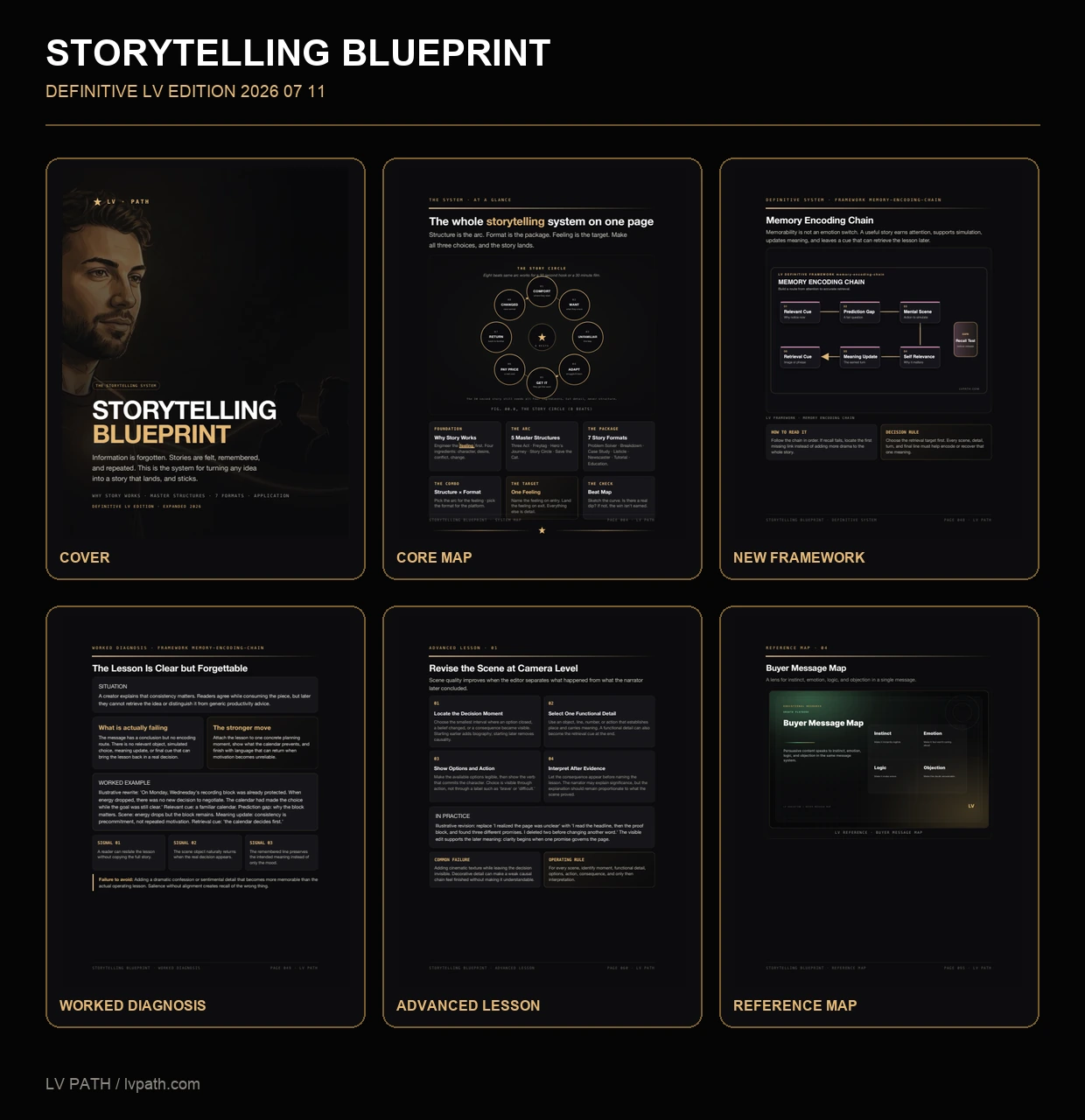
Real pages from the 122-page edition. Tap one to see it full size.

What's included

Storytelling Blueprint definitive reader edition

Main LV book

122 pages · PDF

The complete system, with explanations, examples, six visual frameworks, editorial plates, 6 educational infographics ready to share, and an appendix with a quickstart and printable worksheets.

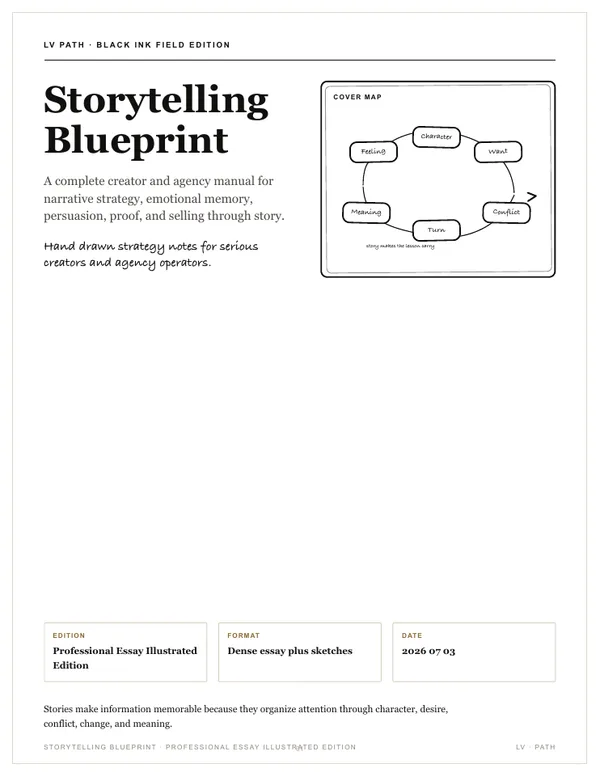
Storytelling Blueprint: Professional light edition, July 2026

Professional light edition

81 pages · PDF

The reference edition for focused study or print.

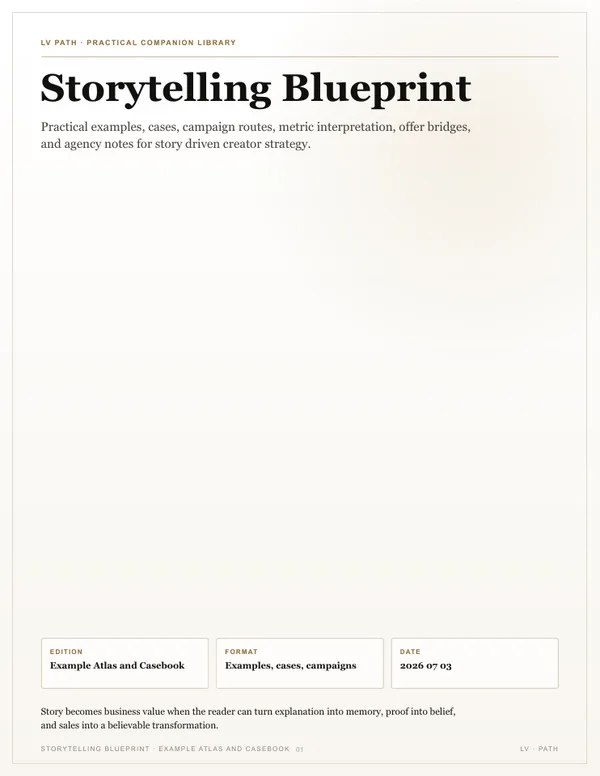
Storytelling Blueprint: Annotated casebook, July 2026

Annotated casebook

55 pages · PDF

Educational cases with diagnosis, decisions, and review.

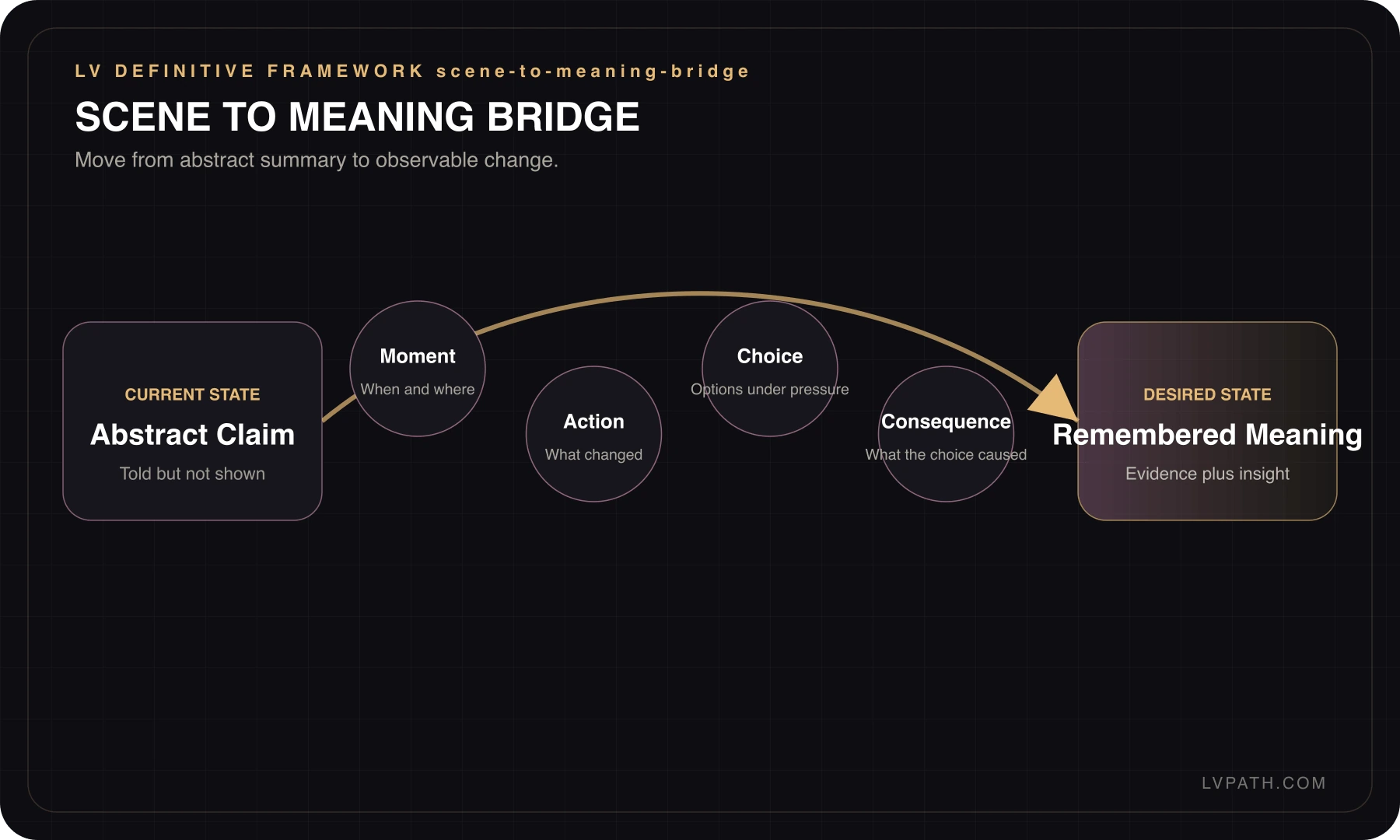
Six visual maps

SVG + PNG

Diagrams for reference and explaining the method.

Eight AI workflows

Markdown

Inputs, review criteria, and boundaries for each workflow.

Example library

CSV

Completed comparisons to inform your own decisions.

Editable workbook

XLSX

An optional tool for documenting and reviewing your work.

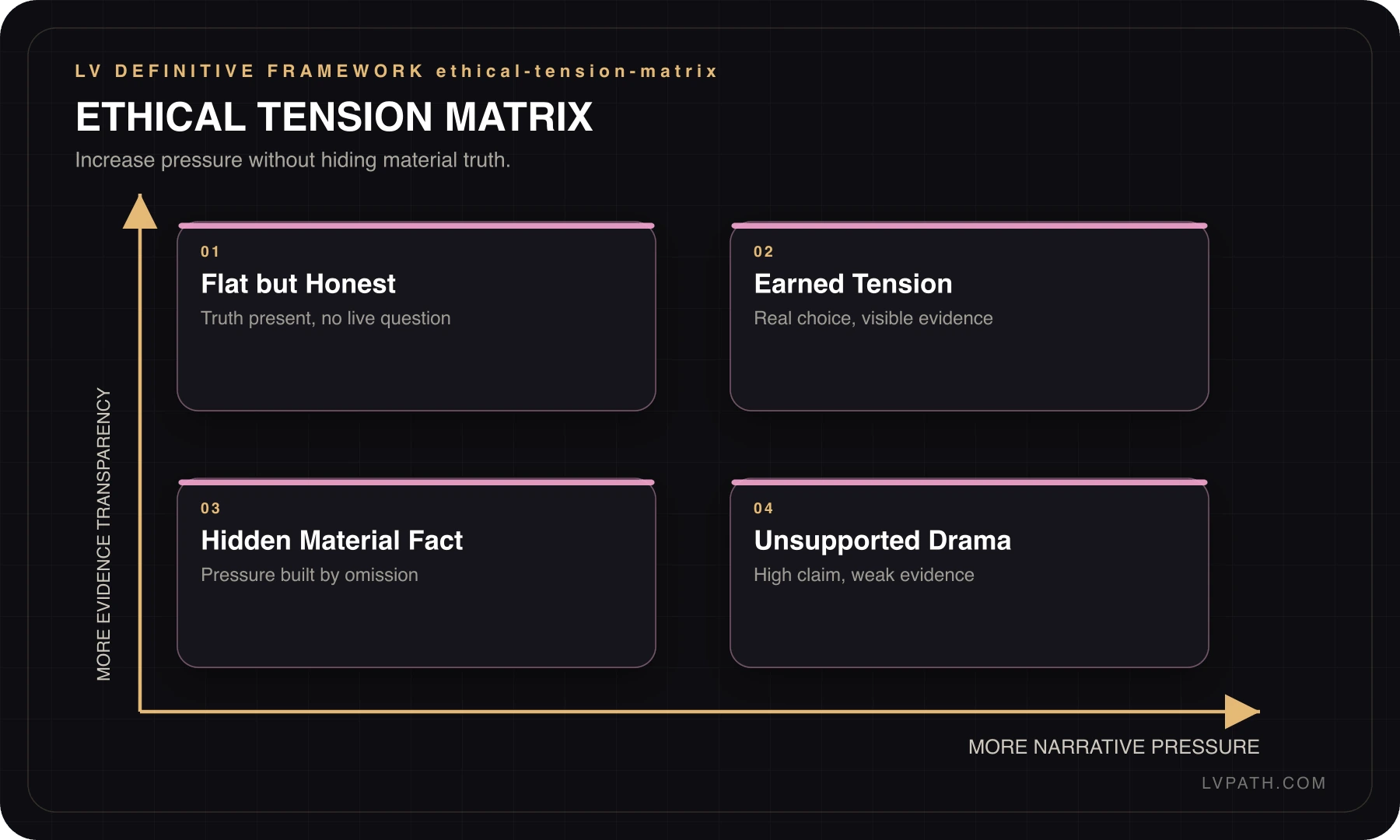
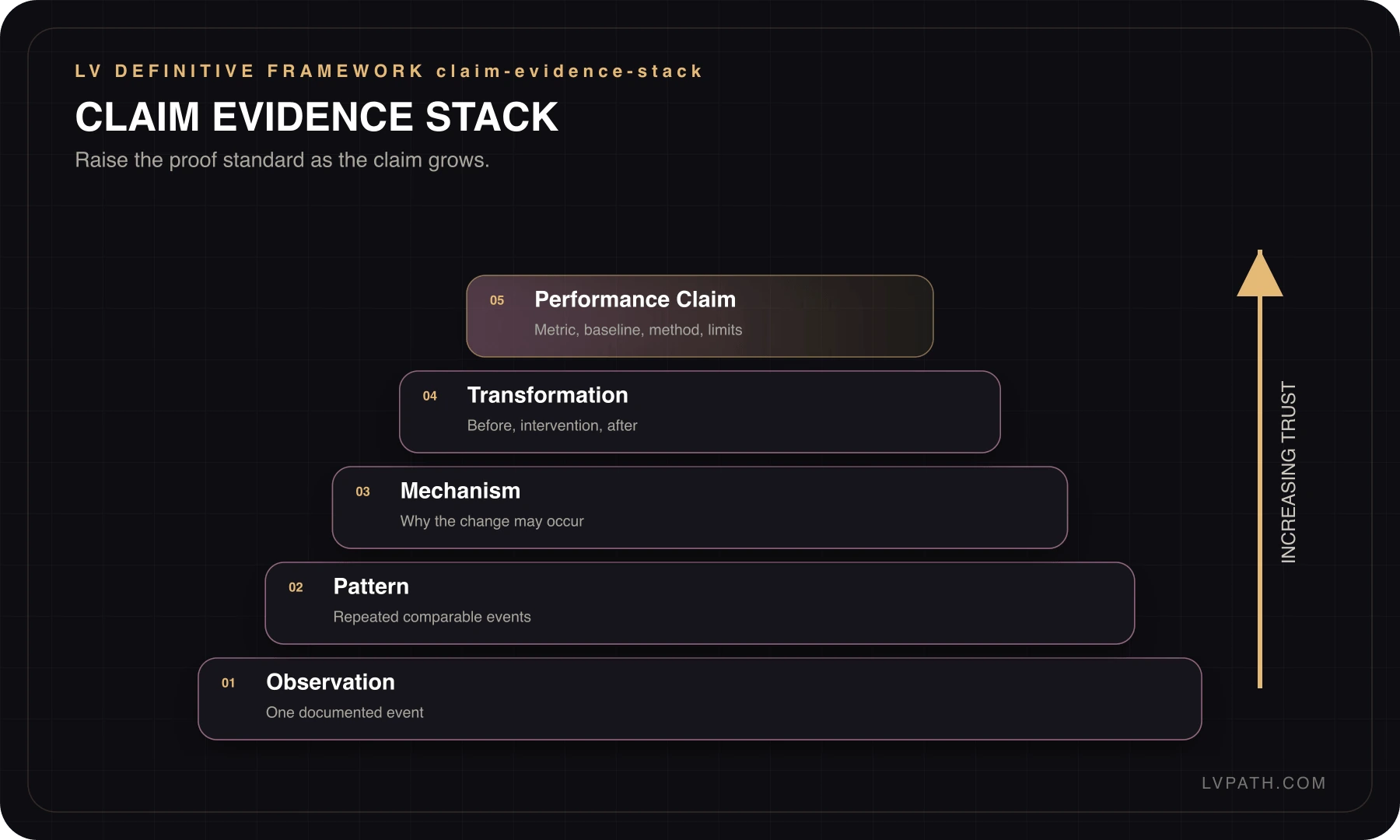
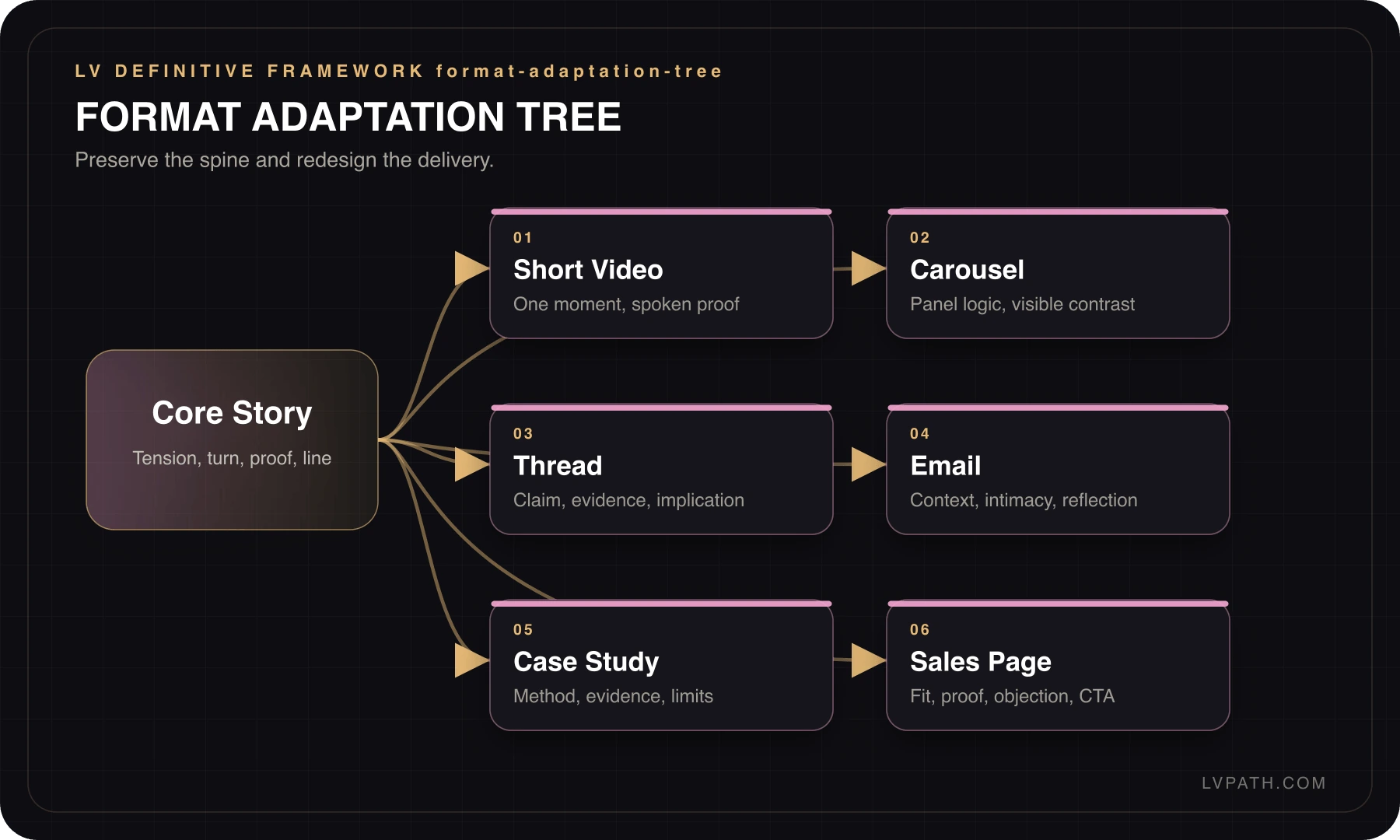
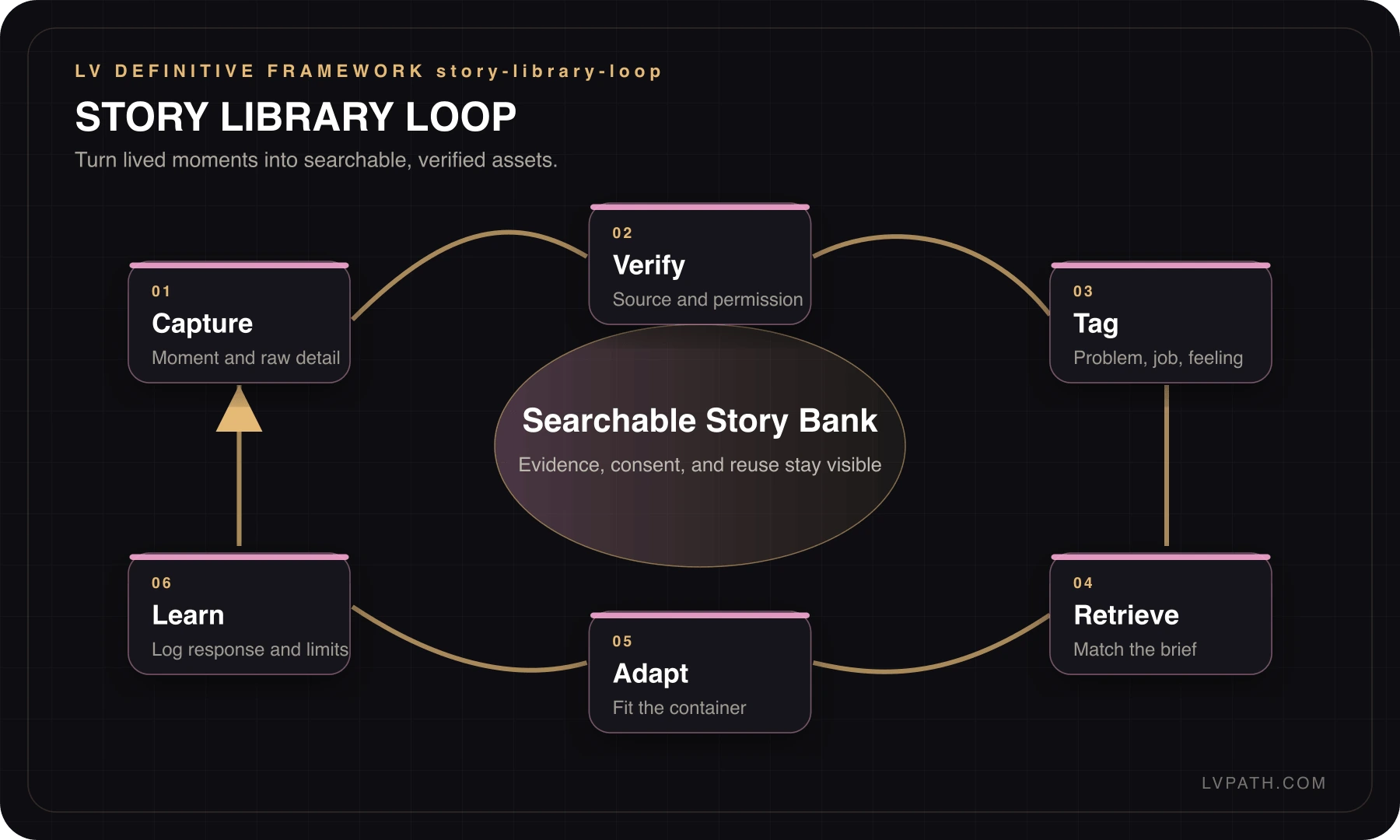
Open the six visual maps

Download and keep your edition. See the policy for how updates are released. Update policy ↗

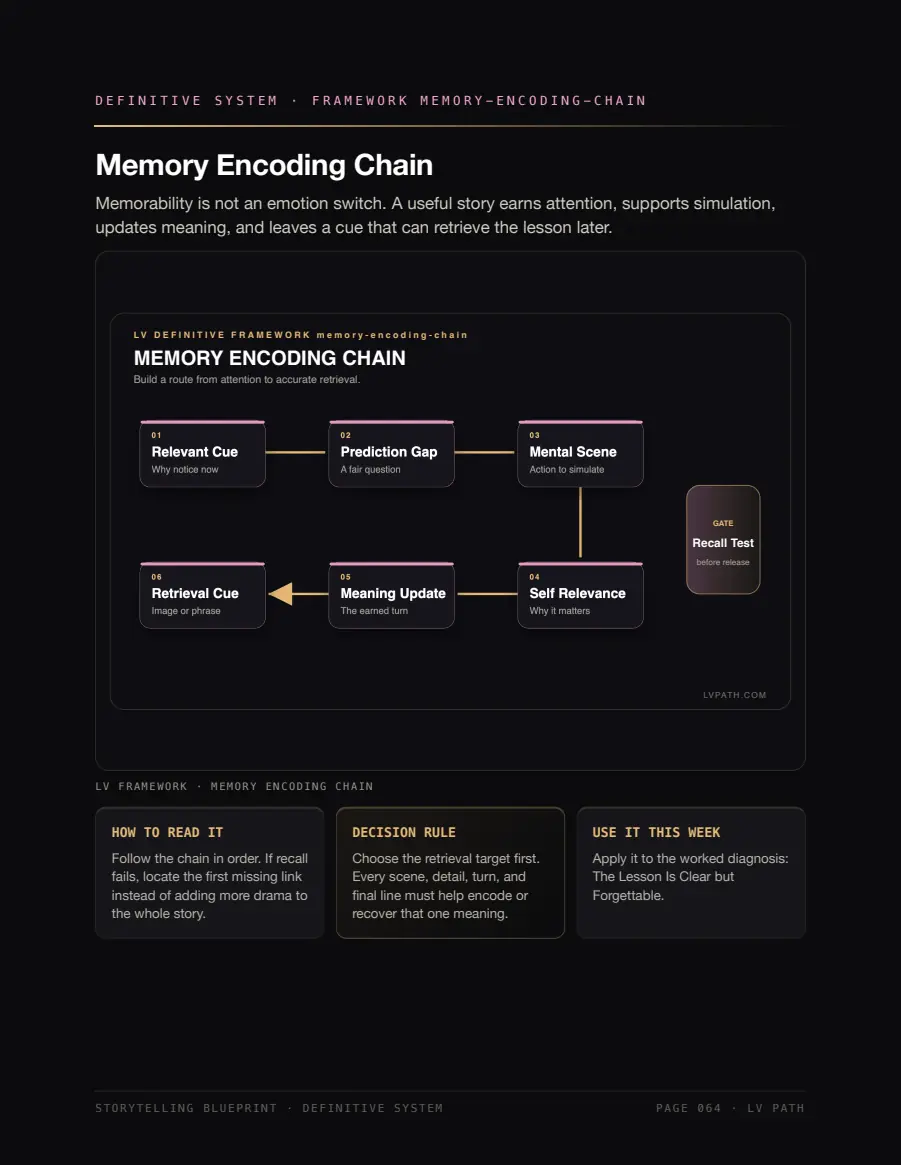
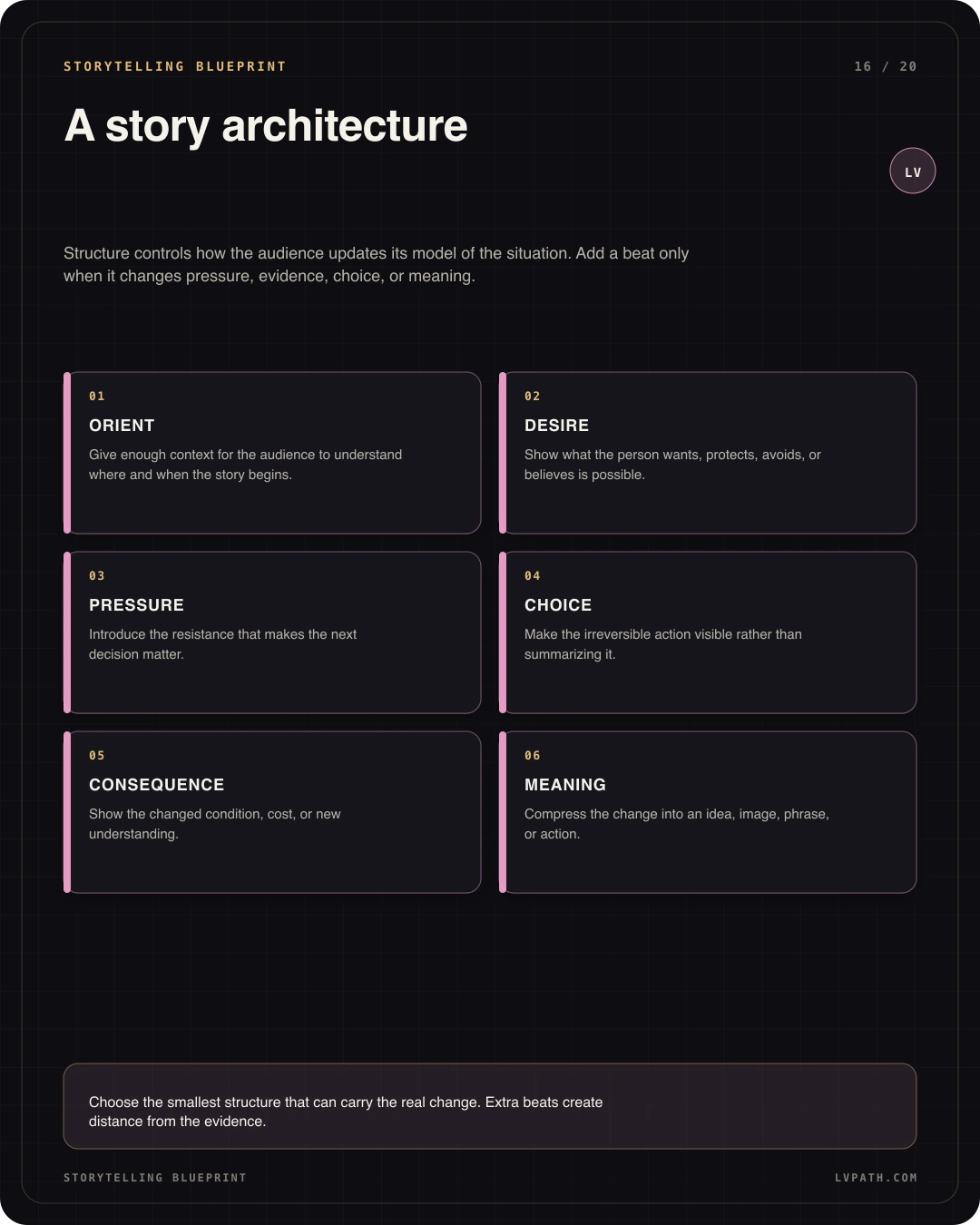
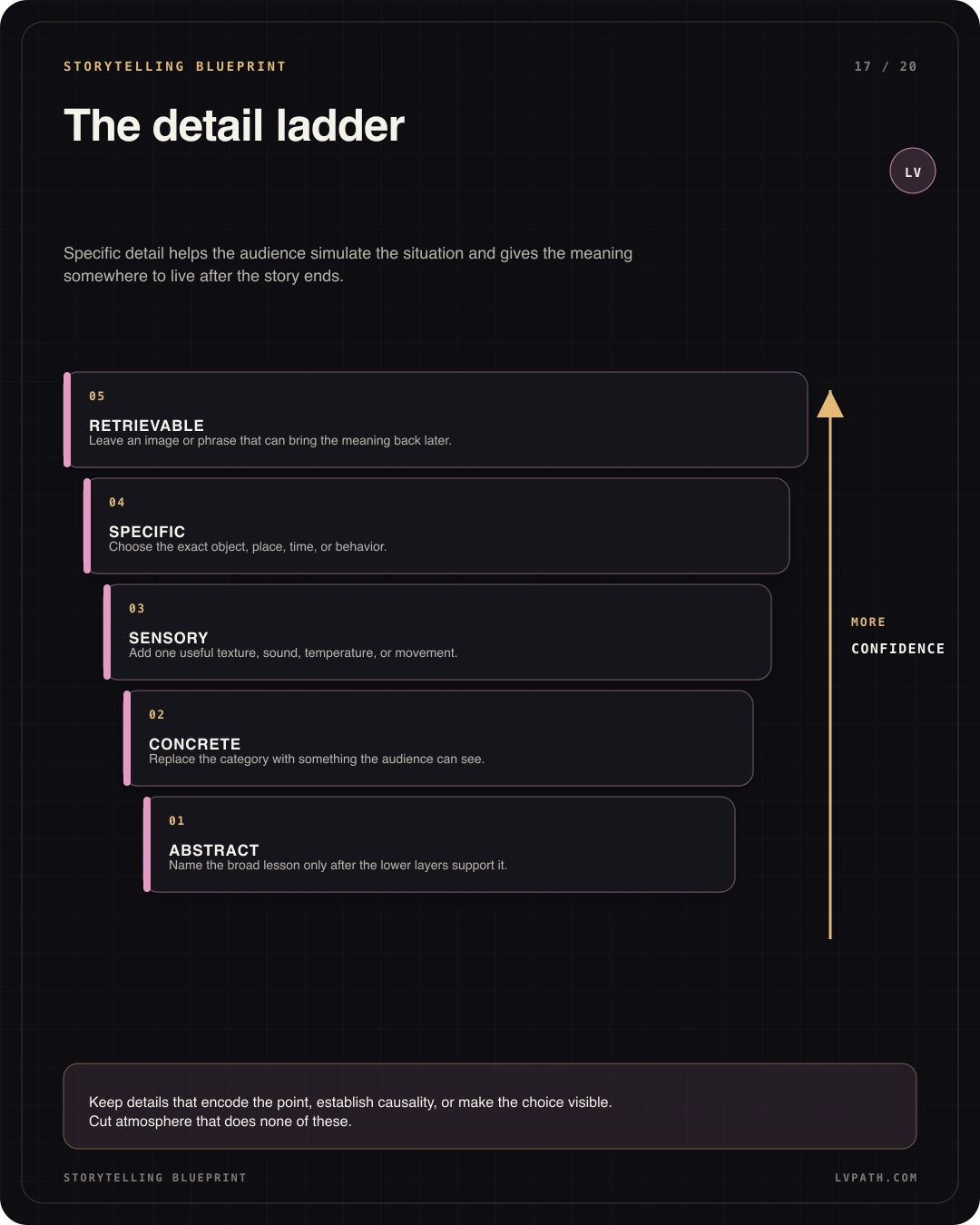
Diagrams from the book

Open a diagram to view it at full size.

LV

Who wrote it

I'm LV. I've spent more than ten years making content in English and Spanish, and helping others turn what they know into an audience and a business. Storytelling Blueprint is what I do every week, written down so you can do it too.

  • 10+years creating
  • 100K+subscribers
  • 50M+views
More about LV ↗

Questions before deciding

Do I need to be a 'creative' for this?

No. Storytelling is a set of structures. The blueprint gives you arcs, formats, and emotional maps so you can build stories with a system instead of waiting for inspiration.

Does this work for short-form too?

Yes. Every structure scales, the same arc works for a 30-second clip and a 30-minute video. You just compress or expand the beats.

Is this only for video?

No. The structures and formats apply to video, writing, threads, talks, and pitches, anywhere you need an idea to land and be remembered.

What format is it?

A book-first digital product: a 122-page LV edition, an 81-page professional light edition, a 55-page casebook, six visual decision frameworks, AI workflows, a completed example library, and an optional XLSX workbook.

Does this work for business content?

Yes. The framework is useful for founder stories, product education, sales narratives, content marketing, talks, pitches, and newsletters. It helps make business ideas easier to understand without turning them into empty entertainment.

Is this just a script template pack?

No. It includes structures, emotional maps, rewrites, examples, editing logic, and prompts. Templates can help, but the main value is understanding why a story works and how to reshape a flat idea.

Can agencies use this for client messaging?

Yes, as an internal strategy and training reference. It can support story audits, campaign messaging, hook development, and brand narrative work. It is not licensed for resale or public redistribution.

What happens after I buy?

You get a download link by email right away: the book, the light edition, the casebook, the maps, the AI workflows, the example library, and the workbook in one ZIP. You can download it again at any time.

Can I get a refund?

Because the files download immediately, sales are final. If a file is broken or the download doesn't work, write in and you'll get a working copy or your money back. Read a free chapter and the PDF sample first so you know exactly what you are buying.

Is it in Spanish?

The book is in English. The product pages, the free chapter notes, and support are available in Spanish.

Do I get updates?

You keep the edition you buy. When a new edition is released, buyers are told how to get it; the update policy explains what is included.

Ask LV about Storytelling Blueprint AI grounded in LV's published work

Is a different problem holding you back?

Use it on your next piece

Rewrite one idea with a clear scene, a decision, and a change people can picture.

USD 39.00 One payment · digital download

Want all three books? View the bundle · USD 119.00 · Save USD 28.00.

Open in new tab ↗