My take
The operating manual for any creator or builder: you don't grow an audience event by event, you design the system that compounds.
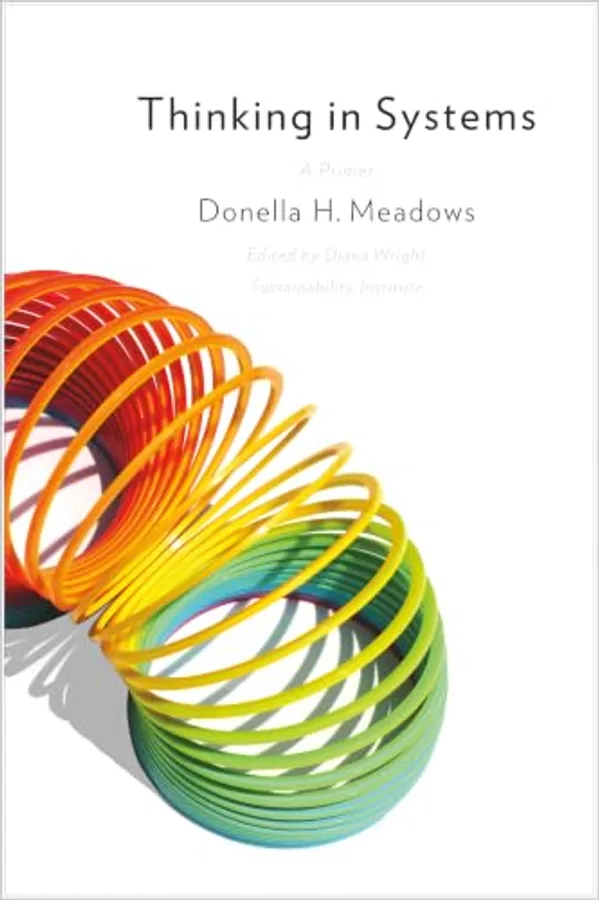
What is Thinking in Systems about?
Behavior emerges from structure: leverage points, feedback loops, and delays govern every system.
Who should read Thinking in Systems?
Builders, growth strategists, and anyone tired of treating symptoms.
Key ideas from Thinking in Systems
- Find the leverage point
- Structure drives behavior
- Beware delays and feedback loops.
Is Thinking in Systems worth reading?
Turns 'why does this keep happening?' into a map you can actually redesign.
Best for
Builders and strategists whose problems keep coming back no matter how well they execute.
Not ideal for
Readers wanting quick frameworks, the book teaches a discipline, not a checklist.
What materially matters
- The stocks-flows-feedback vocabulary that makes system behavior describable.
- Meadows' ladder of leverage points, from parameters all the way to paradigms.
- Delays as the most misunderstood structure in every growth system.
Practical use cases
- Map your content engine as stocks and flows before optimizing any single output.
- Find the delay: most 'it's not working' panics are measurement lags, not strategy failures.
Pros
- A systems textbook readable in an afternoon, with humor.
- Examples span economics, ecology, and organizations, transfer is easy.
Limitations
- Finished posthumously; some chapters read as drafts.
- The modeling notation can slow non-technical readers early on.
Thinking in Systems FAQ
Do I need math for this book?
No, the arithmetic is deliberately simple; the discipline is seeing structures, not solving equations.
How is it different from other decision books?
It models situations, not choices, the unit of analysis is the loop, not the decision.
Continue · Strategy