My take
Most of what you call a gut feeling is System 1 running on heuristics, fast, confident, and often wrong. Knowing which system is driving your decision is the meta-skill.
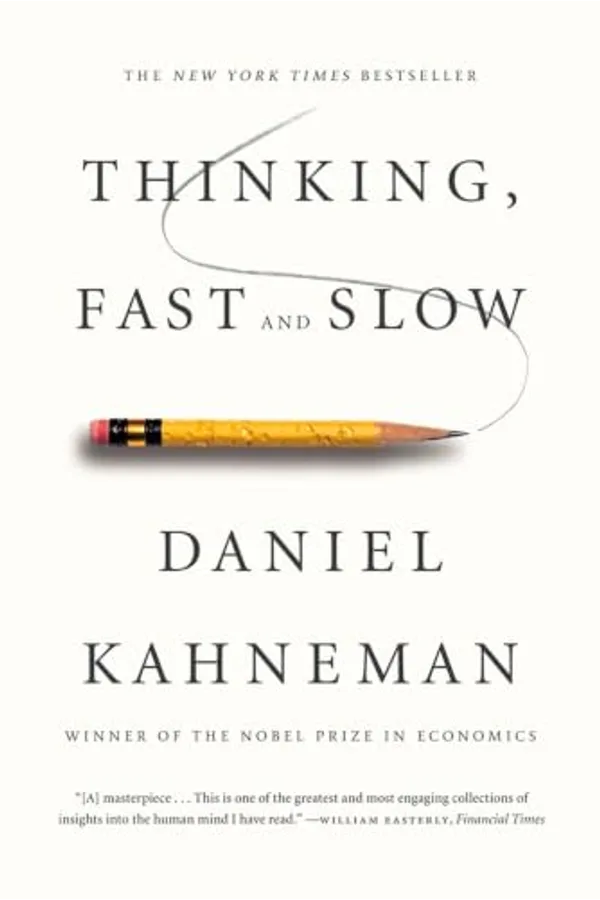
What is Thinking, Fast and Slow about?
The mind operates via two systems, fast intuitive thinking and slow rational analysis, and understanding their interplay is the key to better decisions.
Who should read Thinking, Fast and Slow?
Creators, founders, and strategists who make high-stakes decisions on incomplete information.
Key ideas from Thinking, Fast and Slow
- We are biologically wired to jump to conclusions
- Anchoring, loss aversion, and overconfidence are not bugs but features of human cognition
- The best decisions slow down System 1.
Is Thinking, Fast and Slow worth reading?
Gives you a diagnostic toolkit for your own cognitive blind spots, the foundation underneath every other decision-making book.
Best for
Anyone making consequential calls under uncertainty who wants the machinery, not just the vocabulary.
Not ideal for
Skimmers, this is a long, dense book, and the skimmed version is worse than the summary articles it spawned.
What materially matters
- System 1 / System 2, the shared vocabulary for intuition versus deliberation.
- The canonical experiments: anchoring, availability, loss aversion, planning fallacy.
- Two selves, the experiencing self versus the remembering self, and what that does to how you judge a year.
Practical use cases
- Design your own decision checklist against the named biases before a pricing or positioning call.
- Audit your research inputs: what does your feed make feel available, and therefore true?
Pros
- Decades of primary research, told with humility and charm.
- The reference every later decision book cites; read it and the others sharpen.
Limitations
- Some priming studies failed replication after publication, read with the updates in mind.
- Long and repetitive by the standards of the genre.
Thinking, Fast and Slow FAQ
Is it still credible given the replication crisis?
The core heuristics held up; the priming chapter aged worst, read it knowing that.
Book or summary?
The book; the summaries inherit the vocabulary but not the evidence, which is the actual value.
Continue · Strategy