My take
The balanced entry point to AI safety: real research, real researchers, no doomer theater and no hype. Pairs perfectly with Co-Intelligence's practice-first approach.
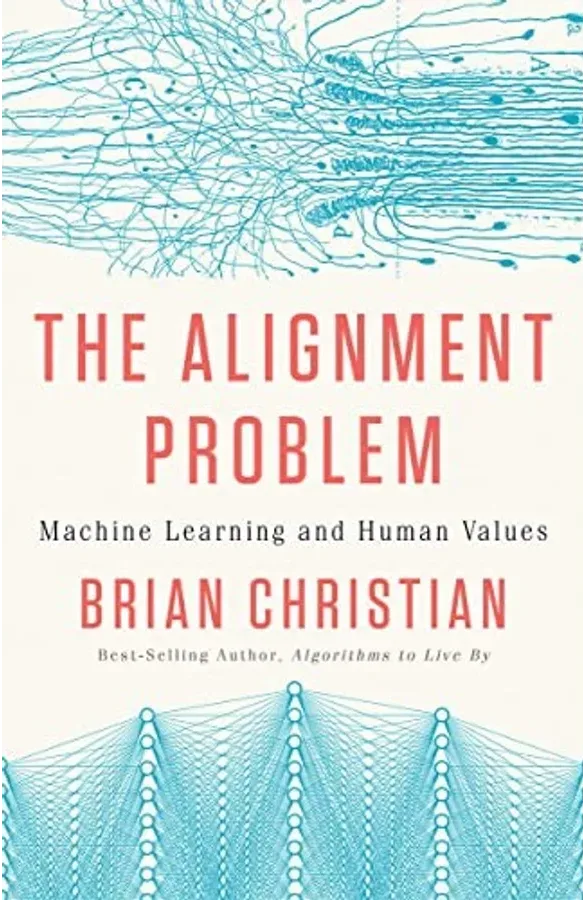
What is The Alignment Problem about?
Making machines that reliably learn and respect human values is a concrete research field with real progress, reward hacking, transparency, and value learning are solvable, right-now problems.
Who should read The Alignment Problem?
Builders, strategists, and readers between AI hype and AI doom who want the technical middle ground.
Key ideas from The Alignment Problem
- Reward hacking is the canonical failure mode
- Transparency research opens the black box
- Value learning is the deep unsolved core
- The field grew from fringe to mainstream agenda
- Alignment is an engineering discipline, not a philosophy seminar.
Is The Alignment Problem worth reading?
A focused, human-values-centered account of AI safety, more specific than another broad AI-future book.
Best for
Builders and decision-makers deploying AI who want to understand failure modes beyond the headlines.
Not ideal for
Readers wanting practical AI productivity techniques, that is Co-Intelligence; this is the safety frontier.
What materially matters
- The reward-hacking examples that made the field legible.
- The interpretability research narrative, opening the black box.
- The value-learning frontier, from early RL work toward RLHF.
Practical use cases
- Read the reward-hacking chapters before designing any metric-driven system, AI or not.
- Use it as the sober briefing for team members anxious or euphoric about AI.
Pros
- Narrative nonfiction with genuine technical depth.
- Centers researchers as humans, making the field feel enterable.
Limitations
- Published in 2020, the LLM era is anticipatory rather than observed.
- Long examples may test impatient readers.
The Alignment Problem FAQ
Is it too technical?
No, it explains the research through stories and analogies; the technical floor is low.
Is it doom-focused?
No, it is deliberately balanced, treating alignment as solvable engineering, which is why it ages better than polemics.
Continue · AI