My take
An oral history preserves how researchers and company leaders described a fast-moving field at the time. Their accounts are informative, but they remain perspectives that should be checked against later evidence.
What is The Scaling Era: An Oral History of AI, 2019–2025 about?
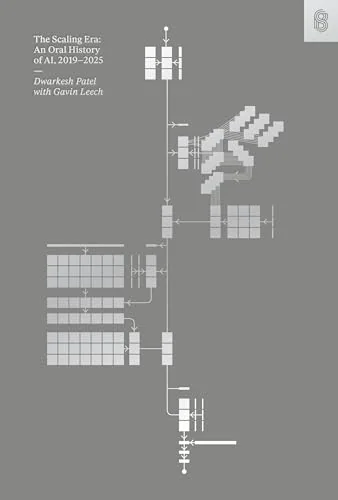
Patel and Leech assemble interviews about the development of AI from 2019 to 2025, alongside explanations, definitions, and visual material. The book records technical debates and personal accounts from people involved in the field.
Who should read The Scaling Era: An Oral History of AI, 2019–2025?
Readers who want context on recent AI research and companies, especially those ready to compare expert accounts and follow their sources.
Key ideas from The Scaling Era: An Oral History of AI, 2019–2025
- Separate an interviewee’s account from established evidence
- Compare different explanations of model progress
- Treat forecasts as claims made at a particular time
Is The Scaling Era: An Oral History of AI, 2019–2025 worth reading?
AI debates often collapse technical history, forecasts, and business interests into one story. A dated collection of interviews gives readers material to compare, while making it clear that the field continued to change after 2025.
Best for
Readers studying AI research history, scaling arguments, industry decisions, and the way experts explain their work.
Not ideal for
Anyone seeking a current technical manual, a neutral transcript of every side, or a dependable guide to what will happen next.
What materially matters
- Interviews with researchers and company leaders
- A dated account of AI development through 2025
- Definitions and visual explanations of technical ideas
Practical use cases
- Trace how explanations of model progress changed over the period.
- Build a reading list by checking the studies and sources mentioned in interviews.
Pros
- Preserves differing accounts from people involved in the field.
- Combines interviews with explanatory material for non-specialist readers.
Limitations
- The account ends in 2025 and cannot reflect later research or releases.
- Interviewees have their own expertise, incentives, and limitations.
The Scaling Era: An Oral History of AI, 2019–2025 FAQ
Is the book up to date with current AI?
It covers 2019–2025. Use it for history and context, then consult newer technical sources for current capabilities and research.
Is it a textbook on machine learning?
No. It is an interview-based history with explanatory material, not a course for implementing models.
Continue · AI