My take
AI is not your competitor, it's your most capable intern. The people who thrive will be those who learn to delegate, verify, and iterate with machines.
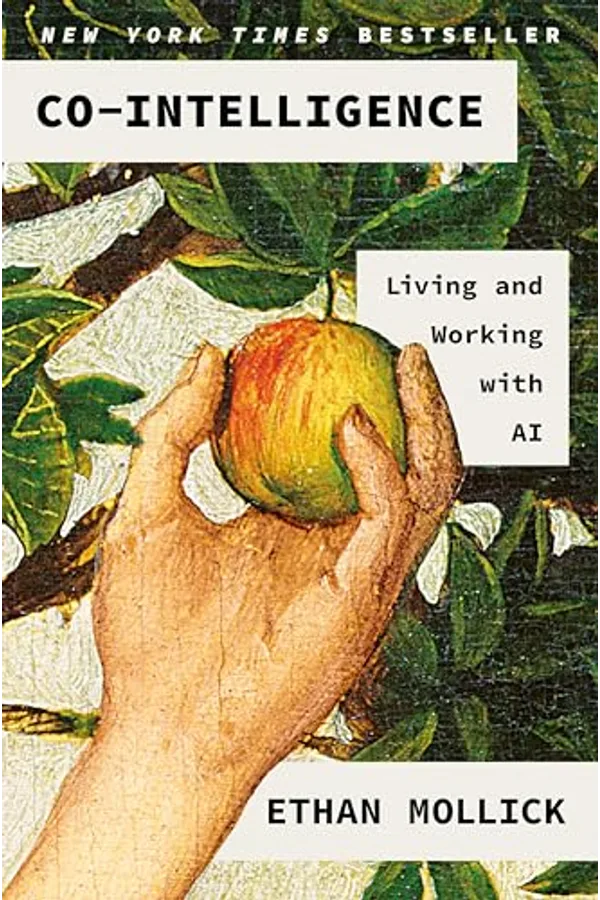
What is Co-Intelligence about?
AI is a co-intelligence, a partner that extends human thinking. The key is learning to work alongside it with clear principles, not fighting it or blindly trusting it.
Who should read Co-Intelligence?
Creators, strategists, and operators who want to integrate AI into real workflows, not just read about it.
Key ideas from Co-Intelligence
- Always invite AI to the table
- Be the human in the loop
- Iterate on outputs, don't expect perfection on the first pass.
Is Co-Intelligence worth reading?
The most grounded, actionable guide to working with AI right now, written by someone who actually uses it daily, not just theorizes about it.
Best for
Professionals, students, and builders who have tried AI tools but work below their potential, plus anyone deciding how to introduce AI to a team.
Not ideal for
ML engineers wanting architecture or papers, this is about practice and policy at the usage layer, not model internals.
What materially matters
- The four rules of co-intelligence, durable principles that outlast any model version.
- AI-as-persona framing: tutor, consultant, coach, teammate, with prompting recipes for each.
- The jagged-frontier research: honest mapping of where AI outperforms humans and where it embarrasses itself.
Practical use cases
- Set team norms: the four rules make a ready-made AI usage policy.
- Redesign your own workflows role by role, delegate, verify, and keep the human judgment where it counts.
Pros
- Immediately actionable, every chapter ends in practices you can run this week.
- Balances enthusiasm with failure modes, including what AI quietly makes worse.
Limitations
- Written at GPT-4 speed; specific model references will date fastest on the AI shelf.
- Broad by design, deep specialists will want domain-specific treatment after this overview.
Co-Intelligence FAQ
Is it too basic for technical readers?
The usage-layer playbooks still apply, most technical readers underuse AI in writing, learning, and ideation exactly as the book describes.
Which AI tools does it reference?
Mostly GPT-4-era chatbots, deliberately, the rules are model-agnostic, which is why they hold.
Continue · AI