My take
Proof that first-principles curiosity, refusing to take any answer on authority, beats credentials every time.
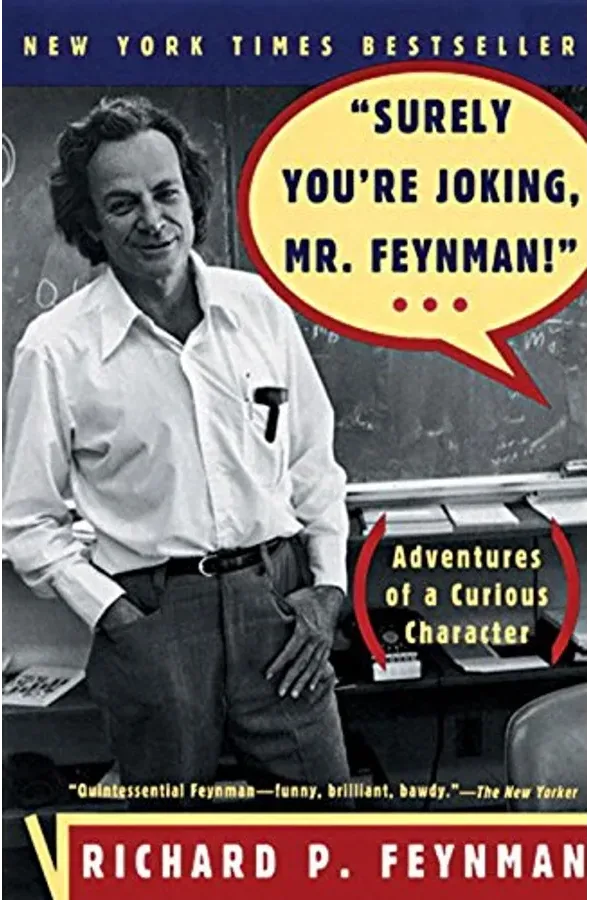
What is Surely You're Joking, Mr. Feynman! about?
A life lived by relentless curiosity, playful experiment, and a refusal to fool yourself.
Who should read Surely You're Joking, Mr. Feynman!?
Builders, learners, and anyone who'd rather understand than memorize.
Key ideas from Surely You're Joking, Mr. Feynman!
- Question everything from first principles
- Play is how the best work gets done
- Don't fool yourself.
Is Surely You're Joking, Mr. Feynman! worth reading?
The definitive case that curiosity and integrity, not authority, are how real understanding is built.
Best for
Curious builders, students, and anyone whose relationship with learning has become instrumental and needs rekindling.
Not ideal for
Readers seeking physics instruction, the science is the backdrop, not the content, or those irritated by self-satisfied anecdote.
What materially matters
- The autodidact arcs: repairing radios, learning to draw, cracking safes at Los Alamos.
- The cargo-cult science appendix: the classic definition of scientific integrity.
- Learning-as-adventure: every domain entered through play instead of credentials.
Practical use cases
- Reset burnout: read two chapters and remember why learning was fun before it became work.
- Steal the integrity standard for your own field: what would the scratch experiment look like in your work?
Pros
- Endlessly entertaining, the rare instructional book people actually reread.
- Shows the emotional truth of science culture better than any textbook.
Limitations
- Mid-century gender attitudes surface throughout and age poorly.
- Episodic structure: no argument builds across the book, by design.
Surely You're Joking, Mr. Feynman! FAQ
Will I learn physics from it?
No directly, you will learn how a physicist thinks, which is worth more and travels further.
Which book is the sequel?
What Do You Care What Other People Think?, the second anthology, with the Challenger investigation, its most serious piece.