My take
Finally clicked why Bitcoin isn't just money, it's a global protocol for trust.
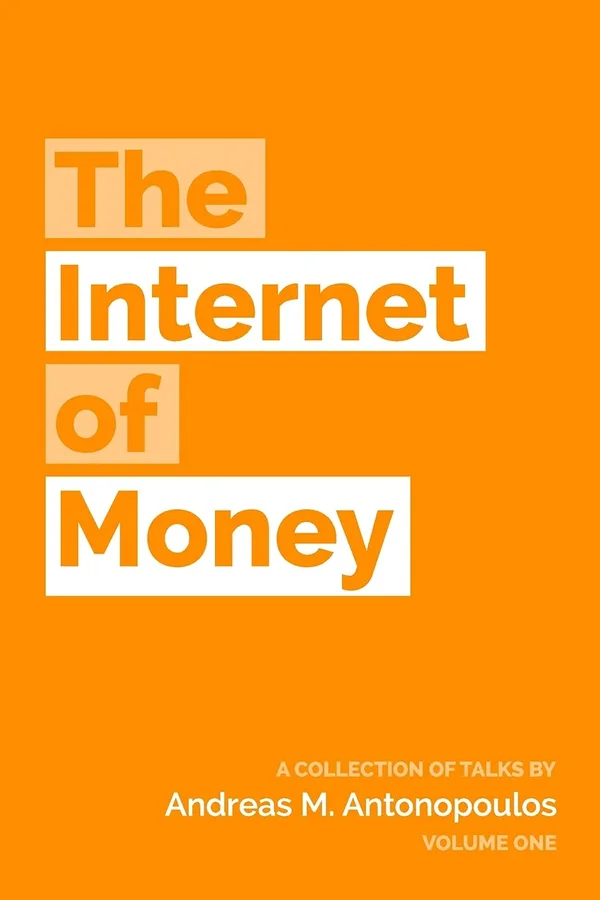
What is The Internet of Money about?
Bitcoin as an internet-age protocol for financial freedom and global trust.
Who should read The Internet of Money?
Developers, human rights activists, and futurists.
Key ideas from The Internet of Money
- Bitcoin is a language, not just currency
- Borderless wealth is a right
- Decentralization is security.
Is The Internet of Money worth reading?
Shifts the focus from technical details to 'why' Bitcoin changes the world.
Best for
Complete newcomers to crypto, and builders who need to explain money technology to non-technical partners, clients, or teams.
Not ideal for
Readers wanting technical depth (that is Mastering Bitcoin's job) or current-market context, this predates DeFi, L2s, and ETFs.
What materially matters
- Money as protocol: currencies reexplained as network-native communication rather than objects.
- The adoption-arc talks: email, early internet, and what those adoption curves predict.
- Zero price talk: a book about the technology and its human stakes, deliberately.
Practical use cases
- Onboard a friend, partner, or teammate into Bitcoin thinking before showing them anything technical.
- Design crypto products for newcomers, the book is a study in explaining hard money concepts plainly.
Pros
- Reads in an afternoon, talk format keeps it conversational without losing rigor.
- Centers the human dimension, banking access, remittances, censorship, not just mechanism.
Limitations
- Transcribed talks repeat themes across chapters; tighten by skipping around.
- 2016 context: no DeFi, no NFTs, no L2s, read it for concepts, not ecosystem news.
The Internet of Money FAQ
Which volume should I read?
Volume one, later volumes deepen but never outrank it.
Is it still current?
The concepts are protocol-level and hold; the market specifics date it to 2016.
Continue · Web3