My take
Bridges the gap between the logic of the early internet and the protocol-based future.
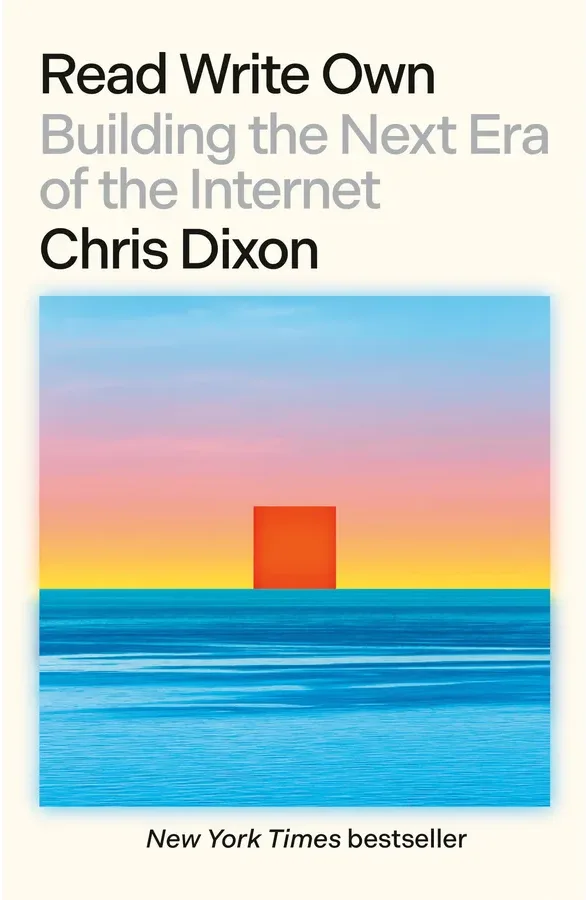
What is Read Write Own about?
Web3 as the next frontier for human creativity and digital property rights.
Who should read Read Write Own?
Creators, digital advocates, and internet historians.
Key ideas from Read Write Own
- Ownership is the next internet layer
- Escape walled gardens
- Protocols over platforms.
Is Read Write Own worth reading?
Bridges the logic of the early internet with the protocol-based future.
Best for
Builders and policy-minded readers who want the why-decentralize argument without maximalist vocabulary, and skeptics willing to read one serious book on the other side.
Not ideal for
Token investors or readers past the foundational debates, it is deliberately an argument for the base case, not market analysis.
What materially matters
- The historical arc, Netscape, RSS, Wikipedia versus Facebook, and why protocols lost phase two.
- Take-rate logic: how network ownership structure predicts where innovation and value accrue.
- Blockchain networks defined by what they enable, credible neutrality, composability, community ownership.
Practical use cases
- Decide whether a project actually needs a blockchain using the take-rate logic.
- Articulate the Web3 thesis to skeptical partners with history instead of ideology.
Pros
- Short (about 200 pages), free online, and written for the unconvinced rather than the choir.
- Engages the anti-crypto critiques seriously instead of dismissing them.
Limitations
- Foundational, not practical, you get the argument, not product guidance.
- Assumes decentralization is a goal worth pursuing; the axioms are argued, not proven.
Read Write Own FAQ
Is the book free?
Yes, the full text is available at readwriteown.com.
Does it cover DeFi and NFTs?
As examples of blockchain-network applications, yes, never as investment guidance.
Continue · Web3