My take
Taught me to stop competing in the present and start building the future from scratch.
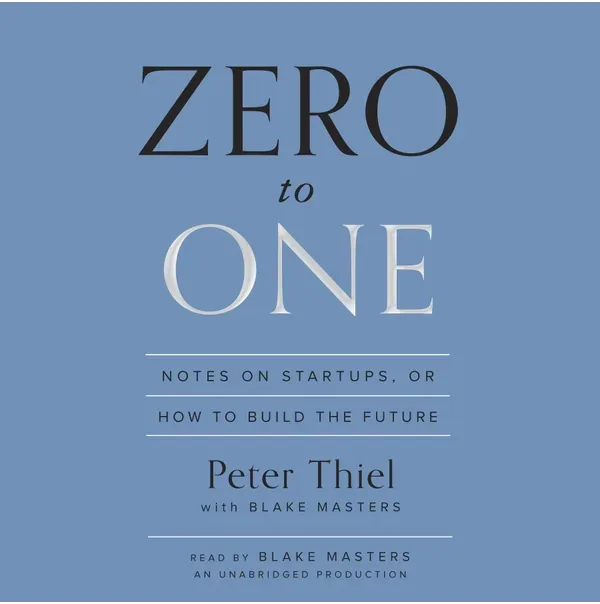
What is Zero to One about?
How to build genuinely new ventures that move the world from 0 to 1.
Who should read Zero to One?
Founders, innovators, and monopoly-builders.
Key ideas from Zero to One
- Aim for 10x improvement
- Competition is for losers
- Secrets are the foundation of business.
Is Zero to One worth reading?
The definitive guide to contrarian thinking in business and technology.
Best for
Founders deciding what to build and whether to build it at all.
Not ideal for
Operators looking for execution tactics, there is nothing here about hiring, shipping, or scaling day to day.
What materially matters
- The 0-to-1 versus 1-to-n distinction that reframes what counts as progress.
- Seven questions every business must answer, from engineering to distribution.
- The monopoly-versus-competition argument, built from first principles.
Practical use cases
- Pressure-test a startup idea: what secret do you believe that others don't?
- Position a product to own a small market first instead of competing in a big one.
Pros
- Compresses a Stanford course into two hundred dense, memorable pages.
- Rewires how you evaluate ideas: defensible uniqueness beats execution speed.
Limitations
- Thiel's confidence outruns his evidence in places, the rules describe outliers, not everyone.
- Almost no operational guidance; the inspiration has to find its own execution.
Zero to One FAQ
Is Zero to One still relevant?
Its questions age better than its predictions; the monopoly argument and the seven questions are the durable parts.
Do I need to agree with Thiel's worldview to use it?
No, the framework stands on its own, and the most useful way to read it is arguing with it.
Continue · Strategy