My take
It normalized treating your own beliefs about customers as hypotheses. Most failed launches I see are validated theater, work shipped without a testable bet.
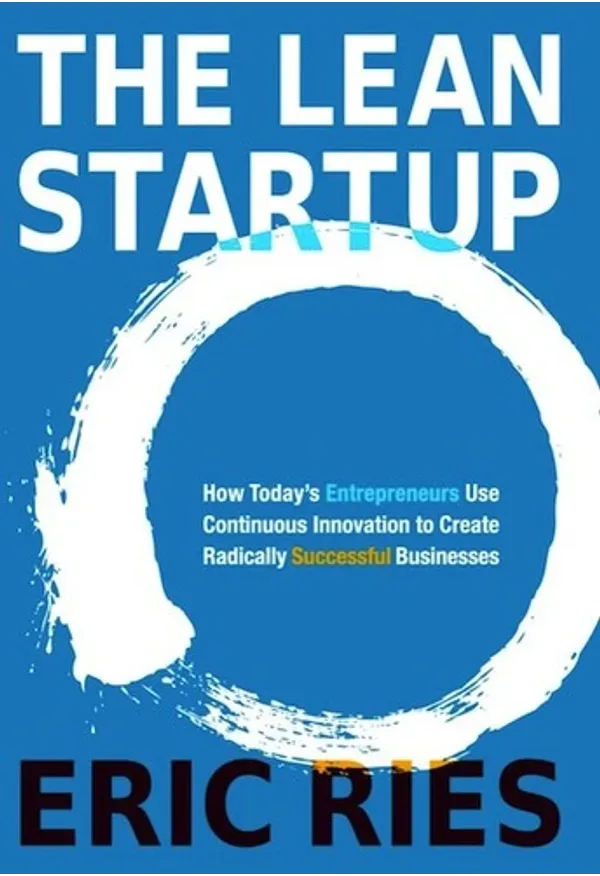
What is The Lean Startup about?
Startups are experiments: define the leap-of-faith assumptions, build the smallest test, measure validated learning, and pivot or persevere on evidence.
Who should read The Lean Startup?
Founders, product builders, and creators launching anything new inside uncertainty.
Key ideas from The Lean Startup
- Build-Measure-Learn is the unit of progress
- An MVP is a test, not a small product
- Vanity metrics lie
- Pivot-or-persevere is a scheduled decision, not a feeling
- Innovation accounting measures learning, not output.
Is The Lean Startup worth reading?
The canonical system for testing ideas under uncertainty, the default operating system of modern product development.
Best for
First-time founders and anyone about to invest months into an untested assumption.
Not ideal for
Operators of proven businesses optimizing for scale, the book is explicitly about search, not execution.
What materially matters
- The build-measure-learn feedback loop as the core engine.
- Leap-of-faith assumptions and innovation accounting.
- A pivot taxonomy, zoom-in, customer segment, channel, and more.
Practical use cases
- Write your next launch's two riskiest assumptions and design one MVP per assumption.
- Replace a roadmap with a queue of validated-learning questions.
Pros
- A complete, teachable system rather than scattered advice.
- Concepts like MVP and pivot became industry standard for a reason.
Limitations
- Case balance skews corporate toward the end.
- Some terminology now reads as a 2011 time capsule.
The Lean Startup FAQ
Is The Lean Startup still relevant?
The vocabulary aged; the loop did not. Treat it as the origin of the experiment-driven norm everywhere in tech.
Does it only apply to tech startups?
No, any project under uncertainty, from a course to a newsletter, runs the same loop.
Continue · Strategy