My take
Proof that obsession with craft and design is the only way to make a dent in the universe.
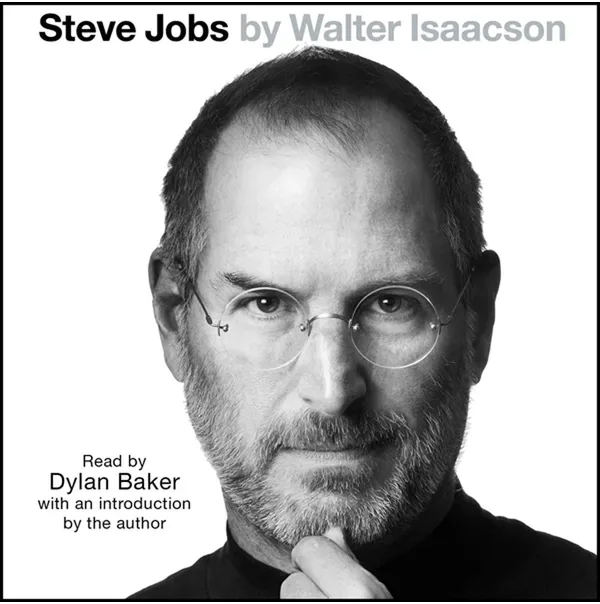
What is Steve Jobs about?
Creative excellence through the intersection of advanced technology and liberal arts.
Who should read Steve Jobs?
Designers, product obsessives, and tech enthusiasts.
Key ideas from Steve Jobs
- Simplicity is the ultimate sophistication
- A-players only
- Design is how it works.
Is Steve Jobs worth reading?
Sets the global standard for product-led growth and design obsession.
Best for
Founders and product people deciding what to build and what to say no to, and managers who want the counter-example to consensus culture.
Not ideal for
Anyone looking for a management template, Jobs's style was inseparable from his context and often outright harmful.
What materially matters
- The 1997 product grid: Jobs cutting Apple's line to a two-by-two focus matrix.
- The reality-distortion-field documentation, useful, since its effects are real in every startup.
- Second-act case studies: the mini, the iMac, the iPhone, taste institutionalized into process.
Practical use cases
- Run the two-by-two focus exercise on your own product line before adding anything new.
- Study the Pixar/Apple balance chapter as a rare case of creative reinvention after 40.
Pros
- Unrestricted access to 40+ interviews with Jobs plus his circle, the honesty is the point.
- Full arc including failures: Lisa, NeXT's pricing, sculley years, the exile.
Limitations
- Long (650+ pages) with biographical filler around the pivotal years.
- Isaacson editorializes on Jobs's cruelty without fully developing the counterargument his own interviews contain.
Steve Jobs FAQ
Is it fair to Jobs?
Remarkably so, Jobs commissioned it, promised no editorial control, and Isaacson kept the cruelty in frame alongside the genius.
Should I watch the movie instead?
The Sorkin film is a compressed character study; the book is where the product decisions and lessons actually live.