My take
Your process is more interesting than your product. The people who document what they're learning attract the right audience, the people who only share finished work attract indifference.
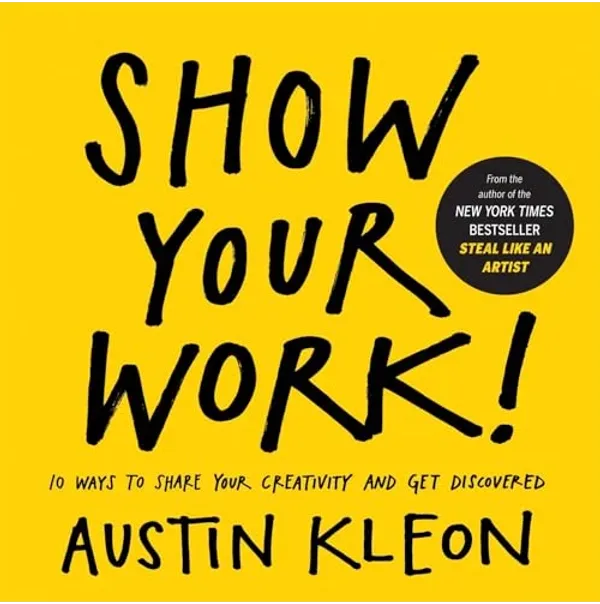
What is Show Your Work! about?
Creativity is not a solo act, it's a social process. By sharing your work openly, you build an audience, a network, and a body of knowledge simultaneously.
Who should read Show Your Work!?
Creators, builders, and anyone whose growth depends on being visible and generous with their knowledge.
Key ideas from Show Your Work!
- Don't wait until you're an expert to share
- Your influence grows with your generosity
- Think of your work as a daily broadcast, not a finished masterpiece.
Is Show Your Work! worth reading?
The blueprint for the build-in-public movement, the single best match for what creators actually do every day.
Best for
Creators starting from zero audience who feel uncomfortable self-promoting and need a system that doesn't require bragging.
Not ideal for
Creators past the discovery stage who need monetization, funnels, or positioning, Kleon stops where the business side begins.
What materially matters
- The scenius concept: you don't need to be a genius, you need to contribute to one.
- The daily-discovery habit: share one small thing a day instead of one big thing a year.
- The storyteller's rules, hook, build, payoff, applied to how you talk about your work.
Practical use cases
- Start a build-in-public habit: one post a day from whatever you're making or learning.
- Turn a silent portfolio into a narrative feed that compounds attention.
Pros
- Reads in ninety minutes and costs nothing to implement, the practices are free and immediate.
- Removes the shame from self-promotion by reframing it as contribution.
Limitations
- Examples skew heavily toward designers and illustrators; writers and developers must translate.
- Deliberately shallow on distribution and monetization, it is a starter book.
Show Your Work! FAQ
Do I need finished work before I can share anything?
No, process, questions, influences, and failures all count as contribution; that is the whole point.
Does the advice work for technical audiences?
Yes, changelogs, postmortems, and build logs are exactly 'showing your work' in engineering form.
Continue · Strategy