My take
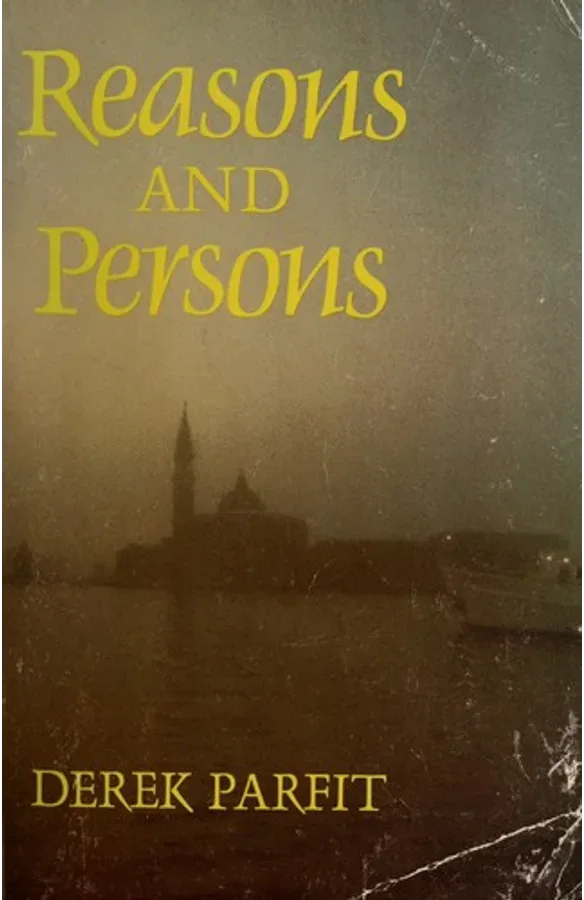
If personal identity is psychological continuity rather than a separate all-or-nothing fact, our reasons for privileging one future self, or present people over future people, must be reconsidered.
What is Reasons and Persons about?
Common theories of self-interest and morality can defeat their own aims. Once personal identity is understood in terms of psychological relations, different conclusions follow about rational action, responsibility, and future generations.
Who should read Reasons and Persons?
Committed readers of ethics, rational choice, identity, long-term thinking, and the moral consequences of decisions across time.
Key ideas from Reasons and Persons
- Some moral and rational theories are self-defeating
- Psychological continuity may matter more than numerical identity
- The non-identity problem complicates duties to future people
- Population ethics produces conclusions that resist easy intuition
- Reasons can extend beyond narrow self-interest.
Is Reasons and Persons worth reading?
It changes how long-term choices are framed, from personal planning and institutional policy to climate, emerging technology, and obligations to people who do not yet exist.
Best for
Advanced readers wrestling with identity, intergenerational responsibility, long-term policy, or the foundations of moral decision-making.
Not ideal for
Readers seeking light philosophy, narrative momentum, or immediately actionable advice; this is dense analytic argument across more than five hundred pages.
What materially matters
- Self-defeating theories of morality, rationality, and collective action.
- Personal identity through psychological continuity, branching, and teletransportation cases.
- The non-identity problem, future generations, population ethics, and the Repugnant Conclusion.
Practical use cases
- Pressure-test long-term policies whose choices determine which people will exist and what lives they inherit.
- Examine how assumptions about a stable self affect planning, responsibility, sacrifice, and care for your future self.
Pros
- Unusually rigorous: objections and revisions are part of the argument rather than hidden from the reader.
- Its identity and future-generations problems remain central across ethics, policy, climate, and technology.
Limitations
- Dense structure, technical notation, and long chains of cases make unguided reading difficult.
- The four parts are connected but can feel like separate books, so the overall arc is easy to lose.
Reasons and Persons FAQ
Must I read it from beginning to end?
No. The parts are designed to stand with some independence. Readers focused on identity can begin with Part Three; future generations and population ethics are in Part Four.
What is Parfit's central claim about identity?
That personal identity may not be a further all-or-nothing fact beyond psychological continuity and connectedness, and that identity itself may not be what ultimately matters.