My take
Good work depends partly on what a person chooses to study, whom they learn from, and how they respond to failure. Hamming treats learning as a skill that can be practiced, not a fixed trait.
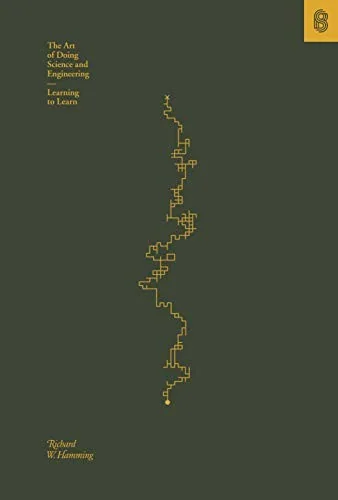
What is The Art of Doing Science and Engineering: Learning to Learn about?
Based on Hamming’s teaching and experience, the book explores how scientists and engineers learn, choose problems, and develop ideas. It combines advice with stories from his career and from other researchers.
Who should read The Art of Doing Science and Engineering: Learning to Learn?
Scientists, engineers, designers, students, and creators who want to reflect on how they choose and pursue difficult work.
Key ideas from The Art of Doing Science and Engineering: Learning to Learn
- Choose problems that matter to a field and fit your ability to contribute
- Learn how important work is judged in your discipline
- Treat examples of success and failure as material to examine, not formulas to copy
Is The Art of Doing Science and Engineering: Learning to Learn worth reading?
People often ask how to produce important work without examining how their time and attention are allocated. Hamming’s questions can help turn that ambition into choices about learning and problem selection.
Best for
Students and practitioners who have room to choose a problem, plan learning, or change how they use their working time.
Not ideal for
Readers expecting a research methods textbook, a step-by-step career plan, or a promise of exceptional results.
What materially matters
- Lectures on learning and scientific work
- Stories about researchers, engineers, and ideas
- Questions about choosing ambitious problems
Practical use cases
- Review a project list and identify which question deserves sustained attention.
- Plan a learning cycle around a concrete skill or research gap.
Pros
- Combines practical questions with examples from scientific work.
- Useful beyond academic research for people who learn through projects.
Limitations
- Some advice reflects Hamming’s own career and historical context.
- The book asks readers to interpret its examples rather than supplying a universal plan.
The Art of Doing Science and Engineering: Learning to Learn FAQ
Is this book only for scientists?
Its examples come from science and engineering, but its questions about learning, work, and problem choice can apply to other fields.
Does Hamming provide a formula for success?
No. He offers reflections and examples; readers need to decide which ideas fit their goals and circumstances.
Continue · Strategy