My take
Clutter is the disease; the rewrite is the cure. Zinsser's four principles, clarity, simplicity, brevity, humanity, out-survive every writing trend since 1976.
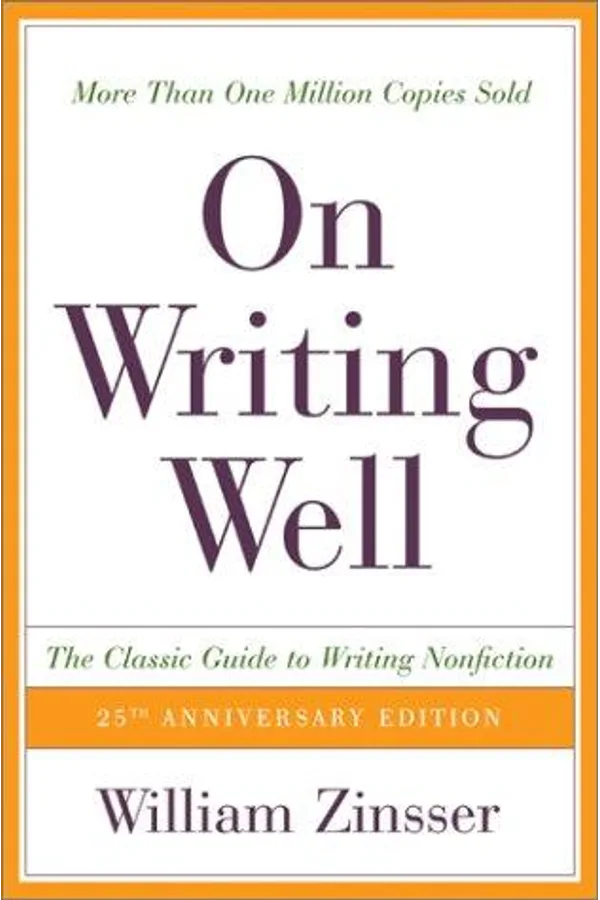
What is On Writing Well about?
Good nonfiction writing is a craft learnable by rewrite: strip clutter, sound like yourself, and respect the reader's time.
Who should read On Writing Well?
Anyone writing to be understood, newsletter authors, bloggers, technical writers, students.
Key ideas from On Writing Well
- Clutter is the disease of writing
- The essence of writing is rewriting
- Vary sentence length, rhythm carries meaning
- Sound like yourself
- Lead strongly and end strongly.
Is On Writing Well worth reading?
The craft foundation under every modern writing guide, practical nonfiction rather than general advice about creativity.
Best for
Nonfiction writers at any level, especially those whose drafts sound like reports.
Not ideal for
Fiction writers seeking plot and character craft, this is strictly nonfiction.
What materially matters
- The four principles: clarity, simplicity, brevity, humanity.
- Genre chapters for people, places, memoir, science, and more.
- The lead, the ending, and a concrete rewrite method.
Practical use cases
- Run a clutter pass on your last published piece: delete every word that carries no weight.
- Read one chapter before each writing session until the principles are reflex.
Pros
- Timeless principles with zero dependence on trends or tools.
- Zinsser practices what he teaches, the prose is the demo.
Limitations
- Examples predate the internet era.
- Prescriptive voice will annoy style-experimenters.
On Writing Well FAQ
Which edition should I get?
The 30th-anniversary Harper Perennial paperback (ISBN 0060891548) is the standard; the principles are unchanged since 1976.
Is it useful for non-native English writers?
Yes, clutter-cutting, rhythm, and voice transfer to any language, including Spanish.