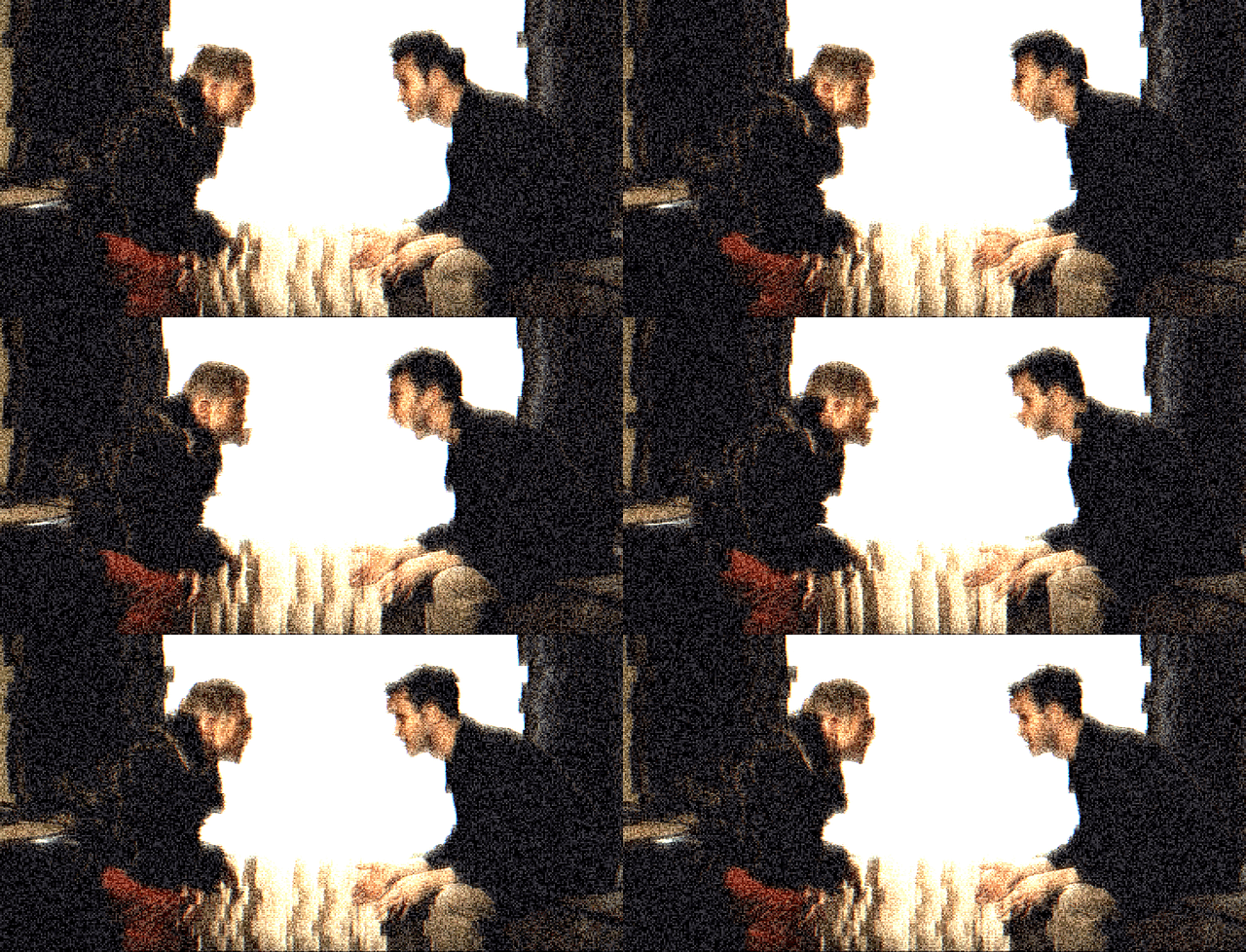
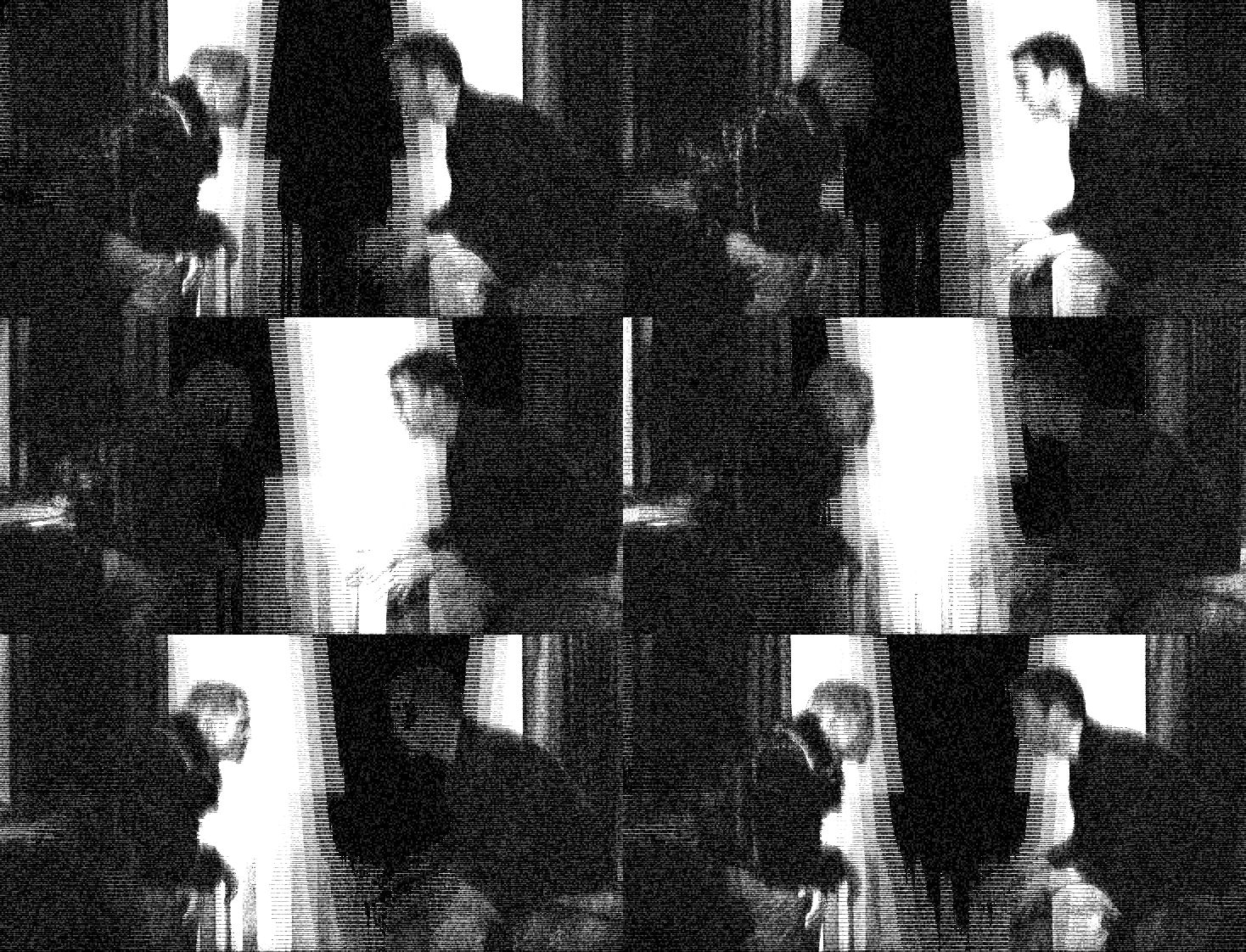
Two people can sit face to face and still exist in completely different realities.
Different feeds.
Different timelines.
Different narratives.
Different versions of the world constantly reinforced by algorithms designed to maximize attention.
The internet was supposed to connect humanity.
Instead, it fragmented perspective at planetary scale.
Over time, people stopped experiencing the same reality simultaneously. Everyone now moves through personalized information environments shaped by engagement systems invisible to most users.
The Rise of Digital Alter Egos
Eventually, the digital self starts separating from the real one.
Online identities become curated.
Opinions become performative.
Personalities become optimized for platforms.
Alter egos emerge naturally from the pressure of constant visibility.
People are no longer just communicating online.
They are managing versions of themselves.
The strange part is how normal this has become.
The New Layer of Control
We built systems that reward reaction over reflection, identity over nuance, visibility over authenticity.
AI will likely accelerate this even further, generating synthetic personalities, synthetic conversations, and eventually synthetic social environments impossible to fully distinguish from organic ones.
The future of the internet may not be defined by virtual reality.
But by fragmented reality.
And the layer controlling perception is quickly becoming more important than reality itself.