
Content creation initiatives, whether structured as bounties, ambassador programs, or any other framework for rewarding contributors, act as a foundational engine for ecosystem growth. They surface knowledge, enable participation across languages and cultures, and strengthen the public narrative of a decentralized network.
As open, decentralized ecosystems mature, a variety of content-oriented structures and entities emerge, each with its own objectives, incentive models, and paths to value. Formalizing these categories helps improve clarity, accountability, and impact. It also reduces overlaps, prevents operational inefficiency, and helps ensure that resources support the right goals and the right contributors.
The Role of CCIs in Ecosystem Development
Content plays several strategic functions in decentralized networks. It reduces information asymmetry, attracts users and builders, and empowers token holders to make informed governance decisions. It is also how a network’s values, roadmap, and culture become legible to the outside world.
Unlike traditional ecosystems where communication is centrally coordinated by a company or foundation, Web3 content efforts must be modular, community-driven, and aligned with shared principles rather than a single corporate voice. This introduces both opportunity and risk:
Opportunity: Any motivated contributor can become a distribution node for accurate information, education, and culture.
Risk: Without structure, incentives can drift toward noise, low-quality repetition, or misaligned narratives.
A Content Creation Initiatives (CCI) framework is a way to harness this energy. It defines roles, expectations, and progression paths so that content scales without losing direction.
Three Types of Content Creation Initiatives
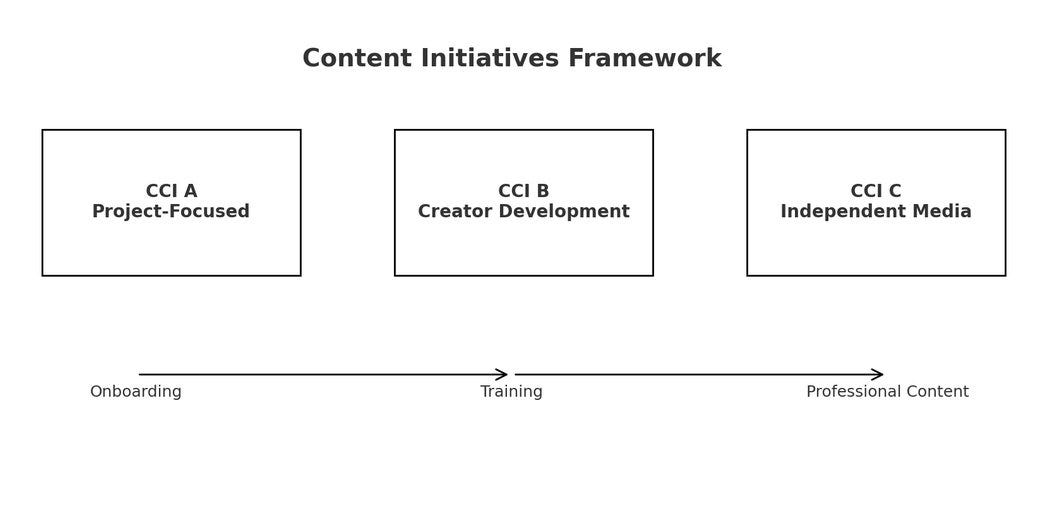
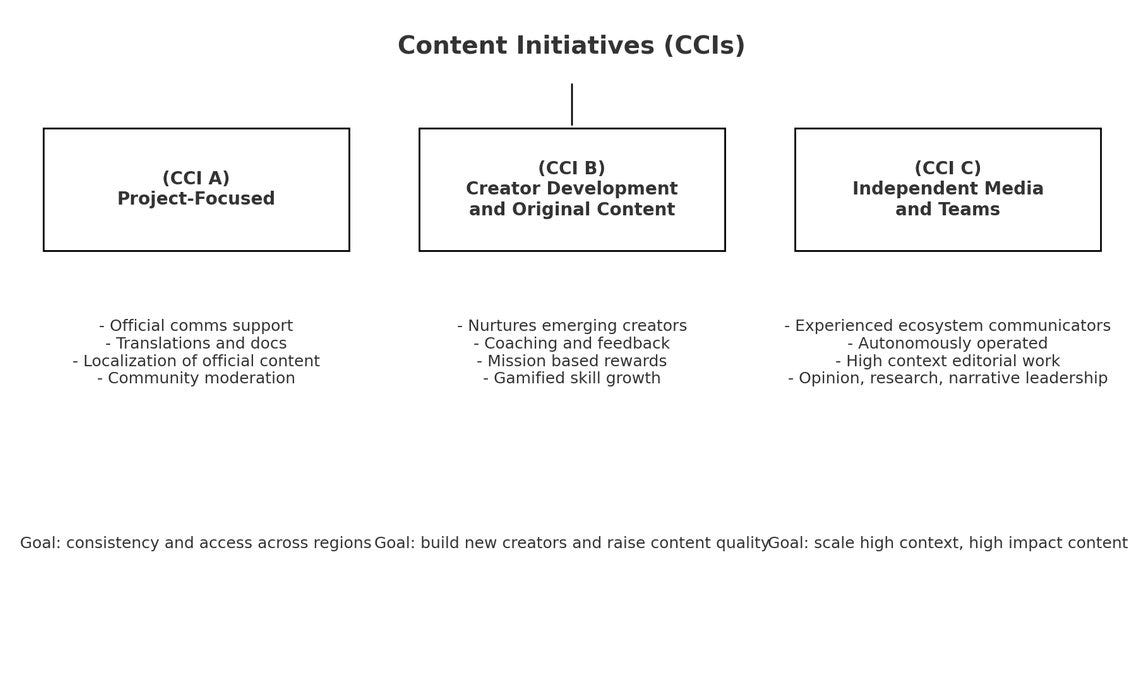
This framework divides CCIs into three archetypes. They can coexist and interact, but each has a distinct purpose and operating logic. Treating them as separate layers avoids the “one program fits all” trap.
1. Project-Focused Programs
These are programs primarily designed to support official communication, language expansion, and user onboarding for core network stakeholders (e.g. infrastructure providers, community moderators, etc.). They often resemble ambassador programs and operate as extensions of official communications.
Primary Focus Areas
Translating documentation and official articles
Adapting official video content with dubbing or subtitles
Moderating language-specific Telegram, Discord, or forum spaces
Publishing ecosystem news and announcements to local audiences
Serving as communication bridges between core teams and regional communities
Providing structured feedback loops from local communities back to core contributors
Purpose
The core purpose of project-focused programs is to ensure that official messaging and ecosystem information travel consistently and accurately across regions and languages.
They are especially valuable for ecosystems aiming to scale globally, where:
Documentation and updates need to be synchronized across time zones and languages.
Local communities rely on trusted intermediaries to interpret technical or governance changes.
Miscommunication can lead to confusion, FUD, or governance apathy.
Success Indicators
Consistent, timely translation of key updates and documentation
Healthy, respectful local community channels with active moderation
Reduced confusion around upgrades, governance decisions, and token mechanics
High alignment between local messaging and official ecosystem strategy

2. Creator-Focused Programs for Original Production
These programs cultivate grassroots creators, reward original content, and offer mentorship and progression paths. Their design is closer to a dojo or accelerator for communication talent inside the ecosystem.
Where project-focused programs amplify official messaging, creator-focused programs expand the narrative surface area by encouraging independent ideas, educational formats, and experiments.
Key Characteristics
Clear reward paths for consistent, high-effort creators
Peer review and editorial guidance to improve content quality
Gamified progression (tiers, badges, quests, seasons, milestones)
Access to mentors, editors, or senior creators for structured feedback
Community spaces for creators to collaborate, co-produce, and cross-promote
Pathways to evolve into independent media teams or specialized contributors
Strategic Role
These initiatives act as training grounds for communication talent and narrative experimentation. They:
Encourage creative risk-taking in a controlled environment (new series, formats, languages, or topics).
Strengthen culture and identity, amplifying memes, stories, and use cases that resonate.
Foster long-term loyalty, as creators feel seen, supported, and challenged to grow.
Over time, strong creator-focused programs produce:
Recognizable community educators and storytellers
Repeatable content formats that audiences trust (weekly recaps, explainers, deep dives)
A pipeline of contributors who can eventually operate as autonomous media entities
Success Indicators
Growth in the number of active, consistent creators over multiple seasons
Improvement in content quality (depth, accuracy, storytelling, production)
Increased earned reach (organic impressions, shares, embeds) beyond internal channels
Emergence of creator “graduates” who launch independent projects or media initiatives
3. Independent Media and Content Teams
These are established media contributors operating autonomously with accountability directly to token holders and/or ecosystem governance. They are no longer “in training”; they are operators.
They often:
Conduct research and analysis on protocol decisions, governance, or ecosystem health
Produce opinion-driven or investigative content
Build deep educational series, guides, or long-form explainers
Operate independent newsletters, podcasts, YouTube channels, or research hubs
Their role is not onboarding, but shaping the narrative, providing critique, and scaling impact.
Distinctive Traits
Clear editorial line and recognizable voice
Independence from core teams (while still being aligned with the ecosystem’s long-term health)
Transparent funding and accountability (ideally via governance or clear public reporting)
Ability to set their own roadmap and content priorities
These teams create narrative sophistication. They:
Ask hard questions and hold decision-makers accountable
Translate complex technical or governance topics into accessible, actionable insights
Help builders and token holders understand trade-offs and long-term implications
Success Indicators
Recognized as credible, independent sources by the wider community
Cited by external media, researchers, or builders
Meaningful impact on governance debates, public understanding, and ecosystem reputation
Sustainable funding models and stable publishing cadence
Why Categorization Matters
The most common operational failure, which we have seen in several funded initiatives, is trying to make one program do everything:
A language guild that tries to translate documentation, train creators, run campaigns, and act as an independent media voice simultaneously.
An ambassador program that tries to mix community management and original series production.
When roles blur:
Quality declines as contributors are pulled in conflicting directions.
Incentives become confusing and hard to manage.
Accountability is diluted: who is responsible for what, exactly?
A clear CCI framework enables:
Better resource allocation – Each program has a defined mandate and budget.
Targeted deliverables – Expectations differ for yappers vs original creators vs media teams.
Specialization – Participants can double down on their strengths instead of trying to do everything.
Measurable outcomes – KPIs can be tailored: reach and quality for creators, accuracy and coverage for ambassadors, depth and influence for media.
A clear progression path – From learner → creator → independent media operator.
Redefining CCI Success for Scalable Impact
In many early Web3 programs, content incentives were volume-centric:
Rewards per Tweet, per article, per video.
No strict criteria around originality, depth, or audience impact.
This created predictable outcomes:
Duplicated content (multiple similar translations or shallow explainers).
Low-effort summaries of updates already covered elsewhere.
Channels optimized for farming incentives, not for building real audiences.
The next evolution of CCIs must be quality- and growth-centric, not piece-centric.
Key Evolution Paths
Move beyond simple “reward per piece” mechanics
Incorporate quality reviews, audience metrics, and progression criteria.
Reward long-term consistency and growth, not just raw output.Encourage creativity through quests and themed challenges
Campaigns that focus on specific narratives, use cases, or audiences.
Seasonal themes that give creators direction while allowing creative freedom.Prioritize narrative clarity and ecosystem contribution
Ask: does this piece actually help users, builders, or token holders make better decisions?
Avoid content that exists only to “check the box” for a bounty.Support creators in building expert knowledge and editorial discipline
Offer resources, workshops, peer feedback, and access to subject-matter experts.
Train creators to research properly, cite sources, and maintain high standards.
Content Creation Initiatives should empower builders and decision-makers, not merely incentivize posts and metrics without context.
The goal is to produce communication leaders, not just content.
Addressing Historical Pitfalls
Early incentive programs often generated formulaic work. Common patterns included:
Translating or dubbing unverified or low-quality content from external sources.
Publishing repetitive, low-context news recaps that add little incremental value.
Over-indexing on vanity metrics (raw impressions) over meaningful engagement or audience growth.
These behaviors:
Do not build competitive, enduring channels.
Do not teach creators audience development, positioning, or editorial strategy.
Can even weaken ecosystem trust if poor content becomes the dominant representation.
A refined CCI model explicitly inverts those patterns. It prioritizes:
Originality: new angles, formats, or audiences.
Context: why something matters, not just what happened.
Quality: clear storytelling, accurate information and thoughtful design.
Professionalism: predictable cadence, successful formats, responsible communication and transparent practices.
Building the Pipeline: From Learner to Independent Media
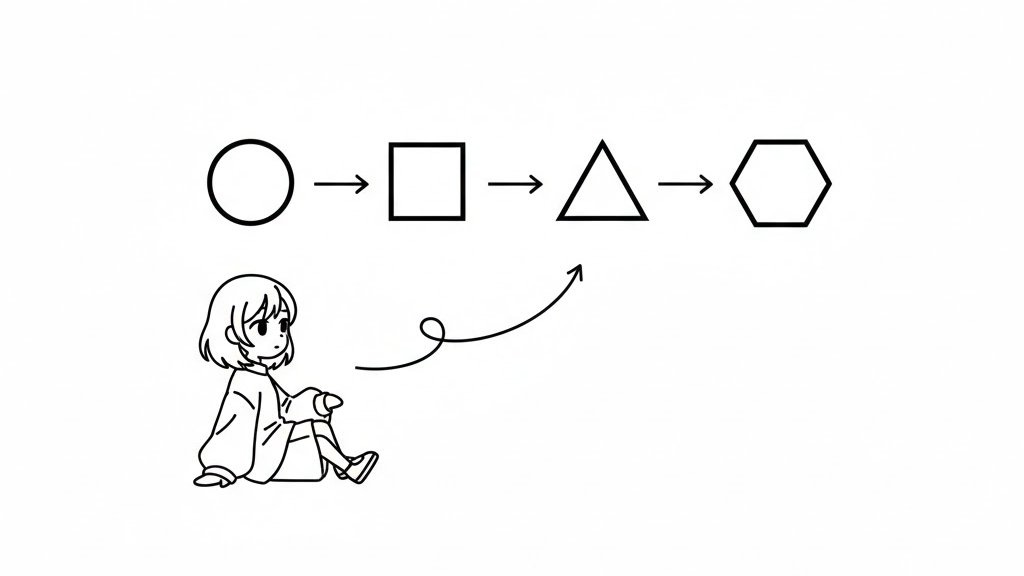
A mature ecosystem does not just “fund content”; it builds a pipeline of talent.
Project-Focused Programs
Entry point for translators, moderators, and community communicators.
Participants learn the ecosystem’s values, terminology, and governance basics. The perfect ambassador onboarding :).Creator-Focused Programs
Next step for contributors who want to express their own voice.
Participants experiment with formats (threads, explainers, podcasts, shorts, essays) and audiences.Independent Media and Content Teams
Destination for the most committed and capable communicators.
Teams operate with editorial independence and high accountability, covering complex topics with depth.
Designing clear transitions between these stages helps avoid talent loss and stagnation. Contributors see a path:
translate → create → lead
Toward a Strategic and Sustainable Future
Content frameworks in decentralized systems are not static. They evolve together with governance maturity, community competency, and ecosystem strategy. A refined CCI structure supports these goals by establishing an organic, scalable path:
> Community globalization and onboarding
> Creator training and growth
> Independent media leadership
Each stage builds upon the previous one. Together they create a healthy media ecosystem that supports education, accountability, innovation and long-term narrative strength.
Conclusion
Clear categorization of the Content Creation Initiatives enables better design, execution, and evaluation of public communication in decentralized networks. It allows each initiative to focus on its strengths, reduce inefficiencies, and maximize value for token holders and builders.
By supporting specialization and progression, the Content Creation Initiatives can foster a global network of skilled storytellers, analysts, and educators who steward and amplify the values of the ecosystem.
The path forward is not about rewarding posts. It is about cultivating talent, strengthening infrastructure, and shaping a strategic narrative for the future of decentralized technology.